
Sarandë District
Former administrative district on Albania's Ionian coast centered on the city of Sarandë. Known for beaches, ancient sites like Butrint, and ferry links to Corfu; now part of Vlorë County.
The District of Sarandë was one of the thirty-six districts that made up Albania's administrative division until national reforms reorganized local government. Centered on the coastal city of Sarandë, the district occupied a stretch of the Ionian shoreline in southern Albania and served as a local hub for trade, fishing and tourism. Population figures cited in older sources put the district at around 48,000 residents, with a marked seasonal increase during the summer months.
Image gallery
1 Image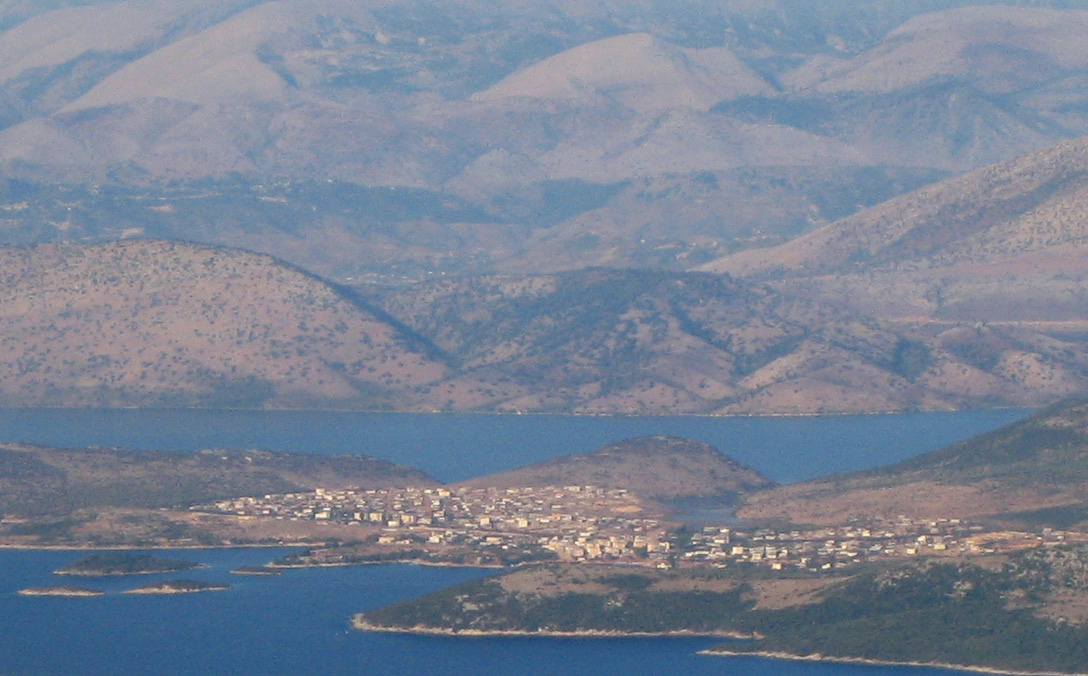
Geography and environment
Located on the Albanian Riviera, the area faces the strait separating the mainland from the Greek island of Corfu. The coastline combines sandy coves, rocky headlands and shallow bays. Inland terrain rises quickly toward hills and karst formations; freshwater springs and coastal wetlands contribute to local biodiversity. The nearby Butrint archaeological and natural area is noted for its mosaic of habitats.
History and name
The urban center of Sarandë has ancient and medieval roots. Nearby is the classical city of Buthrotum, an important settlement in antiquity. The modern name Sarandë derives from the Byzantine-era Greek name associated with the Forty Martyrs (Agioi Saranda). Over centuries the town and surrounding settlements passed through Roman, Byzantine and Ottoman influence before entering the modern Albanian state.
Economy, tourism and transport
The local economy relies heavily on tourism, fishing and small-scale agriculture. Warm-water beaches, resorts at Ksamil and archaeological tourism around Butrint attract regional visitors and international tourists, particularly from neighboring Greece. Sea links provide frequent ferry connections across to Corfu, while the road network connects the district to other coastal towns and the interior. The area has experienced growth in hospitality services since the late 20th century.
Culture and administration
The district area includes a mix of linguistic and cultural communities, with historical ties across the nearby international border. Administratively, the former Sarandë District now falls within the larger unit of Vlorë County and is part of the Republic of Albania's contemporary municipal structure. Local heritage, cuisine and festivals reflect coastal Mediterranean influences and centuries of layered history.
Main attractions and notable facts
- Archaeological site of Butrint, an important classical and Byzantine ruin surrounded by natural wetlands.
- Beaches and island views around Sarandë and Ksamil, popular for swimming and boating.
- Blue Eye (Syri i Kaltër), a striking freshwater spring and visitor site inland from the coast.
- Ferry services to Corfu, offering short international crossings and cultural links.
Although the district as an administrative unit has been superseded by county and municipal government, the name Sarandë continues to identify the region and its principal city, which remain important for tourism, heritage and cross-border exchange in southern Albania.
Related articles
Author
AlegsaOnline.com Sarandë District Leandro Alegsa
URL: https://en.alegsaonline.com/art/87311
Sources
- instat.gov.al : "POPULLSIA SIPAS PREFEKTURAVE, 2001–2010"
- instat.gov.al : "POPULLSIA SIPAS RRETHEVE, 2001-2010"