
Sandon, British Columbia
Former silver mining boomtown in the Kootenays of southeastern British Columbia, now a largely seasonal historic site and ghost town with preserved ruins and museum exhibits.
Overview
Sandon is a historic mining town in the Kootenay region of southeastern British Columbia. Founded during a late 19th-century mineral rush, it grew rapidly as a center for silver and other metal extraction. Today Sandon is best known as a largely abandoned, seasonal community and heritage site that attracts visitors interested in mining history and early western Canadian settlement.
Image gallery
4 Images


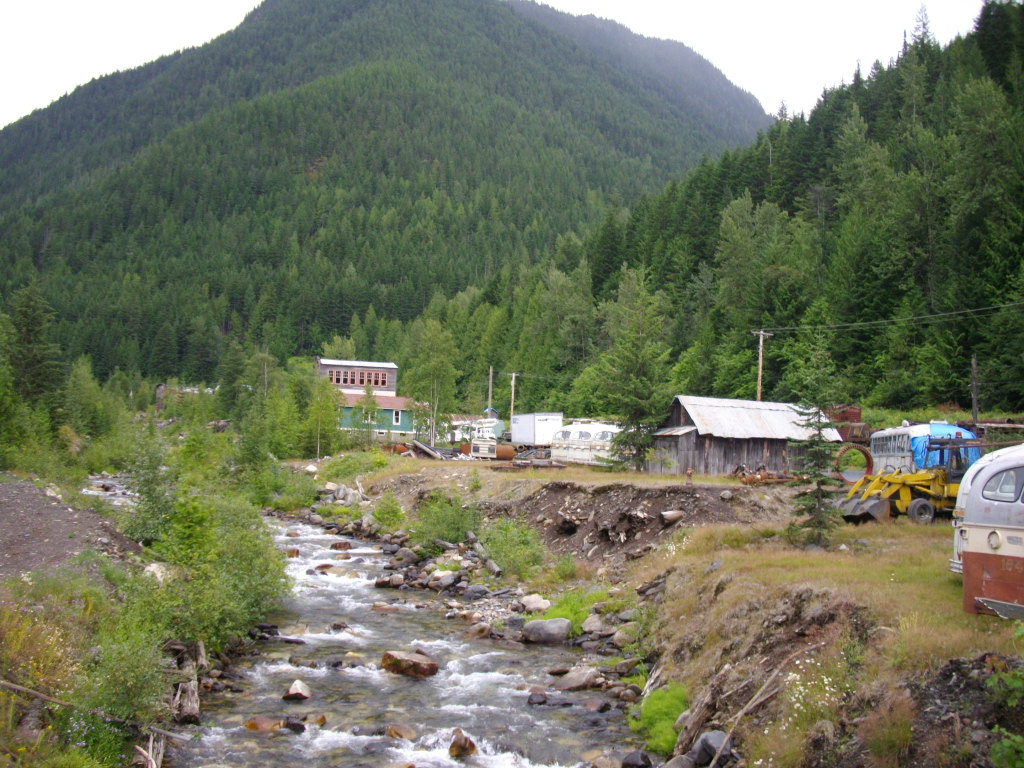
Location and coordinates
The site lies in a steep mountain valley and was originally reached by pack roads and rail connections. Its geographic coordinates are 49°58′32″N 117°13′38″W (49.97556°N, -117.22722°W), a fact sometimes linked to online map references: coordinates.
History and development
Sandon rose to prominence in the 1890s after rich silver-lead-zinc deposits were discovered in the surrounding Slocan Valley. The town served as a commercial and transport hub for nearby mines and boasted a lively mix of businesses, lodgings and services typical of boomtowns of that era. Rail lines and tramways were built to move ore to mills and markets, and the community earned the informal nickname the "Capital of the Silvery Slocan." Over time ore deposits declined, and a combination of economic change, fires and avalanches reduced Sandon’s population and infrastructure.
Present day and preservation
Although many original buildings were lost, a number of structures and ruins remain, and seasonal efforts preserve artifacts and stories of the town’s mining past. Visitors in summer can explore remaining foundations, a small museum collection, interpretive signs and a graveyard. Local volunteers and heritage groups have worked to stabilize and document what remains rather than fully rebuild the town.
Notable people and legacy
Sandon is the birthplace of a number of people associated with the region’s early history, including the hockey legend Cecil "Tiny" Thompson, who was born in Sandon and is often mentioned in accounts of the town’s human history: Cecil Thompson. The town’s legacy is illustrative of many single-industry communities that experienced rapid growth and decline during North America’s mineral rushes.
Characteristics and visitor information
- Type: Former mining town / seasonal heritage site.
- Features: Remnants of commercial buildings, mine site ruins, cemetery and interpretive displays.
- Access: Mountain roads and trails; seasonal visitation is common and services are limited.
Sandon remains an evocative example of the boom-and-bust pattern of resource towns and serves as a focal point for regional history and interpretation of British Columbia’s mining era.
Related articles
Author
AlegsaOnline.com Sandon, British Columbia Leandro Alegsa
URL: https://en.alegsaonline.com/art/86974