
Benign: meaning, medical use, characteristics and distinctions
Benign describes conditions or growths that are not inherently life‑threatening and do not spread like cancers. It covers medical, biological, and general usages, diagnostic approaches, and important exceptions.
Overview
The adjective benign commonly denotes something not harmful or not malignant. In medicine it is most often applied to tumours and growths that do not spread to other organs and are unlikely to be immediately life‑threatening. Outside clinical contexts, benign can describe a gentle or favorable natural quality.
Image gallery
4 Images


Key characteristics
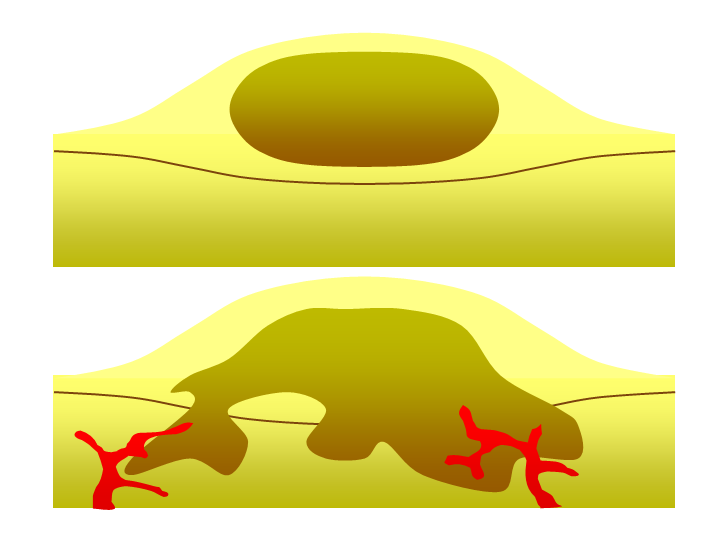
Benign lesions typically show a set of biological features that distinguish them from malignant ones. These include slower growth, well‑defined borders or an encapsulated appearance, and cells that resemble their tissue of origin (good differentiation). A defining clinical point is that benign tumours generally do not metastasize to distant sites, though they may enlarge locally.
- Slow growth and limited invasion
- Often encapsulated or circumscribed
- Histological differentiation similar to normal tissue
- Low likelihood of distant spread
Diagnosis and management
Determining whether a lesion is benign relies on imaging, clinical examination and tissue sampling. Radiology and biopsy help assess size, margins and cellular features. Treatment ranges from observation for small, asymptomatic growths to surgical removal when the lesion causes symptoms, risks organ function, or cosmetic concerns. Follow‑up is common because some benign lesions can recur.
Examples and clinical importance
Common benign tumours include lipomas (fatty lumps), adenomas of glandular organs, uterine leiomyomas (fibroids) and meningiomas of the brain. Even without malignant behavior, a benign mass can be dangerous if its size or location impairs vital structures or if it produces hormones. For instance, a benign brain tumour may compress tissue and cause neurological deficits, or a hormone‑secreting adenoma may disrupt metabolism.
History, usage and etymology
The term derives from Latin roots meaning "well born" or "kind." Its medical use emphasizes biological behavior rather than moral or social connotations. In pathology the label focuses on observed features and prognosis rather than implying absolute harmlessness.
Distinctions and notable caveats
Important distinctions include the concept of premalignant lesions, which carry a risk of transforming to cancer over time. Some lesions are described as premalignant or dysplastic and require closer surveillance. The benign label also does not guarantee absence of harm: clinicians weigh factors such as location, growth rate and symptoms. For further reading on tumor biology and clinical criteria consult resources that cover biological behavior and staging in detail, including discussions of how a lesion interacts with biological systems or spreads to other parts of the body.
Related articles
Author
AlegsaOnline.com Benign: meaning, medical use, characteristics and distinctions Leandro Alegsa
URL: https://en.alegsaonline.com/art/10531