
Bambi, A Life in the Woods
Felix Salten's 1923 novel about a young roe deer, its growth in the forest, and the human and natural forces that shape life in the wild; later adapted and widely reinterpreted.
Overview
Bambi, A Life in the Woods is a 1923 novel by Austrian writer Felix Salten. The book follows the life of a young roe deer as he learns to survive in a European forest: growing from fawn to stag, forming relationships, and confronting predators and human hunters. The original German title, Bambi: Eine Lebensgeschichte aus dem Walde, emphasizes the book's frame as a life history rather than a fairy tale.
Image gallery
5 Images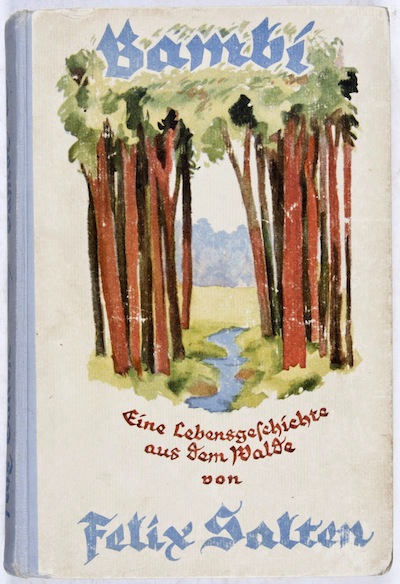


Portrayal and structure
The narrative blends naturalistic observation with elements of animal viewpoint. Animals are depicted with personalities and social bonds, but their behaviour and environment retain realistic detail. Humans are presented as an outside, often unnamed force whose presence changes the rhythms of the forest. The story is episodic, tracing seasons, dangers and rites of passage.
Themes and style
Major themes include coming of age, mortality, the impact of humans on nature, and the balance between instinct and learning. Salten's tone ranges from lyrical description of seasons to frank accounts of predation and hunting. The book invites readers to consider both the beauty and harshness of wild life.
Publication, translations and reception
First published in German in 1923, the novel reached wider audiences through an English translation in the late 1920s and subsequent editions in many languages. Critics and readers have praised its atmosphere and its sympathetic but unsentimental portrayal of animals, while some responses have focused on its uneasy depiction of hunting and human influence.
Adaptations and notable differences
The story became best known internationally after a major animated film adaptation in 1942, which altered characters, tone and certain plot elements to suit a family audience. Key distinctions often noted include:
- Different depiction of the deer species and appearance in film versus the book.
- Simplified relationships and added comic animal characters in the adaptation.
- Tonal shifts: the book's more naturalistic and sometimes stark passages versus the film's emphasis on sentiment and spectacle.
Legacy and significance
Bambi remains an influential work in literature about animals and nature. It has shaped public perceptions of wildlife, contributed to debates about hunting and conservation, and inspired numerous retellings and analyses. As both a coming-of-age tale and a meditation on the human effect on wild places, it continues to be read and re-evaluated across generations.
Related articles
Author
AlegsaOnline.com Bambi, A Life in the Woods Leandro Alegsa
URL: https://en.alegsaonline.com/art/8635