
Ryo Kawasaki: Japanese jazz-fusion guitarist, composer and innovator
Japanese jazz-fusion guitarist, composer and programmer noted for early fusion work, guitar-synth development, an early all-digital live recording, and later activity in New York and Estonia.

Ryo Kawasaki (川崎 燎, February 25, 1947 – April 13, 2020) was a Japanese guitarist, composer, bandleader and software programmer whose work spanned jazz, fusion and electronic music. Born in Tokyo, Kawasaki became known for blending jazz improvisation with electric instruments and synthesis, helping to shape what is commonly called jazz fusion. His career included live performance, studio recording, instrument development and music software for early home computers.
Image gallery
3 Images
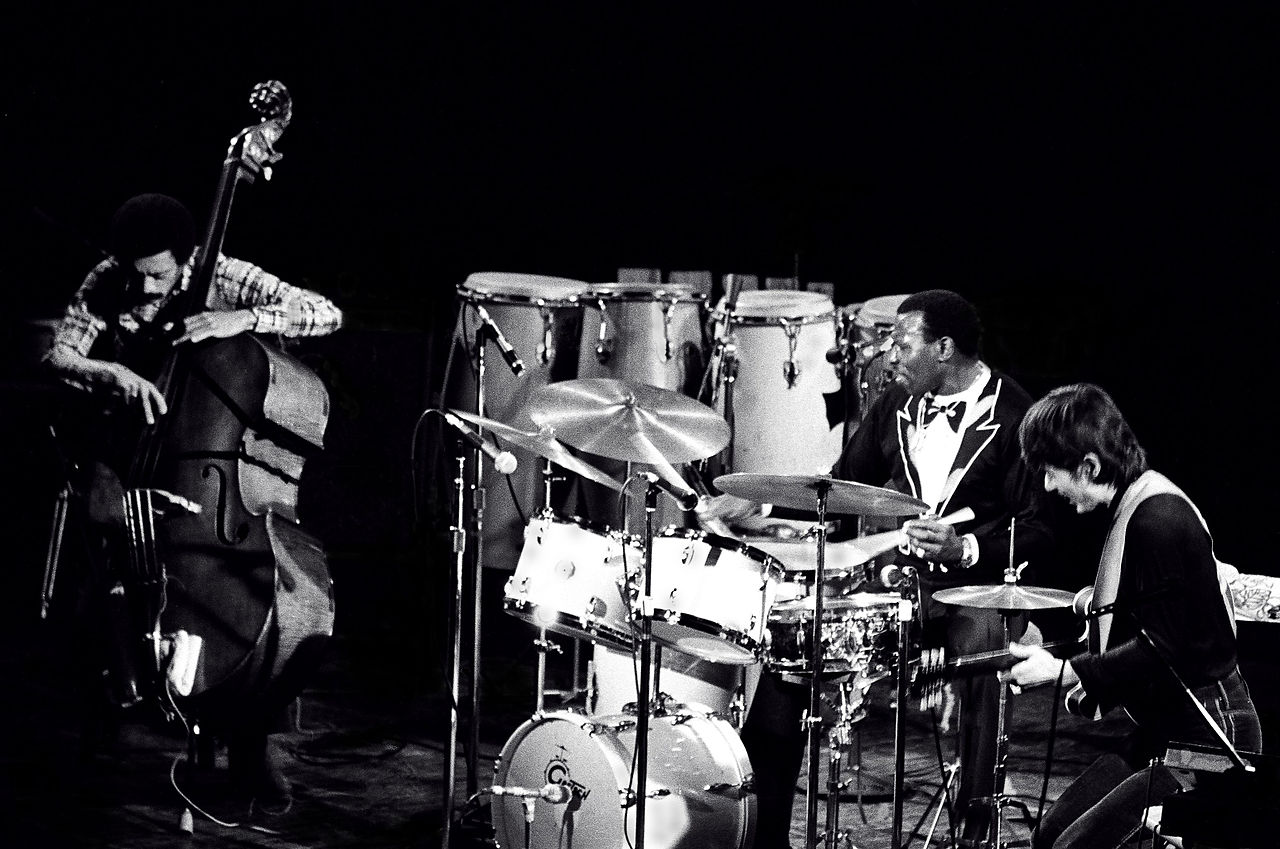

Musical characteristics and technical contributions
Kawasaki's playing combined the vocabulary of post-bop jazz with rock and electronic textures. He was among the early adopters of guitar synthesizers, exploring expanded timbres and parallel electronic processing that allowed the guitar to occupy both melodic and pad-like roles in ensembles. Kawasaki also embraced digital recording techniques: his album Ryo Kawasaki and the Golden Dragon Live is cited as one of the earlier all-digital live recordings. In addition, he developed a software instrument known as the Kawasaki Synthesizer for the Commodore 64, bridging his musical and programming interests.
Career development and chronology
During the 1960s Kawasaki performed widely with jazz groups in Japan and led his own bands. In the early 1970s he relocated to New York City, where he worked in the vibrant jazz scene and collaborated with well-known musicians. This period expanded his exposure to orchestration, electric fusion formats and experimental studio work. Kawasaki also experimented with electronic dance music and produced techno-influenced singles while running an independent label called Satellites Records.
Collaborations, recordings and projects
Throughout his career Kawasaki performed and recorded with a range of respected jazz artists. Notable collaborations included work alongside arrangers and players such as Elvin Jones and Chico Hamilton, among others. His recordings from the 1970s onward document a mix of acoustic jazz, electric fusion and electronic-oriented pieces; he also returned to a jazz-fusion focus in the 1990s after exploring dance and techno styles.
Later life and legacy
In later decades Kawasaki split his time between performance, composition and software projects. He maintained an international presence and spent a significant part of his later career in Estonia, where he lived and worked until his death in Tallinn on April 13, 2020. His legacy is felt in both instrumental technique and the crossover between musical performance and electronic innovation.
Notable facts and distinctions
- Early pioneer in the fusion movement, integrating jazz improvisation with electric instruments and synthesis.
- One of the first musicians to explore guitar-controlled synthesis and live electronic textures.
- Creator of a music program for the Commodore 64, illustrating an uncommon combination of performing and programming skills.
- Produced an early all-digital live recording, signaling an interest in new recording technologies.
Ryo Kawasaki's work occupies a distinct place where jazz tradition met technological experimentation, and his recordings and software contributions remain points of reference for musicians interested in the intersection of guitar technique and electronic sound design.
Related articles
Author
AlegsaOnline.com Ryo Kawasaki: Japanese jazz-fusion guitarist, composer and innovator Leandro Alegsa
URL: https://en.alegsaonline.com/art/84964
Sources
- kultuur.err.ee : Suri Ryo Kawasaki