
Elvin Jones (1927–2004) — American Jazz Drummer
Elvin Jones was a pioneering post‑bop jazz drummer whose polyrhythmic, propulsive style helped redefine the role of drums in modern jazz. Best known for his work with John Coltrane and his own ensembles.
Elvin Ray Jones (September 9, 1927 – May 18, 2004) was an American jazz drummer whose energetic, layered approach became a defining voice of the post‑bop era. Born in Pontiac, Michigan, he rose to international prominence as the drummer in the classic John Coltrane quartet from 1960 to 1966. He came from a musical family and recorded with his brothers, Hank and Thad Jones, among many others.
Image gallery
4 Images


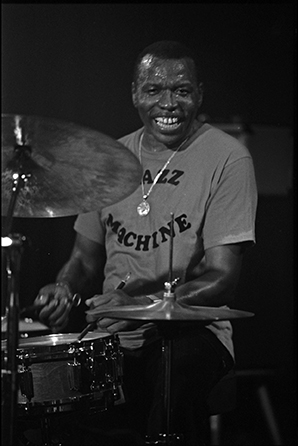
Style and technique
Jones is widely admired for a distinctive combination of power and elasticity. Rather than keeping a metronomic backbeat, he favored layered polyrhythms and continuous, rolling figures that created forward momentum while leaving space for soloists. His approach emphasized:
- polyrhythmic textures that layered multiple rhythmic patterns simultaneously;
- a flowing triplet-based pulse and extensive use of the ride cymbal to shape time;
- dynamic press rolls and tuned-sounding tom work that could function melodically;
- an interactive, conversational role within an ensemble rather than strictly timekeeping.
These qualities made his playing both propulsive and flexible, supporting extended improvisation and shifting group dynamics.
Career and collaborations
After establishing himself in regional bands, Jones's international reputation grew during his tenure with Coltrane, when he contributed to several landmark recordings and live performances that expanded jazz's rhythmic vocabulary. Following that period he led his own groups, most notably the Elvin Jones Jazz Machine, and continued to record and tour as both leader and sideman. Across a long career he worked with many of the era's leading musicians, and he often reunited in studio and performance settings with family members and former colleagues.
Jones's records with Coltrane include contributions to enduring works from the early to mid‑1960s; these sessions are frequently cited in discussions of rhythm, collective improvisation, and the evolution of modern jazz.
Legacy and honors
Elvin Jones influenced generations of drummers in jazz and beyond, inspiring players who sought greater rhythmic freedom and expressive range from the drum kit. His innovations helped shift the drummer's role from timekeeper to an equal, interactive voice in small ensembles. Among formal recognitions, he was inducted into the Modern Drummer Hall of Fame in 1995.
Today Jones is remembered as a transformative figure whose technical command, inventive rhythms, and musical sensitivity left a lasting imprint on jazz technique and ensemble practice. His recordings remain reference points for students and practitioners looking to explore advanced polyrhythmic concepts and expressive drumset playing.
Author
AlegsaOnline.com Elvin Jones (1927–2004) — American Jazz Drummer Leandro Alegsa
URL: https://en.alegsaonline.com/art/137999