
Rose Quartz — Pink Variety of Quartz: Characteristics, Occurrence, Uses
Rose quartz is a pink to rose-red variety of quartz valued for jewelry and ornamentation. This article summarizes its appearance, geology, historical use, treatments, and how it differs from similar stones.
Overview
Rose quartz is the pink-colored form of the mineral quartz, a common crystalline form of silicon dioxide (SiO2). Its color ranges from very pale pink to a deep rose hue and may appear translucent to nearly opaque. Unlike many gem-quality minerals, rose quartz most often occurs in massive, granular aggregates rather than as distinct, well-formed crystals.
Image gallery
5 Images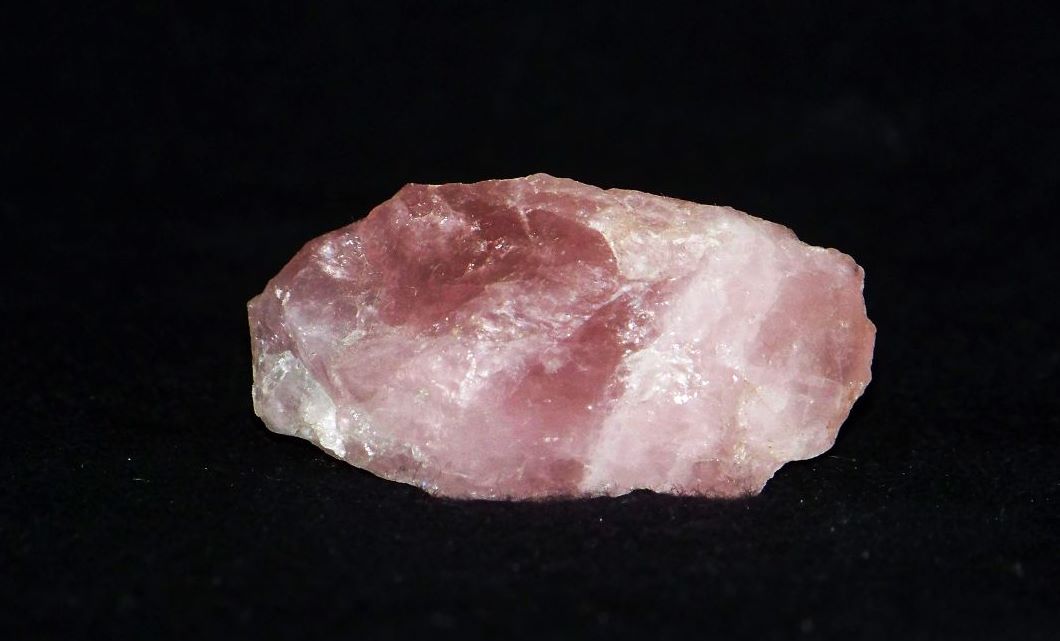


Physical characteristics
The distinctive color of rose quartz is usually attributed to microscopic inclusions or structural defects within the silica lattice rather than to a single trace element. It commonly shows a glassy luster on broken surfaces and has the same hardness as other quartz varieties, making it relatively durable for use in jewelry and carving. Some specimens display asterism or a soft, milky sheen due to aligned fibrous inclusions.
Occurrence and formation
Rose quartz forms in pegmatites and hydrothermal veins where silica-rich fluids crystallize at moderate temperatures. Large masses of rose quartz are found in varied geological settings worldwide. Its geological context is the broader mineral class of silicates and it is chemically part of the quartz family.
Uses and cultural significance
Historically and today, rose quartz is used mainly as a semiprecious gem and ornamental stone. It is fashioned into cabochons, beads, carved objects, and polished spheres. Transparent to nearly transparent pieces can be faceted to enhance light return, though most material is carved or tumbled. Besides practical uses, rose quartz has a long role in jewelry and decorative arts and appears in modern popular culture and metaphysical contexts.
Identification, treatments, and distinctions
When assessing rose quartz for gem use, lapidaries consider color, clarity, and the presence of fibrous inclusions that can affect appearance. Treatments such as heat or irradiation can modify color in some quartz varieties; however, most rose quartz in commerce is sold untreated. It should be distinguished from similarly colored minerals and glass imitations; gemological testing and provenance help confirm identity. For general information on gem grading and terminology see resources on gemstones.
Notable facts
- Rose quartz is more commonly found in massive form than as distinct prismatic crystals.
- Its color origin is complex and can involve trace elements, microscopic inclusions, or structural defects.
- Because of its relative abundance and attractiveness, rose quartz occupies a prominent place among semiprecious stones used in both jewelry and ornamental carving.
Understanding rose quartz involves both its geological setting and its cultural uses: a widespread mineral that has served decorative, practical, and symbolic roles across many societies. For further reading or technical details, consult mineralogical and gemological references or specialized databases via the links above.
Questions and answers
Q: What is rose quartz?
A: Rose quartz is a type of quartz that has a translucent pink to rose-red appearance.
Q: How does rose quartz usually form?
A: Rose quartz is more commonly found in massive form rather than as crystals.
Q: Is rose quartz considered a precious or semi-precious stone?
A: Rose quartz is considered a semi-precious stone.
Q: Can rose quartz be used in jewelry making?
A: Yes, rose quartz is often used in jewelry making.
Q: Are all rose quartz stones translucent?
A: No, only some rose quartz stones are nearly transparent.
Q: What are facets?
A: Facets are flat surfaces cut into a gemstone to better reflect light.
Q: Are nearly transparent rose quartz stones cut into facets?
A: Yes, nearly transparent rose quartz stones are sometimes cut into facets to better reflect light.
Related articles
Author
AlegsaOnline.com Rose Quartz — Pink Variety of Quartz: Characteristics, Occurrence, Uses Leandro Alegsa
URL: https://en.alegsaonline.com/art/84149