
Rodrigo — Last Visigothic King (legend and history)
Rodrigo was a Visigothic ruler in early 8th-century Iberia. Historical records are sparse; he is best known as the legendary 'last king of the Goths' and as a casualty of the Muslim invasion that transformed the peninsula.
Overview
Rodrigo (also rendered in medieval sources as Ruderic, Roderic, Roderik, Roderich or Roderick) is a shadowy figure who appears at the end of the Visigothic period in the Iberian Peninsula. He is traditionally dated to a brief reign around 710–712 and is commonly described in later writings as the final king of the Visigothic realm. Modern historians treat him with caution: the documentary record is limited and often contradictory, and his reputation has been shaped as much by later legend as by near-contemporary reports. For name variants in medieval sources see name forms.
Image gallery
5 Images


Sources and historical uncertainty
Our knowledge about Rodrigo rests on a handful of early chronicles and on later Arabic and Christian narratives. A near-contemporary Latin chronicle written by Christian authors preserved some details, while later Muslim and Christian writers provide fuller but sometimes conflicting accounts. Because references are few and terse, scholars emphasize uncertainty about the scope of his authority, the length of his rule, and the exact circumstances of his death. Many popular or literary accounts that portray Rodrigo as a single decisive villain or hero draw on traditions that developed centuries after the events.
Political context and contested rule
The late Visigothic kingdom was politically fragmented. By the time Rodrigo appears in the sources, rival elites and regional magnates had created competing claims to power. Contemporary testimony implies that Rodrigo controlled part of the peninsula while other claimants held sway elsewhere, reflecting a kingdom weakened by dynastic strife and local autonomy. These divisions limited the central government’s ability to resist external pressure and complicate attempts to reconstruct a clear narrative of succession and governance. Scholars sometimes summarize this as a period of contested kingship within the Visigothic polity.
Invasion and battle
Early eighth-century chronicles record that forces crossing from North Africa engaged Visigothic armies in battle and that Rodrigo was routed and killed in the fighting. Medieval sources generally associate his defeat with an engagement often called the Battle of Guadalete, but the exact date and location remain debated; contemporary reports place events in the first years of the 710s. The invading troops were part of a wider movement from across the Strait of Gibraltar whose success led to rapid territorial gains and the establishment of Muslim rule on large parts of the peninsula—an episode commonly summarized as the Muslim conquest of Iberia (conquest).
Aftermath, family, and legacy
The immediate aftermath of Rodrigo’s death saw an accelerated collapse of centralized Visigothic authority and the consolidation of new political arrangements under Umayyad governors. Some medieval accounts record personal details: Rodrigo’s widow, often named Egilona in the sources, is said to have entered into a relationship or marriage with an Umayyad governor, a union that later chroniclers link to further palace intrigue; that governor was subsequently assassinated. The historicity of each biographical detail is debated, but the general outline—defeat of a Visigothic ruler and the emergence of Muslim governance in parts of Iberia—is widely accepted.
Notable facts and cultural memory
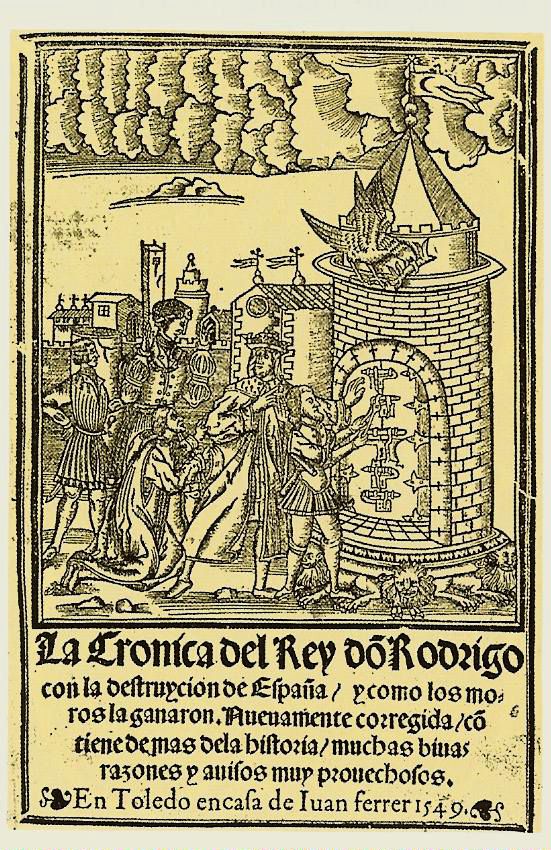
Rodrigo’s standing as the "last king of the Goths" belongs more to literary and nationalist memory than to securely documented political reality. Over the Middle Ages and into modern historiography he became a symbol used in different ways: as a scapegoat in tales of moral failings that led to defeat, as a tragic figure whose fall marked the end of an era, and as a touchstone in discussions of continuity between Visigothic and later medieval Spanish institutions. Key points to bear in mind:
- The historical record is sparse and sometimes contradictory, so many details remain conjectural.
- Rodrigo likely ruled briefly and not over the entire former Visigothic kingdom.
- His death during the early Muslim incursions helped shape the narrative of a dramatic political transformation of the peninsula.
For readers seeking primary accounts and scholarly discussion, consult modern histories and editions of the early chronicles; summaries and translations are available in specialized works dealing with the end of the Visigothic era and the beginnings of Al-Andalus (name forms, Visigothic, Iberia, conquest).
Related articles
Author
AlegsaOnline.com Rodrigo — Last Visigothic King (legend and history) Leandro Alegsa
URL: https://en.alegsaonline.com/art/83665