
Roger Bannister: first sub-four-minute miler, physician and educator
English middle-distance runner Roger Bannister was the first to run the mile under four minutes; he went on to a career in neurology and academic leadership and remained a symbol of breaking perceived limits.
Roger Gilbert Bannister combined elite sport, medicine and academic life in a career that left a lasting mark on athletics and public imagination. An English athlete and trained physician, he achieved his most famous feat in 1954 when he became the first person to run the mile in under four minutes. This single performance shifted beliefs about human performance and inspired a generation of runners and scientists to re-evaluate physiological and psychological barriers.
Image gallery
9 Images
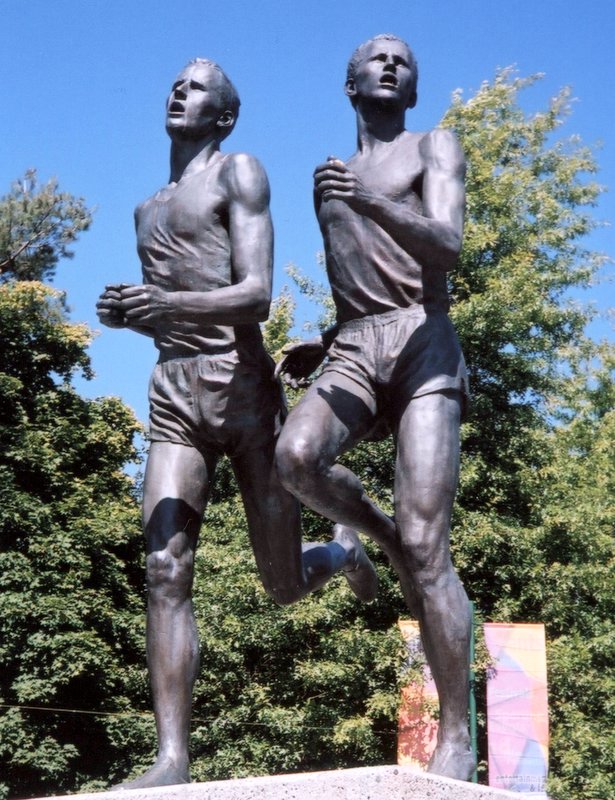


Early life and athletic development
Bannister was born in Harrow, in Middlesex, and balanced study with intense training as a young man. While training as a medical student he developed a disciplined approach that combined interval work, attention to pacing, and strategic use of pacemakers in races. He competed at national and international meets, becoming known for his efficient running style and tactical sense.
The four-minute mile
On a spring day in 1954 at the Iffley Road track in Oxford, Bannister completed the mile in a time officially recorded below four minutes, a barrier previously believed by many to be impossible for humans to breach. His run relied on steady pacing from teammates, careful race planning and a strong finishing kick. News of the accomplishment spread quickly and Bannister was celebrated worldwide; he was named the first recipient of Sports Illustrated "Sportsman of the Year" the following year.
Medical and academic career
After his athletic peak Bannister pursued medicine full time and became a respected neurologist. He combined clinical practice, research and teaching, and later served in academic leadership as Master of Pembroke College, Oxford. He formally retired from active institutional roles but continued to be involved in medical and public discussions about sport and health.
Legacy, honors and later years
Bannister’s achievement demonstrated how perceived limits can be overcome and had an enduring influence on sports science, coaching and the psychology of performance. He received multiple honours for his contributions to sport and medicine and remained a public figure who commented on athletics policy and research. In later life he was diagnosed with Parkinson's disease and he died in Oxford, England, at the age of 88. His life is often cited as an example of excellence across different fields and of how athletic achievement can coexist with professional distinction.
Notable facts and context
- Breaking the four-minute mile changed training methods and spurred worldwide interest in middle-distance running.
- Bannister’s run was paced by teammates, illustrating the tactical teamwork sometimes involved even in individual events.
- His dual career as a physician and athlete made him a prominent advocate for the role of science in sport.
- Subsequent runners have since broken the four-minute barrier, showing how psychological limits can be as important as physical ones.
Bannister remains a symbol of crossing a widely held barrier and of a life that merged competitive sport with contributions to medicine and education. For further reading, contemporary accounts and archival material can be consulted through institutional and sports history resources, and biographical summaries are available from major sports and academic organizations.
athlete | physician | mile | Harrow | Middlesex | Sports Illustrated | neurologist | Pembroke College, Oxford | retired | Parkinson's disease | Oxford | England
Questions and answers
Q: Who was Sir Roger Bannister?
A: Sir Roger Bannister was an English athlete, physician and educator, who is best known for being the first person to run the mile in less than four minutes.
Q: What did Sir Roger Bannister achieve in 1954?
A: Sir Roger Bannister became the first person to run the mile in less than four minutes in 1954.
Q: Did people think running a mile in less than four minutes was possible before Bannister's achievement?
A: No, many people thought that running a mile in less than four minutes was impossible before Bannister's achievement.
Q: What award did Bannister receive in January 1955?
A: Bannister was the first recipient of Sports Illustrated's "Sportsman of the Year" award in January 1955.
Q: What was Bannister's profession other than athletics?
A: Bannister was a neurologist and Master of Pembroke College, Oxford.
Q: When did Bannister retire?
A: Bannister retired in 2001.
Q: How did Bannister die?
A: Bannister died of Parkinson's disease on 3 March 2018 in Oxford, England at the age of 88.
Related articles
Author
AlegsaOnline.com Roger Bannister: first sub-four-minute miler, physician and educator Leandro Alegsa
URL: https://en.alegsaonline.com/art/83686
Sources
- history.com : "Bannister's 4-minute mile"
- bbc.co.uk : Roger Bannister reveals Parkinson's
- bbc.co.uk : "Obituary: Roger Bannister"
- nytimes.com : "A Sports White Paper for Clinton,"
- ultimatequote.co.uk : "Determination"
- books.google.com : Born to Run, p. 13