
Rocketdyne F-1 rocket engine
The Rocketdyne F-1 was the powerful single-chamber liquid-fueled engine that powered the Saturn V first stage. Developed in the 1950s–60s, it produced roughly 1.5 million lbf thrust and remains historically significant.
The Rocketdyne F-1 was a heavyweight, single-chamber liquid-fueled rocket engine developed in the United States to propel the first stage of the Saturn V. Fueled by RP-1 (kerosene) and liquid oxygen, it generated on the order of 1.5 million pounds-force of sea-level thrust, making it the most powerful single-chamber liquid engine ever flown.
Image gallery
10 Images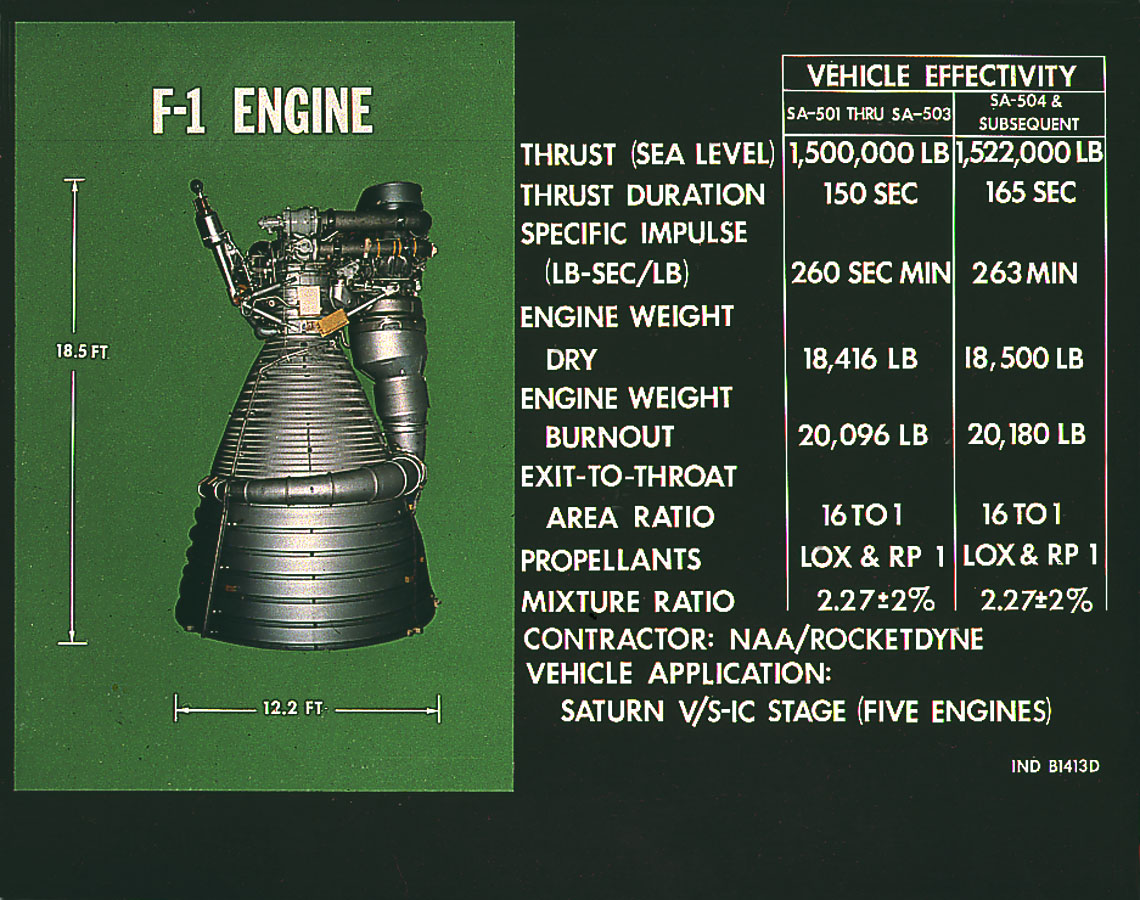



Design and characteristics
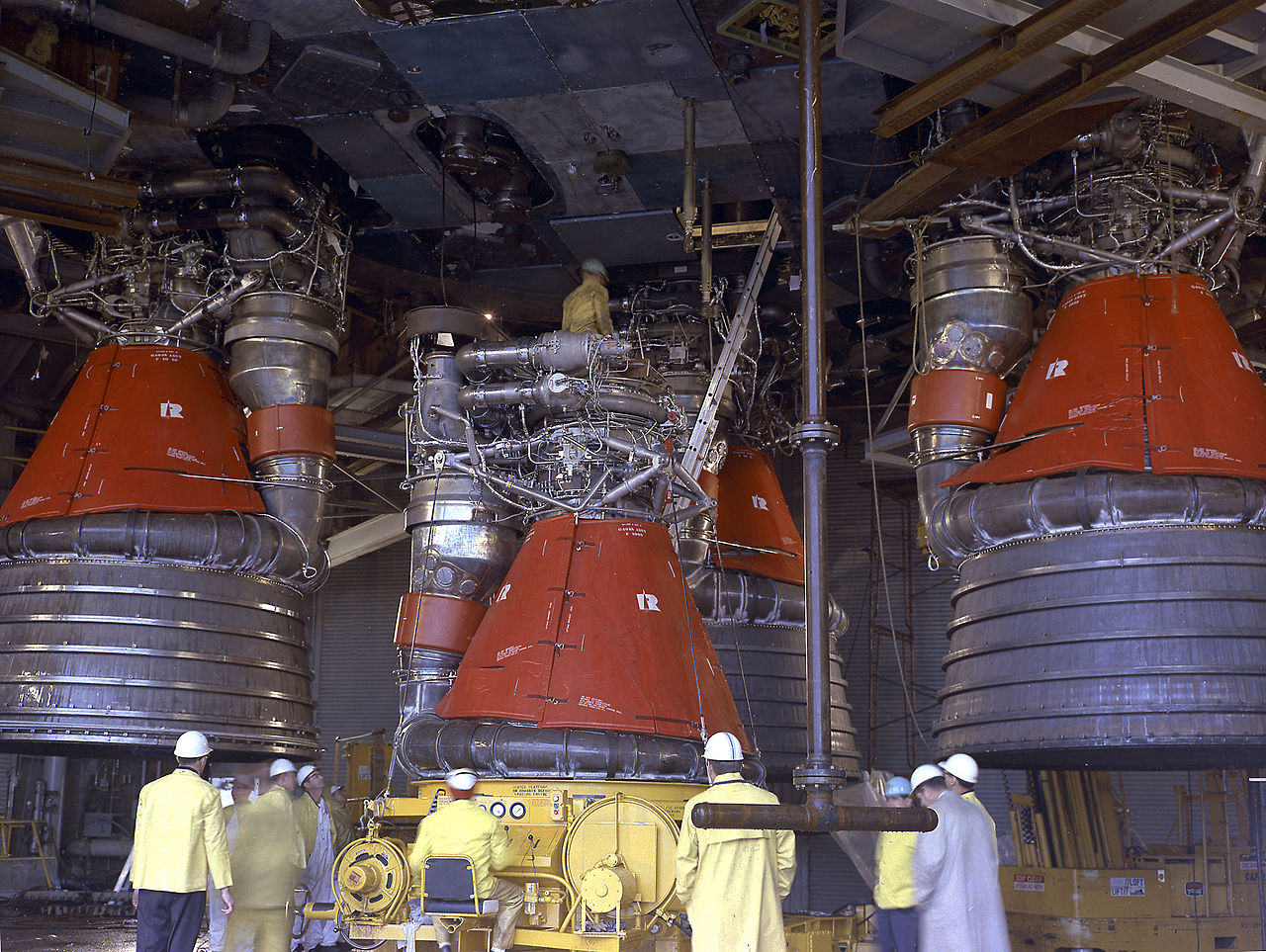
The F-1 used a gas-generator cycle and a large turbopump to feed propellants into its combustion chamber. Its architecture emphasized high thrust density from a single nozzle rather than many smaller chambers. Early development revealed severe combustion-instability issues; engineers mitigated these through injector redesigns and acoustic damping measures. In flight configuration, five F-1 engines were mounted in the Saturn V S-IC first stage to provide liftoff power.
Development and operational history
Work on the F-1 began in the late 1950s and continued through the 1960s as part of the Apollo-era rocket development effort. After extensive static testing and iterative fixes to stability problems, the engine first flew on the unmanned Apollo 4 mission. During the Apollo program the F-1 performed reliably in flight; despite early test troubles it experienced no catastrophic in-flight failures on Saturn V launches.
Uses and legacy
Primarily associated with the Saturn V and the Apollo lunar program—referenced in materials about the Saturn V—the F-1 defined a class of very large kerosene/LOX engines. An uprated variant, the F-1A, was developed and tested but never saw flight. In later decades the F-1 has been studied and occasionally proposed as a model for new heavy-lift boosters or heritage rebuilds; its size and reliable flight record continue to attract attention in aerospace history and engineering circles.
- Propellants: RP-1 and liquid oxygen
- Cycle: Gas-generator
- Notable: Largest single-chamber liquid engine flown
The Rocketdyne F-1 remains a milestone in rocket propulsion: a combination of raw power, intensive engineering to overcome instability, and a service record that supported humanity's first crewed lunar landings.
Related articles
Author
AlegsaOnline.com Rocketdyne F-1 rocket engine Leandro Alegsa
URL: https://en.alegsaonline.com/art/83563