
Baia de Criș — commune in Hunedoara County, Romania
Baia de Criș is a rural commune in Hunedoara County, Transylvania, composed of nine villages. It has a history tied to mining and Romanian national memory, notably the village of Țebea.
Baia de Criș (Hungarian: Körösbánya) is a commune in Hunedoara County, Romania. Situated in the Transylvanian uplands, the name Baia de Criș indicates an origin as a mining settlement beside the Criș river. Today it is a largely rural administrative unit that preserves elements of its mining past, traditional architecture and pastoral landscape.

Image gallery
10 Images


Administrative composition
The commune comprises nine villages that vary from small hamlets to the central village of Baia de Criș. The component settlements reflect the area's multiethnic and historical background:
- Baia de Criș
- Baldovin (Báldovin)
- Căraci (Karács)
- Cărăstău (Karasztó)
- Lunca (Lunka)
- Rișca (Riska)
- Rișculița (Riskulica)
- Țebea (Cebe)
- Văleni


Geography and economy
The commune occupies a mix of low hills, forested tracts and cultivated valleys. Historically, local economy centered on metal extraction and processing—hence the element "Baia" (mine) in the name—combined with small-scale farming, livestock and forestry. In recent decades economic activity has shifted toward agriculture, services and rural tourism, while traces of former mines and related heritage remain visible in the landscape. 

History and cultural significance
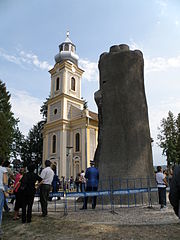
Baia de Criș and its villages have roots in medieval Transylvania. The village of Țebea is particularly important in Romanian modern history: it was the starting point of the peasant uprising led by Horea, Cloșca and Crișan in 1784, and later became associated with Avram Iancu, a 19th-century leader of Romanian national movements; Țebea preserves his death place and burial site, attracting visitors interested in national remembrance. Local churches, memorials and folk traditions reflect this layered past. 



Sights, heritage and contemporary life
Visitors will find rural churches, modest monuments, cemetery sites linked to historical figures and scenic routes for hiking and local exploration. Community festivals, small museums or interpretive panels in some villages present aspects of mining history and peasant life. Conservation and heritage projects have been undertaken occasionally to maintain vernacular houses and the historical memory associated with Țebea. The commune remains an example of Transylvanian rural communities balancing preservation and local development. 


Related articles
Author
AlegsaOnline.com Baia de Criș — commune in Hunedoara County, Romania Leandro Alegsa
URL: https://en.alegsaonline.com/art/8339
Sources
- recensamant.referinte.transindex.ro : Romanian census data, 2002