
Bahá'í World Centre (Haifa, Mount Carmel)
Administrative and spiritual heart of the Bahá'í community, located on Mount Carmel in Haifa. Includes the Shrine of the Báb, terraces, archives, and governing institutions; important for pilgrimage and heritage.
The Bahá'í World Centre is the international administrative and spiritual focal point of the Bahá'í community, located on the slopes of Mount Carmel in the city of Haifa. It is closely associated with the history and development of the Bahá'í Faith and is also connected by community and pilgrimage ties to nearby Acre and other sites.
Image gallery
4 Images


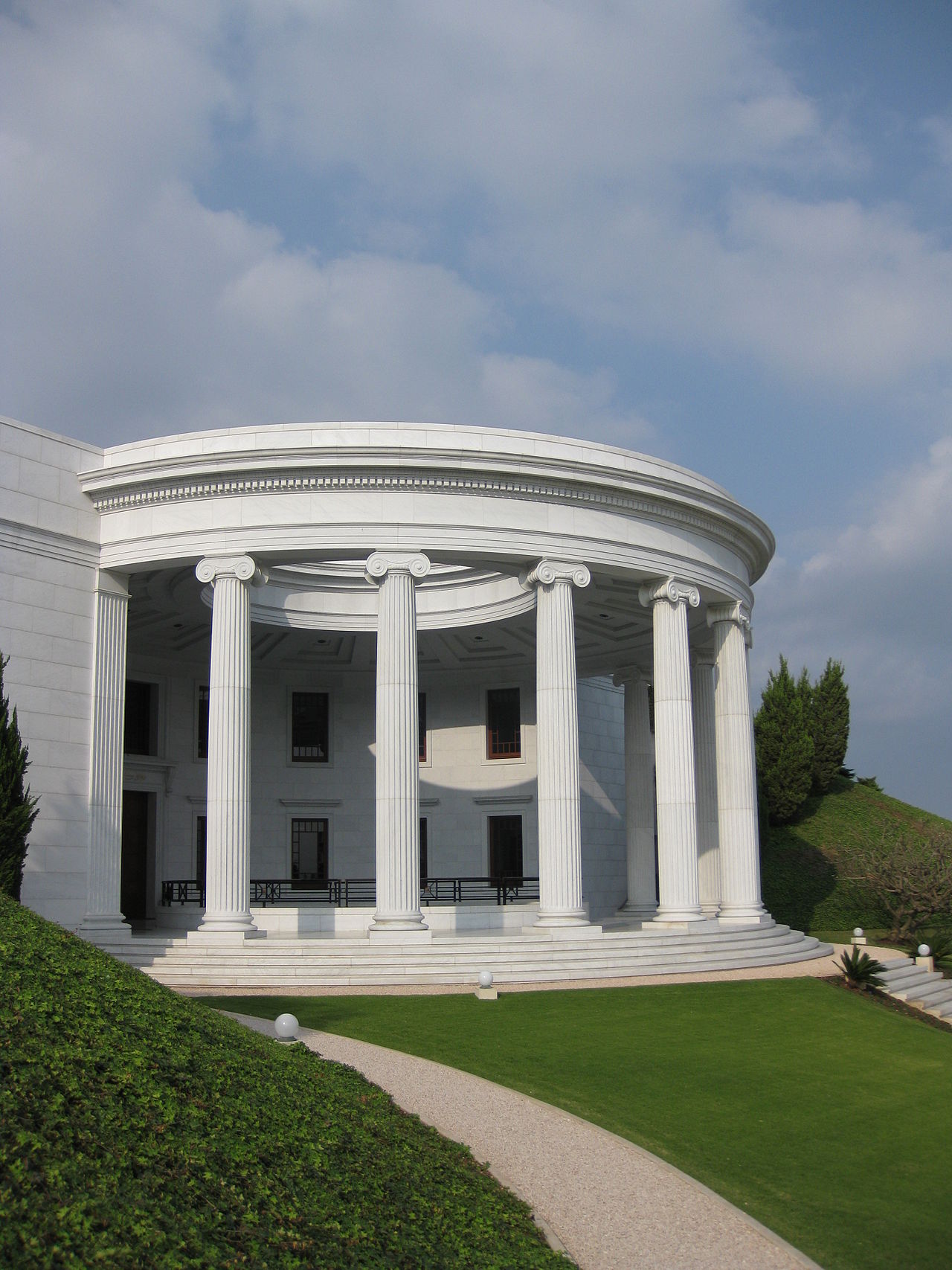
Overview
The campus comprises sacred, administrative and archival properties clustered around terraced gardens that descend a hillside. Its most visible landmark is a gilded-domed shrine that houses the remains of a central figure in the religion. The gardens, paths and buildings together form a distinctive ensemble that serves religious, administrative and cultural roles for Bahá'ís worldwide and for visitors.
Principal components
- Shrine: The mausoleum and its surrounding terraces are an object of pilgrimage and devotional visitation.
- Universal House of Justice: The elected international governing body of the Bahá'í community, headquartered on the site.
- Archives and libraries: Facilities that preserve texts, letters and artifacts central to the faith’s history and scholarship.
- Administrative buildings: Offices and meeting rooms used by international institutions, including offices for teaching and coordination.
- Gardens and terraces: Landscape works that integrate horticulture, design and access, open to the public in many areas.
History and development
The location on Mount Carmel has been significant since the religion’s early years. Over the 20th century the gardens and buildings were developed and expanded as the international community established its institutions. The site has been the focus of careful restoration, landscape design and conservation efforts to preserve both its spiritual role and its architectural and horticultural quality.
Functions and importance
The World Centre serves multiple purposes: it houses the faith’s central administrative bodies, acts as a repository for historical documents and artifacts, and provides a destination for pilgrims and visitors seeking to learn about Bahá'í teachings. Its institutions coordinate worldwide activities, issue guidance, and maintain records that support community life globally.
Visiting and notable facts
Many parts of the grounds are accessible to the public and attract local residents and international tourists alike. The city of Haifa and the State of Israel host a community of Bahá'ís and related sites, and the complex sits on Mount Carmel, a place with long historical resonance. Nearby Acre and other localities retain links to early history and pilgrimage Acre.
The ensemble is widely recognized for its cultural and spiritual significance, and it plays a continuing role in the life of Bahá'ís and in the broader civic and cultural landscape of the region.
Related articles
Author
AlegsaOnline.com Bahá'í World Centre (Haifa, Mount Carmel) Leandro Alegsa
URL: https://en.alegsaonline.com/art/8313