
Bar and Bat Mitzvah: Jewish coming-of-age rites and community roles
Bar and Bat Mitzvah are Jewish coming-of-age milestones marking when a child becomes responsible for Jewish law, tradition, and communal participation; ceremonies and practices vary by movement and culture.
Overview
A Bar Mitzvah (for boys) and a Bat Mitzvah (for girls) are the principal coming-of-age markers in Judaism. They indicate the age at which a young person assumes personal responsibility for observance of Jewish commandments and communal obligations. The terms are commonly used both for the person who has reached this stage and for the ceremony that publicly recognizes the transition. The event functions as a rite of passage into religious adulthood and is widely celebrated across Jewish communities.
Image gallery
10 Images

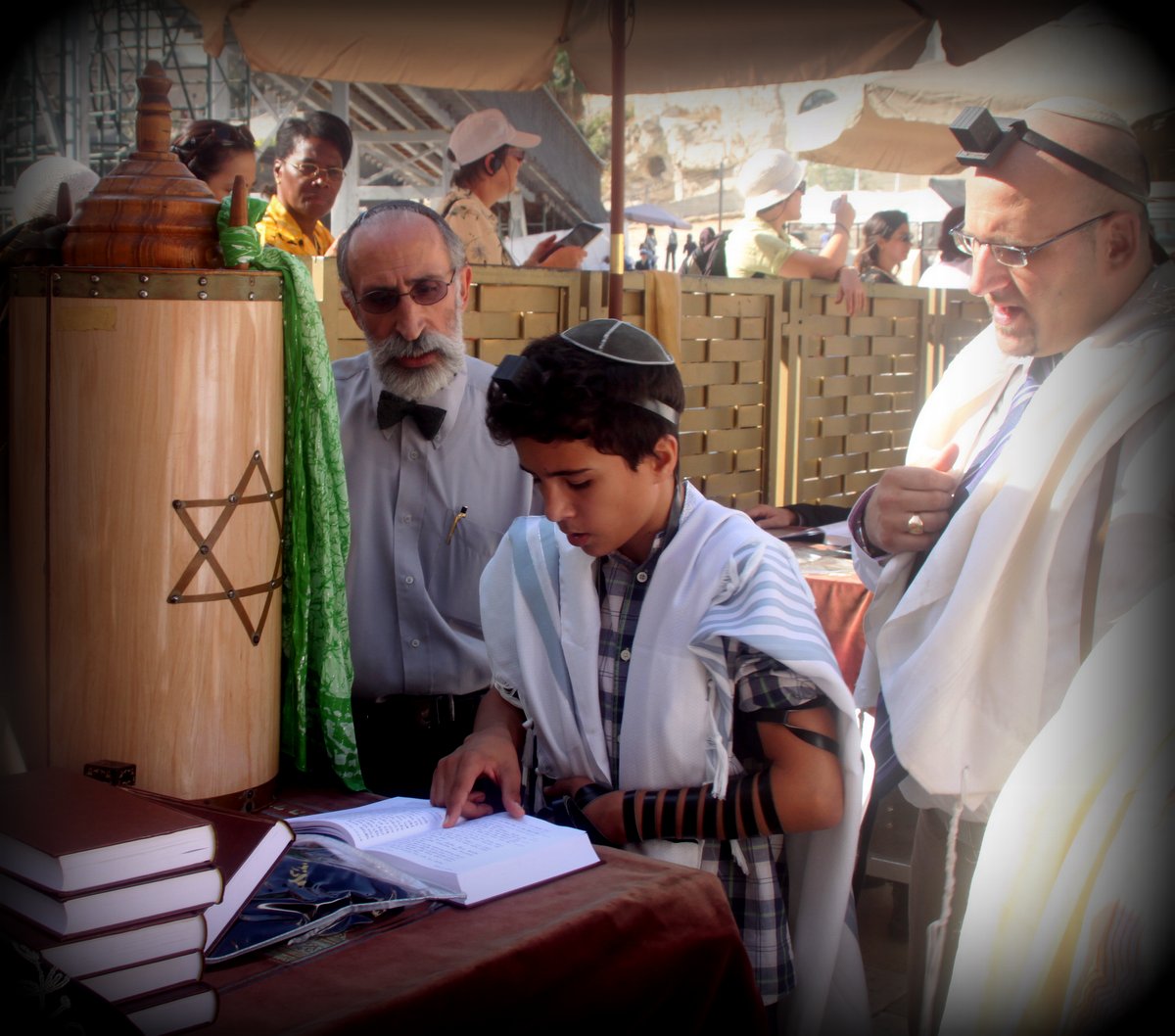


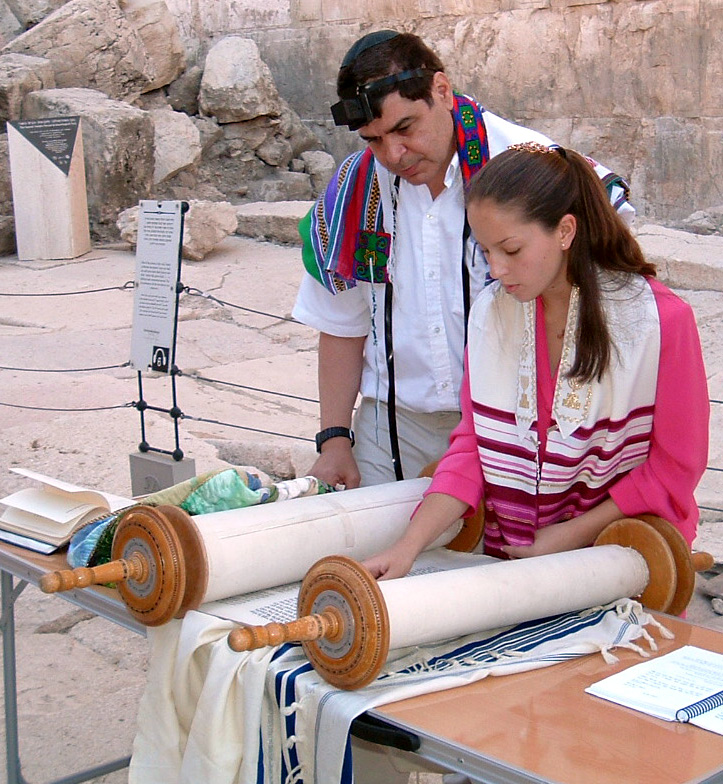
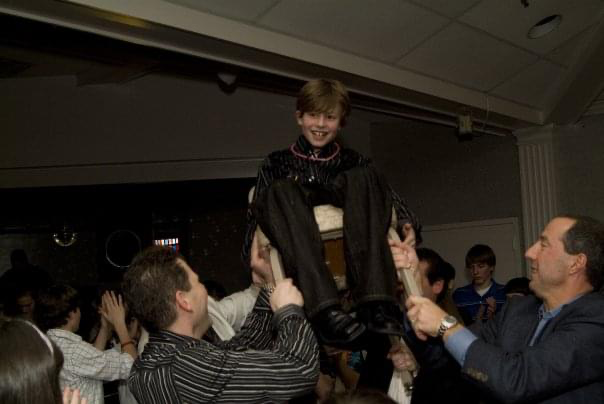
Religious meaning and legal status
Under traditional Jewish law, a child attains the age of majority and becomes accountable for ritual obligations at a defined age: traditionally thirteen for boys and twelve for girls, often summarized as the age of majority. These ages correspond with the customary ages of maturity in classical rabbinic texts and often align with the onset of puberty. At that point, a youth may be called to the Torah, lead certain prayers, and is morally and legally responsible for observance of ritual law and ethical duties.
Terminology and etymology
The phrase Bar Mitzvah derives from Aramaic, literally "son of the commandment." The Aramaic בר מצוה is reflected in the English form; related notes about gendered forms explain the difference in roots: in Aramaic "bar" denotes son while in Hebrew the cognate is "ben". A Bar is therefore "one (m.) to whom the commandments apply"; a Bat is "one (f.) to whom the commandments apply." Historically, those grammatical notes (for example masculine and Hebrew variants) illustrate how language and law intersect in Jewish practice.
Ceremony and common elements
When a young person becomes a Bar or Bat Mitzvah they may be called for an aliyah (a Torah reading honor) in synagogue, deliver a short sermon or teaching (often called a d'var Torah), and participate in ritual prayers. Typical elements include study and preparation with a rabbi or mentor, public reading from the Torah or Haftorah, and sometimes leading parts of the service. In many communities the boy also begins wearing tefillin regularly; practices differ by movement and local custom. Families and communities commonly celebrate with a gathering, reception, or party after the religious portion.
Variations and historical development
Customs and timing vary among Orthodox, Conservative, Reform, and other Jewish movements. The modern Bat Mitzvah—public ceremonies and educational programs for girls comparable to those for boys—became widely established only in the 20th century and is now a normative life-cycle event in most non-Orthodox communities. The plural for celebrations or groups is often rendered as B'nai Mitzvah or B'not Mitzvah depending on the grouping. Larger communities adapt ceremony length, musical accompaniment, and educational emphases to local norms and family preferences.
Significance, roles, and notable distinctions
Beyond the synagogue service, the Bar/Bat Mitzvah marks eligibility for full participation in communal life: voting in synagogue matters, counting toward a minyan in some traditions, and assuming other responsibilities. Differences remain: many Orthodox communities observe the earlier age for girls and maintain gender-distinct ritual roles, while other movements emphasize equal opportunities for religious leadership. The event is both an individual milestone and a communal affirmation of continuity, education, and responsibility within the broader framework of Jewish life. For further reading about ritual context, legal background, and communal variations see entries linked here: boys' age, girls' age, and general resources on Jewish upbringing and practice (Jewish youth, coming of age).
- Typical elements: study, Torah reading, d'var Torah, communal blessing.
- Common variations: public vs. private ceremony, musical accompaniment, timing and age practices.
- Related topics: lifelong study, adult obligations, and lifecycle celebrations.
For introductory explanations or community guidelines consult liturgical and educational materials offered by synagogues and Jewish educational institutions. These outline the practical steps of preparation and the communal expectations associated with becoming a Bar or Bat Mitzvah; many such guides are provided by local rabbis and community educators (synagogue resources, rite descriptions, legal overview).
Further contextual notes: distinctions in naming and grammatical usage reflect historical language layers in Jewish tradition (Aramaic terms, Hebrew forms). The Bar/Bat Mitzvah remains a key intersection of personal growth, religious study, and communal life in contemporary Jewish cultures.
Questions and answers
Q: What is a Bar Mitzvah?
A: A Bar Mitzvah is a Jewish boy who has turned 13 years old and gone through a rite of passage which symbolizes the young person's responsibility for themselves.
Q: What is a Bat Mitzvah?
A: A Bat Mitzvah is a Jewish girl who has turned 12 years old (or 13 in the Orthodox movement) and gone through a rite of passage which symbolizes the young person's responsibility for themselves.
Q: What does "Bar/Bat Mitzvah" mean?
A: Bar/Bat Mitzvah comes from the Aramaic בר מצוה, "one (m./f.) to whom the commandments apply". It literally means "son/daughter of commandment".
Q: When do children become responsible for their actions according to Jewish law?
A: According to Jewish law, when children reach the age of majority (generally thirteen years for boys and twelve for girls), they become responsible for their actions and "become a Bar or Bat Mitzvah". This is also the time when physical puberty normally begins.
Q: At what age are boys considered to be Bar Mitzvahs?
A: Boys are considered to be Bar Mitzvahs at 13 years old.
Q: At what age are girls considered to be Bat Mitzvahs?
A: Girls are considered to be Bat Mitzvahs at 12 years old (or 13 in the Orthodox movement).
Tags
Related articles
Author
AlegsaOnline.com Bar and Bat Mitzvah: Jewish coming-of-age rites and community roles Leandro Alegsa
URL: https://en.alegsaonline.com/art/8828