
Ring‑tailed lemur (Lemur catta): appearance, behaviour, and conservation
Overview of the ring‑tailed lemur (Lemur catta): distinctive appearance, social structure, diet, habitat in Madagascar, reproduction and conservation threats.
Overview: The ring‑tailed lemur (Lemur catta) is a medium‑sized primate endemic to Madagascar and one of the most familiar lemur species. It belongs to the lemur radiation of primates; for taxonomic context see taxonomic resources and for general introductions to lemurs see lemur overviews. Ring‑tailed lemurs are notable for their long, boldly ringed tails, highly social groups and adaptability to relatively dry, seasonal habitats.
Image gallery
10 Images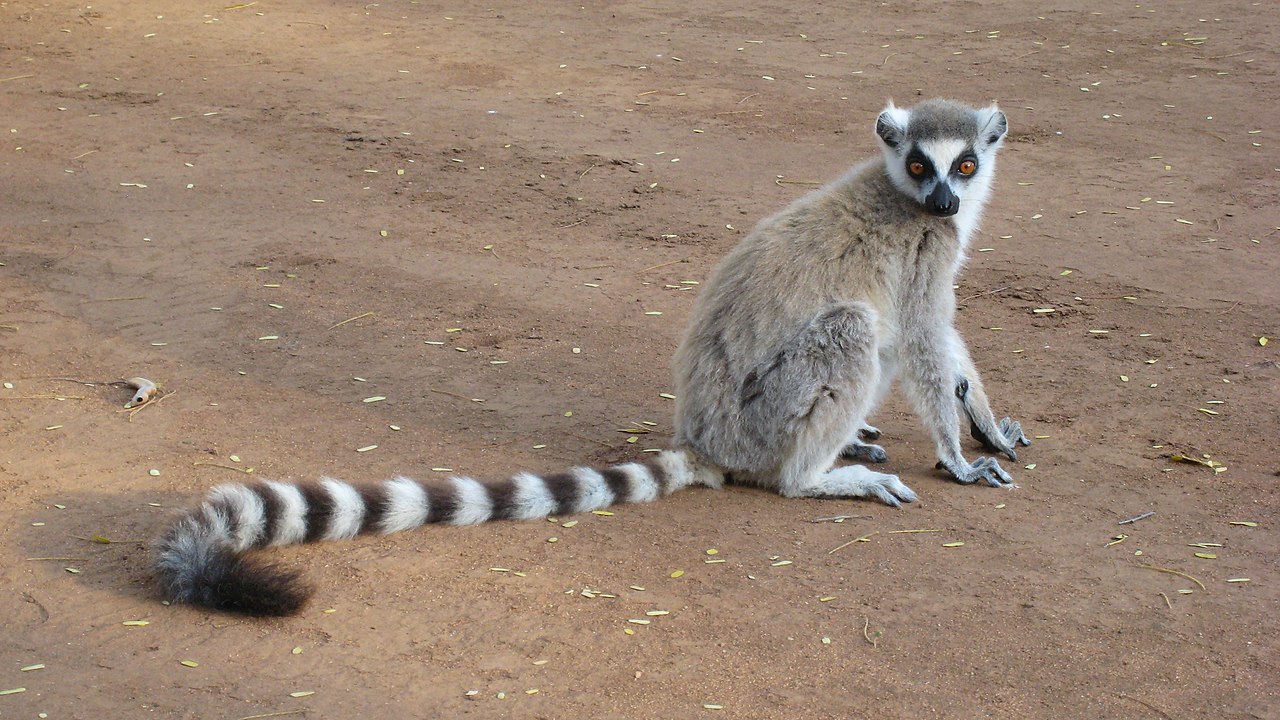



Physical characteristics
Adults typically weigh around 2–3.5 kg and have compact bodies with strong limbs suited to both arboreal and terrestrial locomotion. The tail is long and bushy with alternating black and white rings; it is not prehensile but is used for balance and conspicuous signalling. Fur is generally grey or brown on the back and paler beneath, and the face is white with dark eye patches. Lifespan in the wild commonly reaches into the teens and some captive individuals live around or beyond 20 years.
Habitat and distribution
Ring‑tailed lemurs are restricted to southern and southwestern Madagascar where they occupy a mosaic of dry forests, spiny scrub, gallery forest along rivers and open rocky terrain. They tolerate seasonal variation in rainfall and food availability better than many rainforest lemurs, which helps explain their presence in relatively open habitats. More detail on regional habitats and ecology can be found in field guides and habitat summaries at Madagascar habitat resources.
Social behaviour and communication
These lemurs are highly social and live in multimale–multifemale groups that commonly number around a dozen individuals; group size can vary by local conditions. Social organization is female‑centered: females typically dominate males in access to food and preferred resting sites. Ring‑tailed lemurs are diurnal and spend considerable time on the ground compared with many other lemur species. Communication uses vocalisations, visual displays (including tail‑held flags), and scent marking. Males possess scent glands and may engage in ritualised behaviours sometimes termed "stink fights"; for summaries of behavioural research see behavioural studies.
Diet and foraging
Although often described as frugivorous, ring‑tailed lemurs show flexible feeding habits and consume a mix of fruit, leaves, flowers, sap and other plant parts, supplemented occasionally by insects and small vertebrates. Seasonal changes in resource availability influence group foraging patterns, with groups making use of both trees and ground vegetation. General references on primate diets and feeding ecology are available at dietary references.
Reproduction and lifecycle
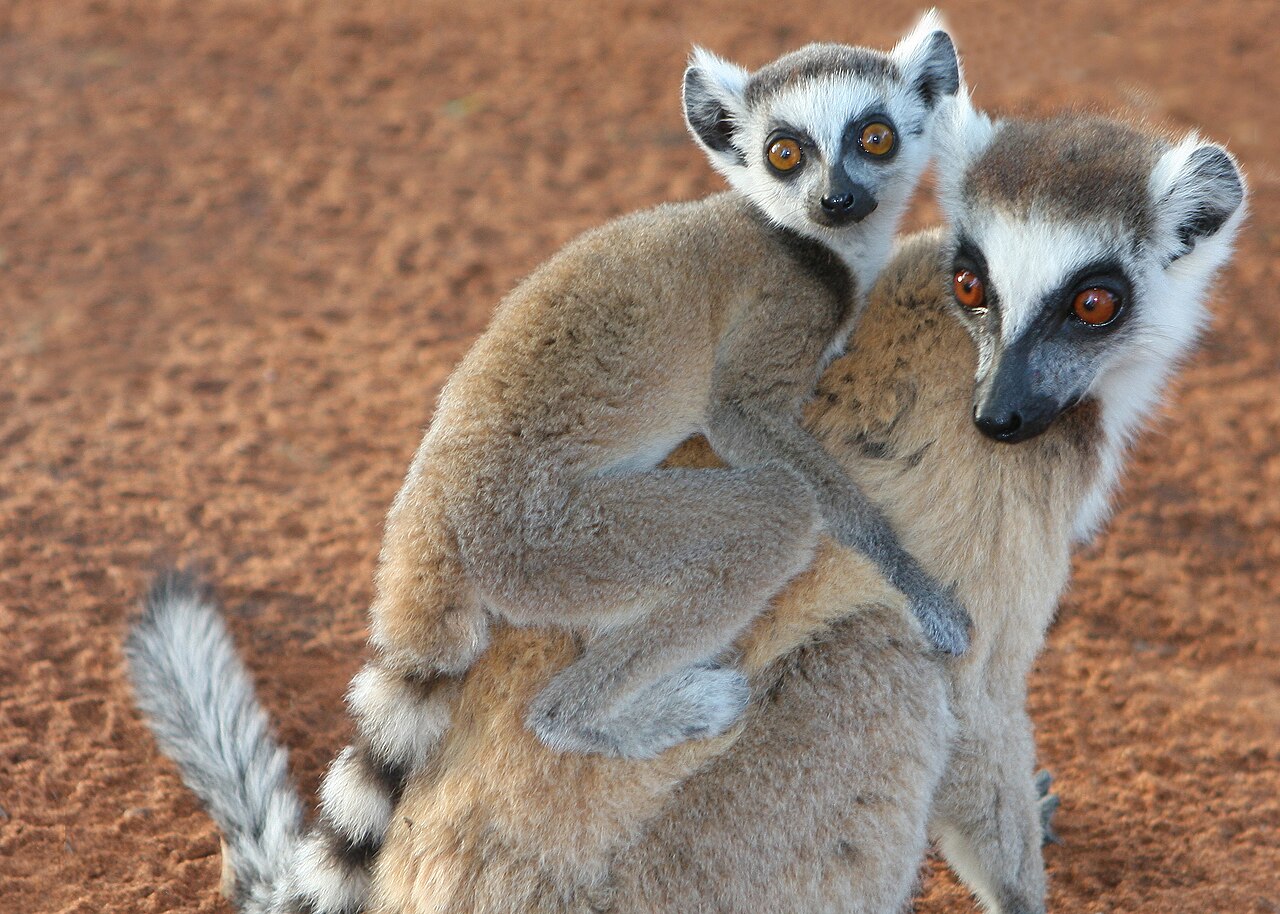
Breeding is seasonal in most populations, timed so that births occur when food availability is higher. Gestation is a few months and typically a single offspring is born, although twins can occur. Mothers provide most of the infant care, with alloparental behaviours sometimes observed in groups. Young become increasingly independent during the first year, and social rank and group membership influence survival and dispersal.
Notable behaviours and adaptations
Ring‑tailed lemurs exhibit a number of distinctive behaviours: they sunbathe in an upright, arms‑out posture to absorb heat, use the tail as a visual signal while moving, and combine arboreal agility with extensive terrestrial travel. Female dominance and cooperative group living are important aspects of their social ecology; further commentary on female roles is summarised at female leadership.
Conservation and threats
Ring‑tailed lemurs face multiple human‑caused threats including habitat loss from shifting agriculture and charcoal production, hunting for food or capture for the pet trade, and fragmentation of remaining forest patches. Conservation organisations highlight the species as vulnerable to ongoing decline in parts of its range; protected areas, local conservation initiatives and captive breeding programmes all contribute to efforts to reduce risk. Fieldworkers and conservationists recommend habitat protection, community engagement and measures to reduce illegal hunting as priorities.
- Key traits: boldly ringed tail, female dominance, diurnal and partly terrestrial behaviour.
- Range: endemic to Madagascar, mainly southern and southwestern regions.
- Diet: largely frugivorous and folivorous with seasonal variation.
- Threats: habitat destruction, hunting and the illegal pet trade.
For practical identification, conservation status updates and further reading see the linked resources above and specialist literature focused on Madagascar's primates. Continued research into behaviour, ecology and population trends helps guide conservation priorities and on‑ground action for this distinctive species.
Author
AlegsaOnline.com Ring‑tailed lemur (Lemur catta): appearance, behaviour, and conservation Leandro Alegsa
URL: https://en.alegsaonline.com/art/82963
Sources
- zoo-hannover.de : Ring-tailed lemur