
Richard Levins: Mathematician-Ecologist, Modeler, and Philosopher of Science
Overview of Richard Levins (1930–2016), his work on population genetics, metapopulations, model building, political engagement, and influence on ecology and public health.
Overview
Richard "Dick" Levins (June 1, 1930 – January 19, 2016) was an American scientist whose career bridged ecology, population genetics, mathematical biology and the philosophy of science. He taught at the Harvard T.H. Chan School of Public Health and combined technical model-building with strong commitments to public health and social justice. For a concise biographical outline see biography.
Image gallery
3 Images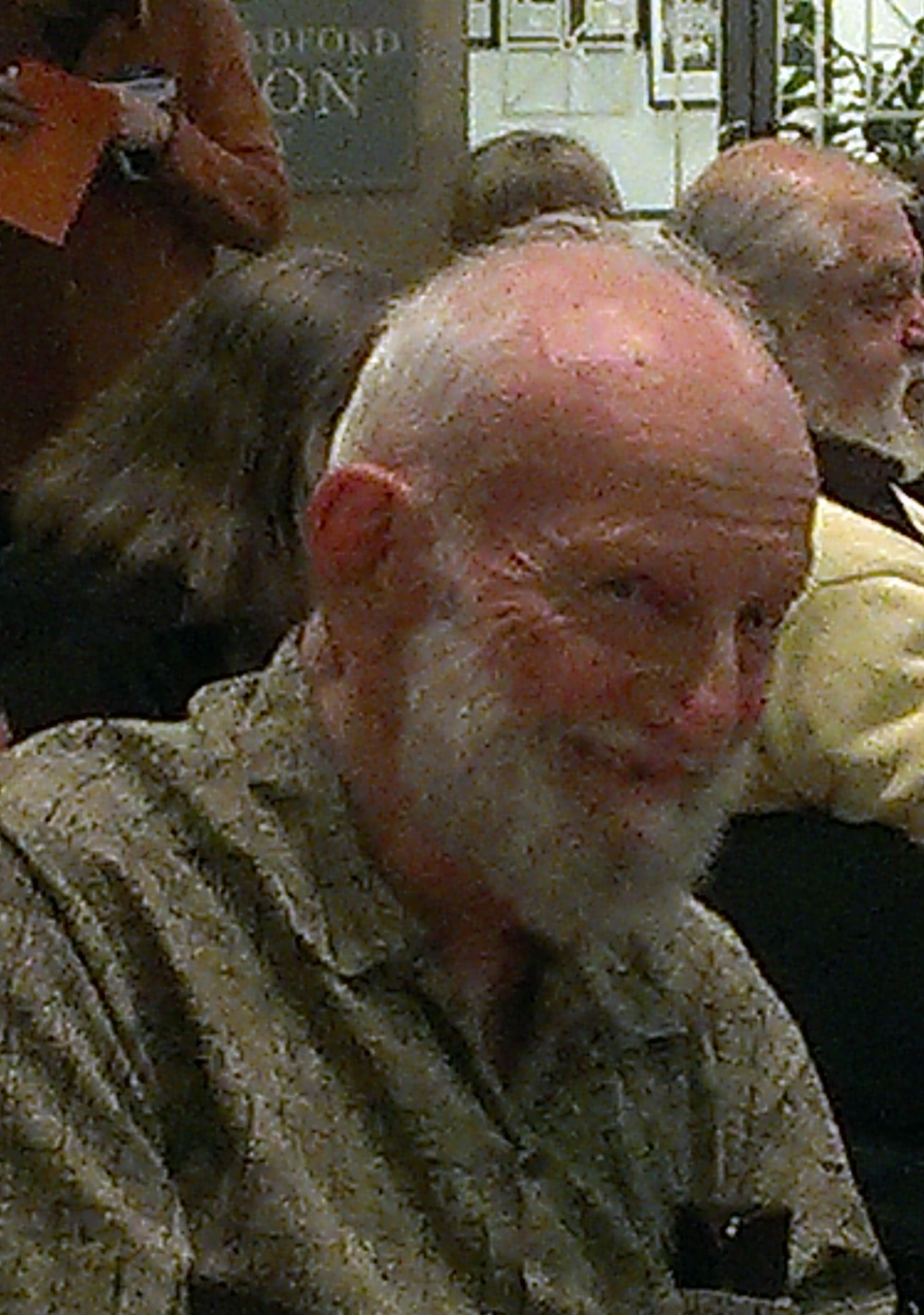

Key contributions and concepts
Levins is widely remembered for formalizing simple, insightful models that clarify how populations behave under changing conditions. His 1966 essay "The Strategy of Model Building in Population Biology" argued that models trade off generality, realism and precision. His 1968 book "Evolution in Changing Environments" explored how genetic and ecological processes operate when conditions fluctuate. He also developed the classic metapopulation model for patchy populations and persistence, often cited in conservation biology and landscape ecology; see treatments of evolution and complexity for context.
Career, collaborations and activism
Levins spent decades at Harvard where he worked on problems in ecology and epidemiology, and he frequently collaborated with biologists concerned with theory and practice. He co-authored work with peers on dialectical approaches to biology that connected scientific theory to societal issues. He was also a long-standing political activist and outspoken about the social responsibilities of scientists; details of his activism are discussed at activism.
Applications and examples
Practical applications of Levins's ideas include metapopulation management in conservation, approaches to understanding pesticide resistance and disease dynamics, and methodological guidance for modelers in public health. His emphasis on pluralism in modeling—using multiple, complementary models to understand a system—remains influential in ecological theory and applied epidemiology.
Legacy and notable facts
Levins combined rigorous mathematical thinking with clear reflections on the limits and purposes of scientific models. He maintained that simple models, when used critically, can illuminate essential processes without pretending to be exact replicas of complex reality. He died in Cambridge, Massachusetts; accounts of his passing note the city and circumstances at the time of death (Cambridge, cause).
Selected works
- The Strategy of Model Building in Population Biology (essay, 1966)
- Evolution in Changing Environments (book, 1968)
- The Dialectical Biologist (with R. Lewontin, 1985)
These writings and his teaching shaped generations of ecologists, population geneticists and public-health modelers, and continue to be cited where simple, robust models are needed to guide both theory and policy.
For overviews and further reading follow general resources listed at complexity resources and biographical summaries at biographical sources or activist profiles.
Related articles
Author
AlegsaOnline.com Richard Levins: Mathematician-Ecologist, Modeler, and Philosopher of Science Leandro Alegsa
URL: https://en.alegsaonline.com/art/82696
Sources
- link.springer.com : Weisberg, M. Richard Levins’ Philosophy of Science, Biology and Philosophy, November 2006, Volume 21, Issue 5, pp 603-605, First online: 05 January 2007, accessed 1/22/2016
- link.springer.com : Wimsatt, W. Richard Levins as Philosophical Revolutionary, Biology and Philosophy, January 2001, Volume 16, Issue 1, pp 103-108, accessed 1/22/2016
- link.springer.com : Winther, R.S. On the dangers of making scientific models ontologically independent: taking Richard Levins’ warnings seriously, Biology and Philosophy, November 2006, Volume 21, Issue 5, pp 703-724, First online: 16 January 2007, accessed 1/22/2016
- hsph.harvard.edu : In memoriam: Richard Levins, ecologist, biomathematician, and philosopher of science, Harvard Chan School faculty memorial announcement, January 22, 2016
- rdln.wordpress.com : Richard Levins, 1930-2016