
Mozart: Requiem in D minor, K. 626
An encyclopedia overview of Mozart's Requiem in D minor (K.626): its composition, structure, unfinished state, completion by Süssmayr, performance history, and continued musical importance.
The Requiem in D minor, K. 626, stands among Wolfgang Amadeus Mozart's best-known and most frequently discussed works. Commissioned in the last year of his life and left incomplete at his death in 1791, the setting of the Roman Catholic funeral mass combines solemn choral writing, expressive solo passages and dramatic orchestral moments. Its aura of mystery — amplified by the circumstances of its composition and the later completion by another hand — has made it a focal point for scholars, performers and listeners.
Image gallery
8 Images

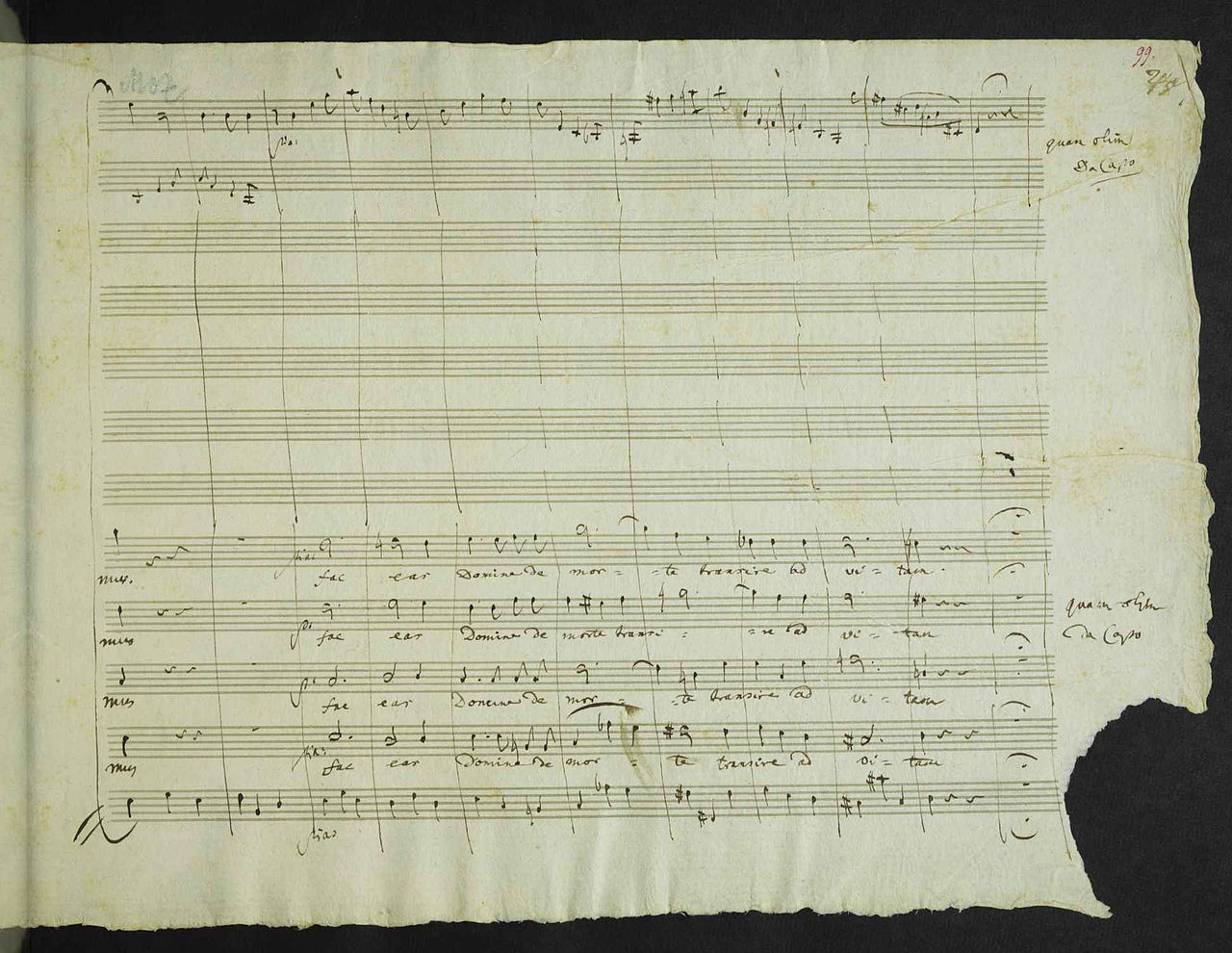


Form and main sections
The piece follows the traditional sections of the Requiem mass and is scored for soprano, alto, tenor and bass soloists, SATB chorus and an orchestra including winds, brass, timpani and strings. Major movements include the Introitus (Requiem aeternam), the Kyrie, the Sequence (beginning with the Dies irae and containing subsections such as Tuba mirum, Rex tremendae and Recordare), the Offertory (Domine Jesu), the Sanctus and Benedictus, and the Agnus Dei. One of the most celebrated single pages is the Lacrimosa, a short but intensely poignant chorus which breaks off in Mozart's autograph after the first eight bars.
Composition and completion
Mozart received an anonymous commission for the work and worked on it during his final months. He died before completing the score; the autograph contains fully written passages, sketches and partially finished movements. Franz Xaver Süssmayr, a younger composer and former student or assistant in Mozart's circle, prepared the commonly heard performing edition by completing the unfinished movements and supplying orchestration where it was missing. How much of the final music derives directly from Mozart, and how much is Süssmayr's contribution, has been the subject of long-standing discussion.
Scholarly debate and alternative completions
Musicologists and performers continue to evaluate the authenticity of various sections. Some scholars endorse Süssmayr's completion as practical and stylistically plausible; others have produced alternate completions aimed at closer adherence to Mozart's idiom. Notable modern revisions and reconstructions attempt to rework the Sanctus, Agnus Dei and the ending of the Lacrimosa using Mozart's surviving sketches and period practice. These alternatives are heard alongside the traditional Süssmayr edition in recordings and concert programs.
Historical and cultural significance
The Requiem has had wide cultural impact: it is central to the vocal-orchestral repertoire, frequently programmed in memorial services and concert series, and widely recorded. Its expressive range — from thunderous fugues to intimate solo lines — exemplifies Mozart's late style, blending operatic drama with liturgical gravity. The work's backstory, involving an anonymous patron, Mozart's failing health and the posthumous completion, has contributed to a popular mythology that surrounds the score.
Listening and further reading
- Typical performances use the standard Süssmayr completion, though many recordings explore reconstructions.
- For historical context and musical analysis, readers may consult biographies of Wolfgang Amadeus Mozart and studies of the Requiem tradition.
- Key moments to listen for: the dramatic opening Kyrie, the Tuba mirum solo trombone entry, the plaintive Lacrimosa, and the concluding Lux aeterna.
Whether approached as an object of scholarly inquiry, a liturgical setting or a staple of the concert hall, Mozart's Requiem remains a powerful and enigmatic masterpiece whose music continues to move audiences and inspire debate about authorship and editorial practice.
Related articles
Author
AlegsaOnline.com Mozart: Requiem in D minor, K. 626 Leandro Alegsa
URL: https://en.alegsaonline.com/art/82262