
Rationality: Reasoned Thought, Decision-Making, and Practical Use
Rationality is the practice of using reason and relevant information to form beliefs and make choices. This article explains types, features, history, applications, limits, and common debates.
Overview
Rationality refers to thinking and acting in ways that are guided by reason rather than by pure impulse. At its core it involves using evidence, principles of inference, and coherent goals to form beliefs and select actions. Discussions of rationality often distinguish between the quality of beliefs (epistemic rationality) and the effectiveness of choices given an agent's aims (instrumental rationality). For a general account of reasoning, see reason.
Image gallery
1 Image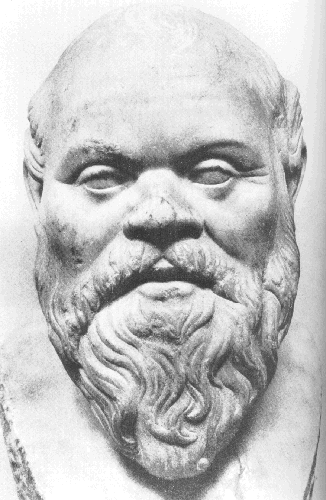
Key characteristics
Although definitions vary across disciplines, several characteristics are commonly associated with rationality. These are practical standards rather than a single test:
- Evidence-sensitivity: beliefs should track available information and be updated when new evidence appears.
- Logical coherence: conclusions and preferences should avoid internal contradictions.
- Goal alignment: actions should be directed toward achieving the agent's stated ends.
- Transparency of reasoning: reasons for beliefs and choices can be articulated and examined.
Historical and intellectual background
The idea that reason should guide thought and conduct has roots in classical philosophy, where thinkers emphasized logical argument and practical wisdom. During the Enlightenment, rationality became associated with science and universal principles of thought. In the 20th and 21st centuries, fields such as decision theory, cognitive psychology, economics, and artificial intelligence formalized aspects of rational choice and belief updating, producing models that describe idealized agents as well as empirically grounded descriptions of how real people decide.
Applications and examples
Rational methods are applied in many domains. Scientists use epistemic standards to evaluate hypotheses; policy-makers employ cost–benefit and risk analysis to choose programs; individuals use reasoning to manage personal finances, health, or relationships. In economics and decision theory, models of rational choice explain how preferences and probabilities determine optimal moves. Everyday decisions often involve trade-offs between imperfect information and competing values, and agents typically rely on heuristics to make timely choices. A familiar practical task is weighing available information before reaching a decision.
Context, limits, and competing views
Whether a decision is judged rational depends on background information, goals, and norms of justification. What counts as rational in one context may be irrational in another: a person who prioritizes the group's welfare will make different choices than someone pursuing only self-interest. Theories of bounded rationality emphasize that cognitive limits and incomplete data constrain ideal reasoning, while behavioral research documents systematic biases in human judgment. Debates also consider the role of emotion, moral values, and social norms: emotions can be rationally integrated into decision-making, and moral considerations may revise the standards for what is rational.
Notable distinctions and practical takeaways
Useful distinctions include epistemic versus instrumental rationality and internal coherence versus external success. Improving rationality typically involves clarifying goals, seeking reliable information, recognizing common biases, and applying norms of evidence and consistency. For more on how information shapes rational judgment see information, and for how situational factors influence assessment see context. Together these perspectives make rationality a multi-faceted concept relevant to philosophy, science, policy, and daily life.
Related articles
Author
AlegsaOnline.com Rationality: Reasoned Thought, Decision-Making, and Practical Use Leandro Alegsa
URL: https://en.alegsaonline.com/art/81274