
Relevance: concept, uses, and measures across disciplines
Relevance denotes the degree to which one piece of information or a topic bears on another. This article explains its meanings, applications in logic, information retrieval, cognition, law and communication, and common measures.
Overview
Relevance describes how well a piece of information, question, argument or signal pertains to a task, belief or situation. At its core it is a relational notion: an item is relevant to a user, problem or hypothesis when it materially affects decisions, understanding, or outcomes. The term appears across many fields—philosophy, logic, cognitive science, information science and law—where its precise interpretation and operationalization differ.
Image gallery
1 Image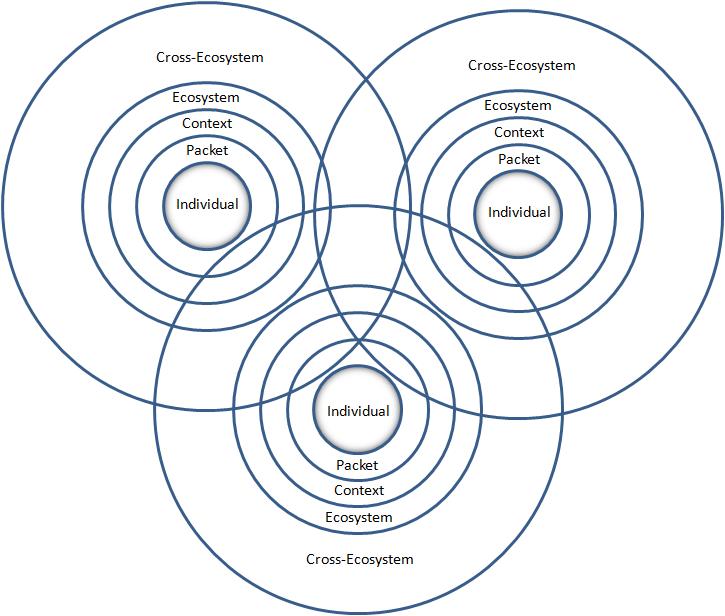
In logic and philosophy
Philosophical treatments of relevance address when reasons count for or against beliefs and actions. In logic, relevance (or relevant logic) emerged to avoid allowing irrelevant premises to support conclusions in classical entailment. Debates in epistemology examine relevance of evidence to beliefs and the distinction between having evidence and having evidence that is probative. For further reading on logical approaches, see logic resources and on epistemology consult epistemology resources.
In information retrieval and computing
In search engines and database systems, relevance is an operational concept used to rank items that best satisfy a query or information need. Measures such as precision, recall and ranked relevance evaluate system performance. Techniques include term matching, semantic analysis, machine learning ranking models and relevance feedback, where user responses adjust future results. Relevance here is typically judged by users or approximated by click behavior and ground-truth labels.
Cognitive science and communication
Psychology and linguistics study how people seek, select and attend to relevant information. Relevance Theory, associated with scholars like Dan Sperber and Deirdre Wilson, frames communication as driven by a search for optimally relevant utterances—those that yield the greatest cognitive benefit for least processing effort. Cognitive models also treat relevance probabilistically: information that substantially changes belief or prediction is more relevant. For cognitive perspectives see cognitive sciences.
Measures, applications and importance
- Evaluation: precision/recall, F-measure, and user-centered judgments quantify relevance in search and recommendation systems.
- Legal practice: relevance determines admissibility of evidence—balancing probative value against prejudice.
- Decision making: relevant factors are those that alter utilities, risks or available options.
- Communication design: highlighting relevant information improves comprehension and reduces overload.
Distinctions and notable facts
Relevance differs from mere relatedness: two topics can be related without one being useful to a particular goal. It also differs from importance: something may be important in general but not relevant to a specific inquiry. Operational definitions matter: what counts as relevant depends on goals, context, background knowledge and the criteria used to judge usefulness. Understanding this relational and context-dependent nature is central when designing systems, making legal rulings or evaluating evidence.
Related articles
Author
AlegsaOnline.com Relevance: concept, uses, and measures across disciplines Leandro Alegsa
URL: https://en.alegsaonline.com/art/82020
Sources
- dan.sperber.fr : dan.sperber.fr/?p=93
- simple.wiktionary.org : relevance
- simple.wiktionary.org : relevant
- simple.wiktionary.org : irrelevant