
Radish: an edible root vegetable of the Brassicaceae family
Radish is a fast-growing root vegetable in the mustard family, valued for its crisp texture and peppery flavor. Many cultivars vary in size, color, taste and use, from salads to pickles and cooking.
Overview
The radish is the swollen edible root of plants in the Brassicaceae (mustard) family. Valued for its crisp texture and sharp, peppery flavor, radish is consumed worldwide in raw and cooked forms. It is a versatile vegetable with many cultivated varieties adapted to different climates and culinary traditions.
Image gallery
10 Images



Description and varieties
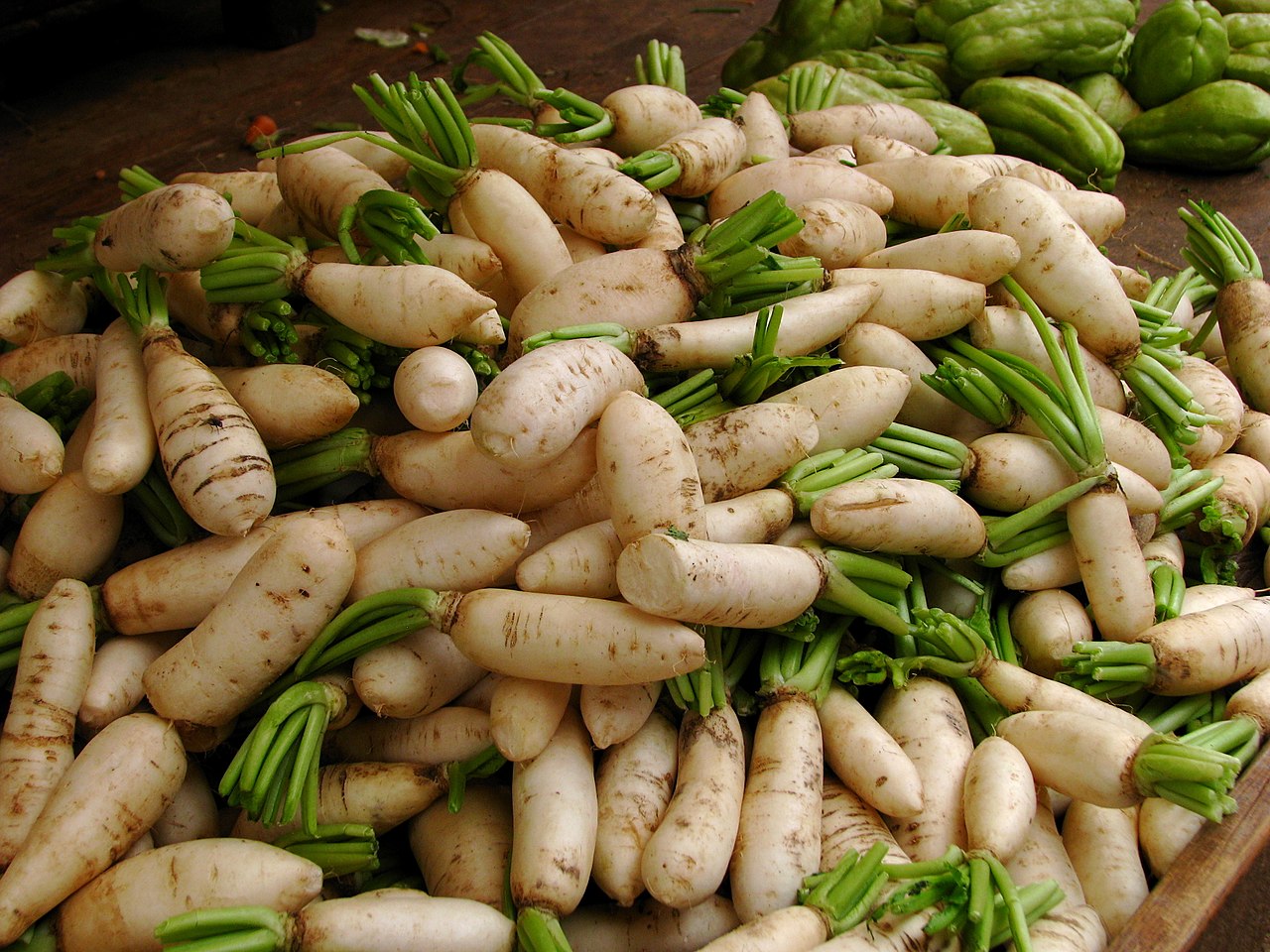
Radishes have a true root (a taproot) that stores water and flavor compounds. Skin and flesh colors include red, pink, white, purple and black; shapes range from small round buttons to long, cylindrical roots. Taste varies from mildly sweet to distinctly pungent. Many common types are grouped as spring or summer radishes, which are quick-maturing, and winter radishes, which are larger and often sharper.
- Popular forms include small round salad radishes and long Asian types such as daikon.
- Specialty varieties include black radish, watermelon radish and heirloom cultivars.
- Leaves (radish greens) are edible and used in salads, soups or as cooked greens.
History and development
Radishes have been cultivated since ancient times. They were grown in regions around the Mediterranean in antiquity and appear in historic agricultural texts and records. Over centuries, selective cultivation produced the wide range of sizes, colors and flavors available today, with distinct traditions in Europe, East Asia and elsewhere.
Uses and culinary importance
Radishes are most often eaten raw for their crunchy texture and peppery bite—sliced in salads, as a garnish or in vegetable platters. They are also pickled, roasted, sautéed or added to soups. Winter varieties are commonly preserved or cooked to mellow their sharpness. The greens can be used like other leafy vegetables. Beyond the kitchen, some radish types are grown as cover crops or used in crop rotation.
Cultivation, flavor and ecology
Many radishes mature rapidly—some in a matter of weeks—making them a common choice for home gardens and commercial production. Their pungency comes from sulfur-containing compounds that also function as a deterrent to some herbivores. For more on cultivar differences see varieties and breeding, and for ecological roles and herbivore interactions see plant defense and ecology.
To avoid overly woody or bitter roots, radishes are usually grown in cool seasons and harvested promptly when mature. Their adaptability and distinctive flavor keep them a persistent element of cuisines worldwide.
Related articles
Author
AlegsaOnline.com Radish: an edible root vegetable of the Brassicaceae family Leandro Alegsa
URL: https://en.alegsaonline.com/art/80782