
Rachel Getting Married (2008 film)
A 2008 American drama directed by Jonathan Demme about family, addiction and reconciliation, starring Anne Hathaway. Noted for its naturalistic style and strong performances; received critical acclaim and awards attention.
Rachel Getting Married is a 2008 American drama film that examines family dynamics, addiction, and the uneasy process of healing. Directed by Jonathan Demme and written by Jenny Lumet, the story centers on Kym, a young woman recently released from rehab who returns home for her sister Rachel's wedding. The film is frequently discussed for its intimate, almost documentary-like approach and the central performance by Anne Hathaway.
Image gallery
1 Image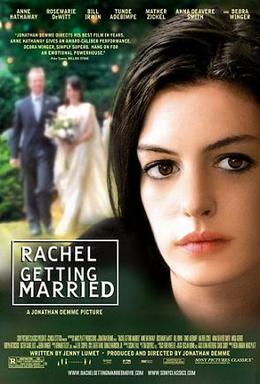
Plot and themes
The narrative unfolds over the course of wedding preparations and the ceremony itself, using the event as a lens to expose long-standing resentments, grief, and fragile bonds among relatives. Themes include recovery and relapse, sibling rivalry, guilt and forgiveness, and the challenge of rebuilding trust after addiction. The film balances painful confrontations with moments of tenderness and music, portraying recovery as nonlinear and communal.
Style and production
Demme employed a naturalistic, often handheld-camera style that creates a sense of immediacy and spontaneity. Scenes are frequently driven by improvisational-feeling performances and long takes that allow emotion to unfold organically. The production favored real locations and informal staging to enhance authenticity, a choice that shaped both performance and audience response.
Cast and credits
Anne Hathaway leads an ensemble that includes Rosemarie DeWitt as Rachel and a supporting cast of established character actors. Key credits include:
- Director: Jonathan Demme
- Writer: Jenny Lumet
- Principal cast: Anne Hathaway, Rosemarie DeWitt, and others
- Cinematography and music choices that emphasize acoustic and contemporary sounds
For a concise credits list and further production notes, see Rachel Getting Married details and a full cast listing at cast and crew.
Release and reception
The film received a limited release in October 2008 and was widely discussed by critics for its performances and directorial approach. Anne Hathaway's portrayal earned significant awards attention, including major nominations. Critics praised the film's frank, unsentimental look at family life and addiction while some viewers noted its uneven pacing or improvisational feel.
Legacy and notable facts
Rachel Getting Married is often cited as an example of contemporary American filmmaking that blurs the line between drama and observational cinema. It remains referenced in discussions about realistic portrayals of addiction, ensemble storytelling, and actors taking creative risks. For reviews, interviews, and retrospective commentary, consult film criticism archives and festival coverage via further reading.
Related articles
Author
AlegsaOnline.com Rachel Getting Married (2008 film) Leandro Alegsa
URL: https://en.alegsaonline.com/art/80695
Sources
- boxofficemojo.com : "Rachel Getting Married (2008)"
- austinchronicle.com : "Chronolog"
- toastedrav.com : "St. Louis Film Critics Association Announces Award Nominees"