
Raging Bull: Scorsese’s 1980 Biographical Boxing Drama
Raging Bull (1980) is Martin Scorsese’s black‑and‑white biographical sports drama about boxer Jake LaMotta, noted for Robert De Niro’s performance, striking cinematography, and its lasting influence on American cinema.
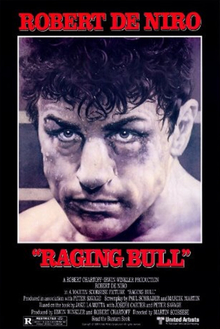
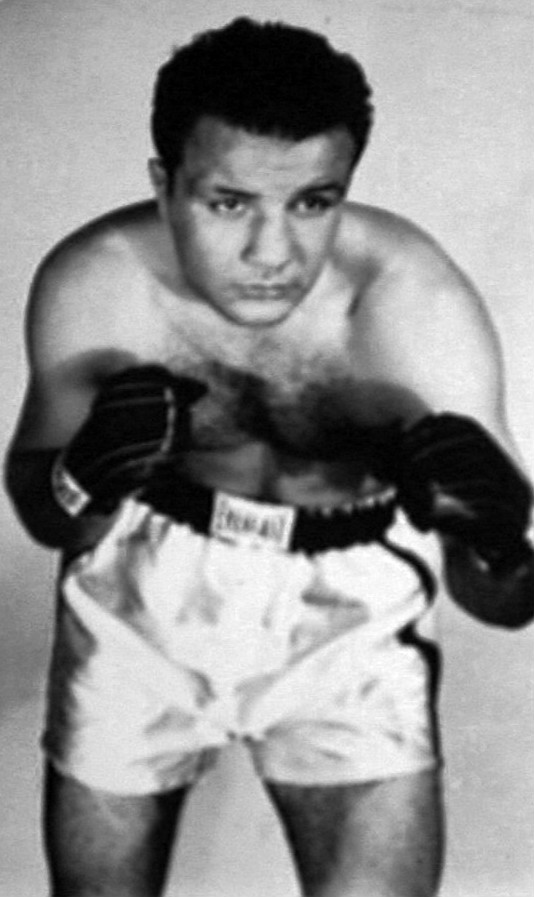
Raging Bull is a 1980 American biographical sports drama directed by Martin Scorsese that chronicles the turbulent life of middleweight boxer Jake LaMotta. Adapted from LaMotta’s 1970 memoir, the film focuses on the fighter’s self-destructive temperament, jealousies, and volatile relationships rather than on a conventional sports narrative. It is widely remembered for its stark black‑and‑white cinematography, the intense central performance by Robert De Niro, and an aesthetic that treats the ring as a stage for personal collapse rather than simple triumph.
Image gallery
7 Images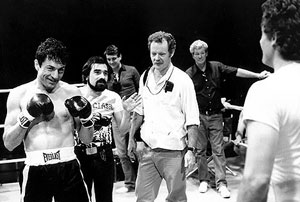



Story and principal performances
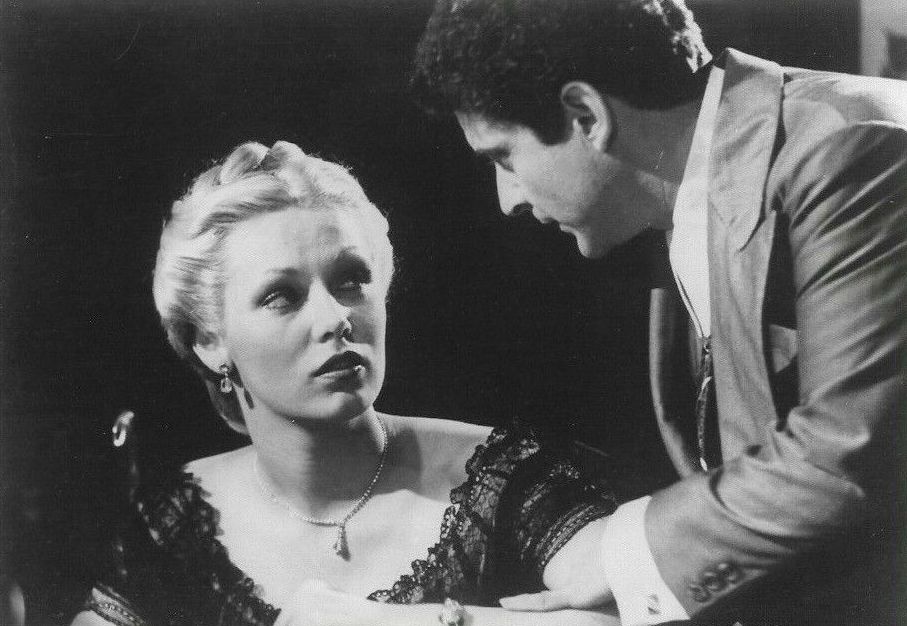
The narrative follows LaMotta from his rise in the ring through his decline, emphasizing his obsession with control and the violence those impulses bring into his private life. De Niro portrays LaMotta with a muscular and physical commitment: he trained extensively for fight scenes and later gained significant weight to depict LaMotta in his post‑career years. Joe Pesci appears as Joey, LaMotta’s brother and manager, offering a counterpoint of loyalty and frustration; Cathy Moriarty plays Vickie, LaMotta’s wife, whose relationship with him deteriorates under the pressure of his possessiveness. Supporting players add texture to the milieu of the film: friends, opponents, and members of LaMotta’s family form a social world that enables and suffers from his behaviour.
Development and casting
Scorsese was initially reluctant to take on the project but identified with elements of LaMotta’s character and struggle. The screenplay was credited to Paul Schrader and Mardik Martin, with further uncredited contributions made during rehearsals and filming. Casting mixed experienced performers and newcomers: De Niro was already an established actor, while Joe Pesci and Cathy Moriarty were relative unknowns whose performances helped launch their careers. Scorsese’s collaboration with his core creative team—most notably editor Thelma Schoonmaker—shaped the film’s rhythm and dramatic focus.
Production, visual style, and editing
The choice to shoot in black and white lends the film a documentary texture and concentrates attention on light, shadow and movement. Cinematographer Michael Chapman worked with Scorsese to compose the ring as an arena of choreography and psychological pressure. Fight sequences were carefully staged to read on camera and to express the emotional states of the characters: close framing, sudden cuts, and carefully timed sound design convey impact and exhaustion rather than merely cataloguing blows. Thelma Schoonmaker’s editing is often singled out for its role in shaping the film’s brutal, granular tempo.
Boxing choreography and actor preparation
De Niro studied actual boxing techniques and worked with trainers to make the physical exchanges appear authentic while remaining safe for the actors. Each fight scene was planned with specific camera angles and cutting rhythms in mind; the camera often functions as a witness to Jake’s subjective experience. The film’s attention to physical detail extends to LaMotta’s later life: the actor’s deliberate weight gain for the final act was intended to underscore the long‑term consequences of a life consumed by rage and regret.
Reception, awards, and box office
On release the film received a mix of praise and controversy. Critics lauded De Niro’s performance and the editing, while some viewers and reviewers reacted strongly to the film’s explicit violence and bleak portrait of masculinity. Commercially it had a modest run, earning approximately twenty‑three million dollars against a reported budget in the neighbourhood of eighteen million. At the 53rd Academy Awards the film earned eight nominations and won two Oscars, including Best Actor for De Niro and Best Editing for Thelma Schoonmaker.
Critical reassessment and legacy
In the decades since its release, Raging Bull has undergone extensive critical reassessment. Many film historians and critics now regard it as one of Scorsese’s major works and as a landmark of American cinema for its formal daring and psychological depth. The film is frequently discussed in studies of auteurism, performance, and film editing, and it is used in film schools as an example of how technical choices serve thematic ends. In 1990 the film was selected for preservation in the United States National Film Registry during its first year of eligibility, an acknowledgment of its cultural, historical, and aesthetic importance.
Cultural impact and influence
Raging Bull helped redefine the sports film by treating athletic competition as a vehicle for exploring character and pathology rather than as merely inspirational spectacle. Its monochrome palette, tight editing, and visceral fight choreography have influenced subsequent filmmakers working in both dramatic and genre cinema. References to the film appear in discussions of screen acting, method preparation, and the ethics of depicting violence on screen.
Controversies and biographical accuracy
As with many films based on memoirs, the movie condenses and dramatises events from LaMotta’s life. Viewers and commentators have debated the degree of factual accuracy in specific scenes and in the portrayal of secondary figures. The film’s depiction of violence and of gender relations provoked discussion at the time of release and continues to be considered in contemporary evaluations of the work.
Further reading and resources
- Source material: based on Jake LaMotta’s memoir, the film dramatizes episodes from his life, career, and relationships.
- Key collaborators: director Martin Scorsese, actors Robert De Niro and Joe Pesci, editor Thelma Schoonmaker, and cinematographer Michael Chapman.
- Production choices: black‑and‑white photography, choreographed fight scenes, and disciplined editing shape the film’s tone.
- Impact: widely regarded as one of the greatest American films and a defining work for Scorsese and De Niro.
For further exploration of related topics, production notes, and critical analyses, see these entries: film overview, biographical dramas, Martin Scorsese, Irwin Winkler, Robert Chartoff, Paul Schrader, Jake LaMotta, United Artists, Robert De Niro, middleweight boxing, Joe Pesci, Theresa Saldana, Frank Vincent, Best Picture nominees, Best Director nominees, Best Actor winners, Best Editing winners, National Film Registry.
Related articles
Author
AlegsaOnline.com Raging Bull: Scorsese’s 1980 Biographical Boxing Drama Leandro Alegsa
URL: https://en.alegsaonline.com/art/80843
Sources
- rottentomatoes.com : Raging Bull