
Quasi-War (1798–1800) — Undeclared Naval Conflict Between the United States and France
An undeclared naval war between the United States and the French Republic, triggered by maritime seizures and the XYZ Affair; ended by the Convention of 1800 and influential in the founding of the U.S. Navy.
Overview
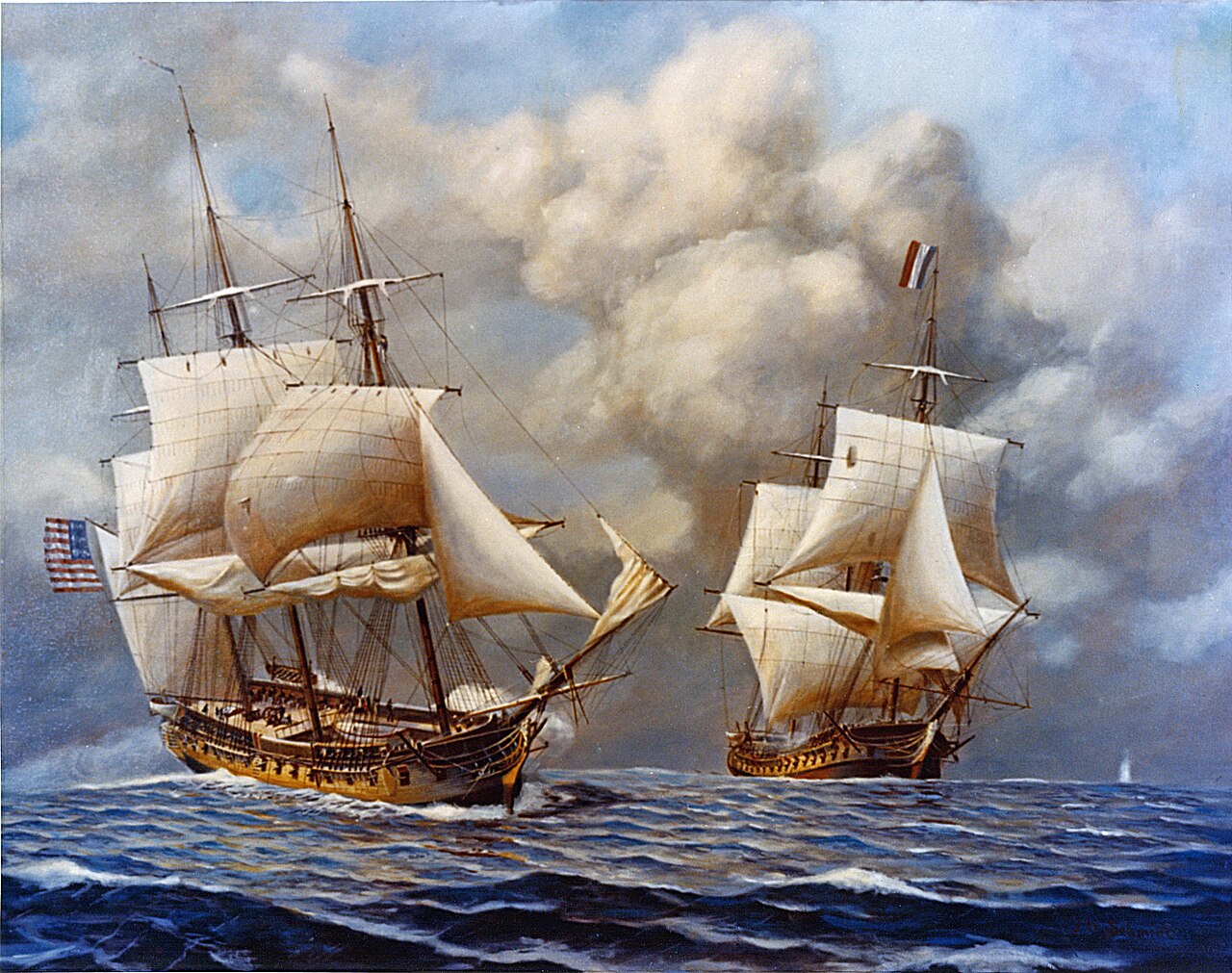
The Quasi-War was an undeclared naval conflict between the United States and the French Republic that broke out in 1798 and is generally considered to have ended with the Convention of 1800. It arose from a series of maritime disputes and diplomatic crises after the French Revolution, during which American merchant vessels were intercepted or harassed and political tensions in both countries escalated.
Image gallery
6 Images




Causes and immediate triggers
Commercial rivalry, the legacy of earlier alliances, and French privateering against neutral shipping set the scene. The diplomatic scandal known as the XYZ Affair inflamed public opinion in the United States and led to calls for protection of American commerce. In response, Congress authorized naval preparations and measures to protect shipping without declaring formal war.
Nature of the conflict
Fighting was almost entirely naval, concentrated in the Caribbean and off the American coast. United States warships, revenue cutters and convoys sought to defend merchantmen and intercept French privateers and warships. American frigates scored several notable successes, and convoying and capture operations reduced losses to commerce over time.
Diplomacy and end of hostilities
Although Congress empowered naval and defensive measures, no formal declaration of war was issued. Diplomatic negotiations continued, and in 1800 the Convention of 1800 (also called the Treaty of Mortefontaine) normalized relations, ended the wartime alliance obligations from the 1778 treaties, and brought hostilities to a close; some technical and financial issues required settlement afterward.
Significance and consequences
- Institutional: The conflict stimulated the growth and professionalization of the U.S. Navy and maritime services.
- Political: It influenced domestic politics, contributing to debates over executive power, national defense, and legislation such as the Alien and Sedition Acts.
- Diplomatic: It demonstrated early American willingness to defend neutral trade and to resolve conflicts by a mix of force and negotiation.
Further reading
For concise background on the conflict and its diplomatic context see Quasi-War overview and discussions of late-18th-century Franco-American relations at French-American relations. These provide entry points for exploration of naval actions, political debates, and the Convention of 1800.
Related articles
Author
AlegsaOnline.com Quasi-War (1798–1800) — Undeclared Naval Conflict Between the United States and France Leandro Alegsa
URL: https://en.alegsaonline.com/art/80415