
Quảng Ngãi — provincial capital in South Central Vietnam
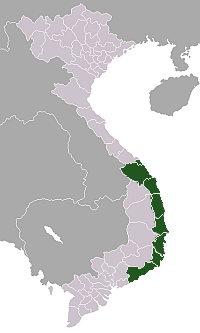
Quảng Ngãi is the capital of Quảng Ngãi province on Vietnam's South Central Coast. A regional administrative and service center, it links coastal communities, nearby Ly Sơn island and inland districts with industry and culture.
Overview
Quảng Ngãi is the capital city of Quảng Ngãi province on Vietnam's South Central Coast. The city has about 135,000 inhabitants and functions as a local administrative, commercial and service hub. It connects coastal communities, nearby islands and inland districts and supports provincial industry, fisheries and agricultural trade.
Image gallery
3 Images
Geography and climate
Located near the coast of the South China Sea, Quảng Ngãi lies along lowland plains and the Trà Khúc River, with hills and agricultural land nearby. The climate is tropical monsoon, with a warm, rainy season from spring to autumn and a drier, milder period in winter. These conditions support wet-rice cultivation, tropical fruit production and coastal fisheries.
History
The region has a long history, with archaeological evidence of the Sa Huỳnh culture and later influences from the Cham polities before incorporation into Vietnamese domains. In the 20th century Quảng Ngãi experienced wartime disruption during the Indochina and Vietnam wars; the Sơn Mỹ (Mỹ Lai) village area in the province was the site of the 1968 Mỹ Lai massacre, a widely reported event of the Vietnam War era. Postwar reconstruction and economic reforms from the 1980s onward shaped modern urban growth.
Economy and transport
Quảng Ngãi's economy combines provincial administration, retail and services with light industry, logistics and support for nearby heavy industry. The Dung Quất economic zone and refinery, located in the province, are significant drivers of investment and employment and have influenced transport and infrastructure. Road connections include National Route 1, regional highways and river transport; rail lines and commercial airports in adjacent provinces provide wider connectivity.
Culture, tourism and notable sites
The city serves as a base for exploring provincial attractions. Ly Sơn island, noted for its volcanic landscape and garlic production, is a popular destination reachable by ferry. The province preserves traditional markets, pagodas and regional cuisine of central Vietnam. Archaeological sites and museum collections reflect Sa Huỳnh and Cham heritage. Local festivals, craft villages and coastal scenery contribute to cultural life and tourism.
- Population: about 135,000 (city proper)
- Key functions: provincial government, commerce, transport hub
- Nearby highlights: Ly Sơn island, Dung Quất industrial area, archaeological sites
Related articles
Author
AlegsaOnline.com Quảng Ngãi — provincial capital in South Central Vietnam Leandro Alegsa
URL: https://en.alegsaonline.com/art/80374