
Quedlinburg — medieval town in Saxony‑Anhalt and UNESCO World Heritage site
Quedlinburg is a well‑preserved medieval town in Saxony‑Anhalt, Germany, known for its timber‑framed houses, castle hill and the Collegiate Church of St. Servatius; listed by UNESCO in 1994.
Overview
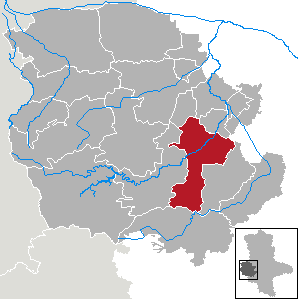
Quedlinburg is a small historic town in central Germany, situated on the banks of the Bode River and lying just north of the Harz range. Administratively it belongs to the state of Saxony‑Anhalt. The municipal area covers roughly 78 square kilometres (about 30.1 miles), and its population is commonly reported in the tens of thousands rather than hundreds of thousands. The town is widely admired for the density and quality of its historic buildings and medieval street plan.
Image gallery
10 Images





History and development
Quedlinburg developed around a royal and ecclesiastical foundation in the early Middle Ages and became closely associated with the Saxon rulers of the 9th and 10th centuries. It served as an important center under the Ottonian dynasty and was the burial place of prominent rulers. Over centuries a collegiate church and a castle complex came to crown the town’s steep castle hill, while craftsmen and merchants built the houses and streets that survive today. Quedlinburg later passed through the shifting territorial arrangements of the Holy Roman Empire, the modern German states, and the period of division and reunification in the 20th century.
Architecture, layout and notable sights
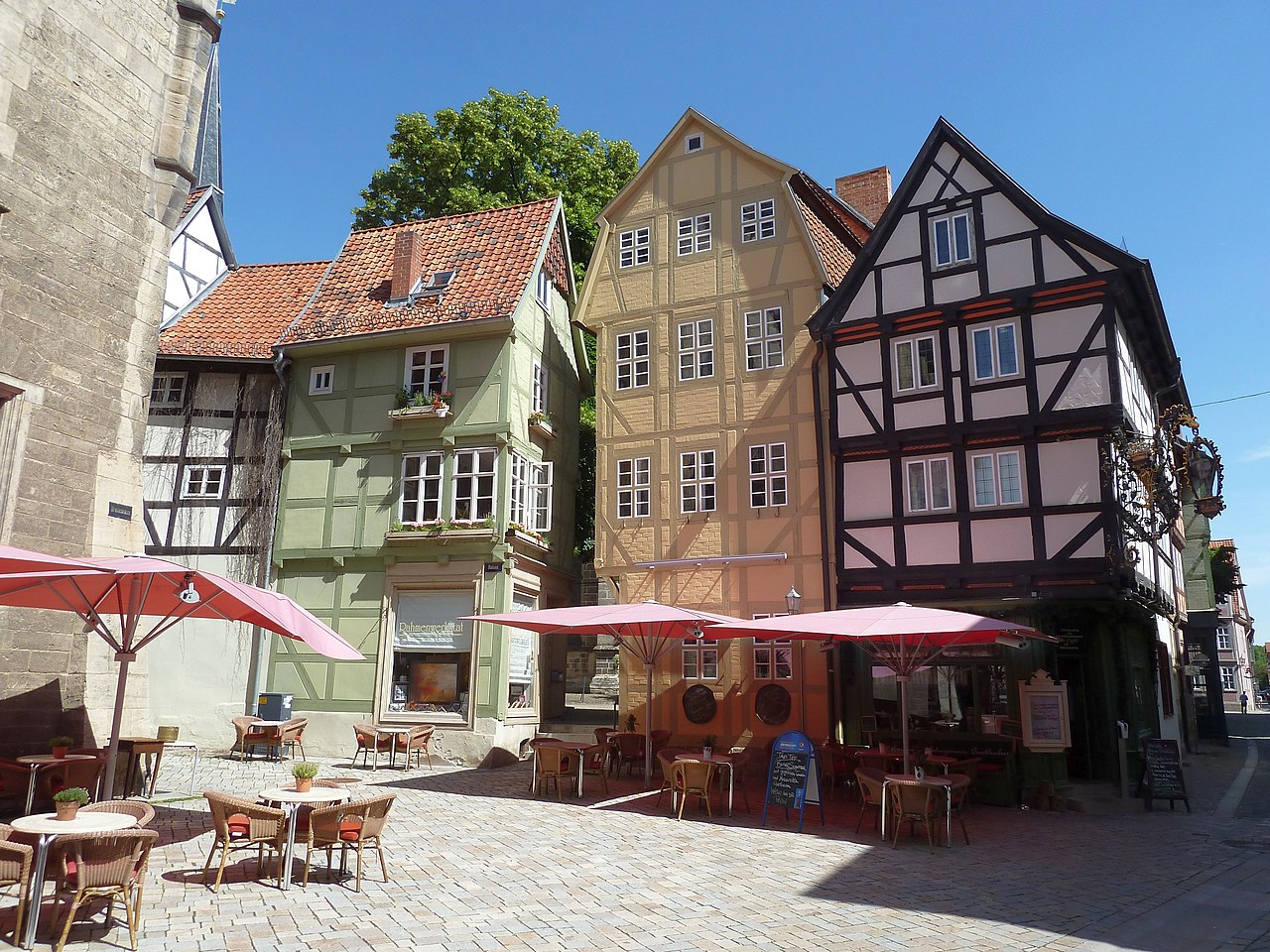
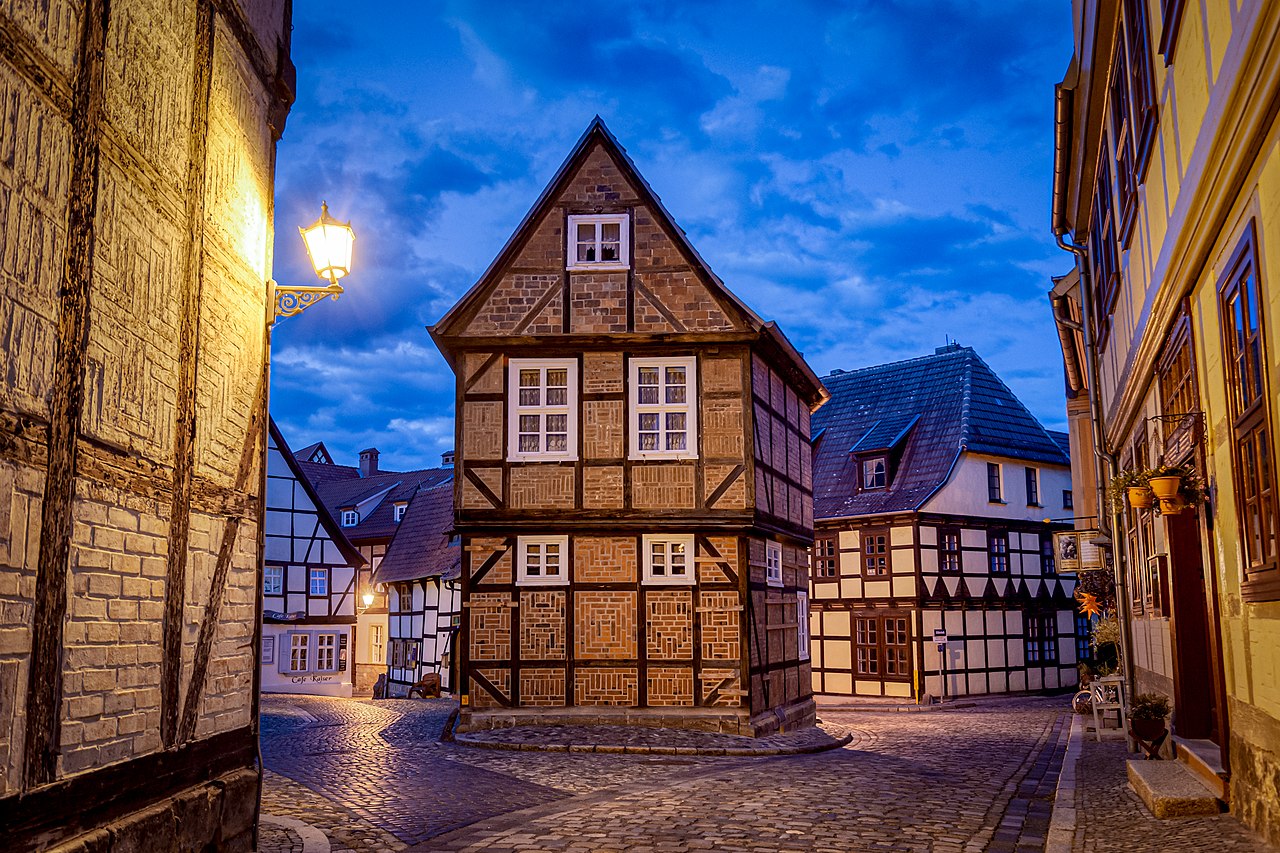
The town is celebrated for its compact old town, which contains more than a thousand largely intact timber‑framed buildings spanning late medieval to early modern periods. The protected ensemble centers on the castle hill and the Collegiate Church of St. Servatius, with its Romanesque architecture and historic treasury. Narrow winding streets, market squares and rows of decorated half‑timber houses create an unusually complete medieval townscape.
- Collegiate Church and treasury: a focal point of religious and artistic history.
- Castle and museum: displays of local artefacts and town history.
- Market Place and Rathaus: civic architecture and social hub.
- Timber‑framed streets: examples of urban craft and residential design.
World Heritage status and conservation
In recognition of its exceptional state of preservation, Quedlinburg’s old town was inscribed by UNESCO on the list of World Heritage Sites. This designation highlights both the town’s medieval urban fabric and the necessity of long‑term conservation. Local and national authorities, together with private owners, continue restoration work to maintain historic rooflines, timber frames and stone churches while adapting buildings for modern use.
Today: tourism, culture and economy
Today Quedlinburg is a regional cultural centre that attracts visitors for guided tours, heritage festivals and seasonal markets. Tourism, crafts, small manufacturing and services form the backbone of the local economy. The town is also used as a case study in architectural preservation and medieval urbanism, and it often features in educational programs and heritage tourism routes.
For concise local information and visitor resources consult municipal and regional guides, or specialist heritage sites such as those linked here: Low Saxon name and local traditions, additional municipal information at national portals, and regional resources on administration and heritage.
Questions and answers
Q: Where is Quedlinburg located?
A: Quedlinburg is located in the state of Saxony-Anhalt, Germany.
Q: What is the size of Quedlinburg's area?
A: The area of Quedlinburg is 78 square kilometres (30.1 square miles).
Q: How many people lived in Quedlinburg in 2005?
A: In 2005, 22,795 people lived in Quedlinburg.
Q: What is the distance between Quedlinburg and the Harz mountains?
A: Quedlinburg is 8 kilometres (5.0 miles) north of the Harz mountains.
Q: Is there a river that flows through the city of Quedlinburg?
A: Yes, there is a small river called Bode that flows through the city of Quedlinburg.
Q: When did UNESCO add the old town of Quedlinburg to the list of World Heritage Sites?
A: UNESCO added the old town of Quedlinburg to the list of World Heritage Sites in 1994.
Q: What is Quedlinburg known for?
A: Quedlinburg is known for its old town, which was added to UNESCO's list of World Heritage Sites in 1994.
Related articles
Author
AlegsaOnline.com Quedlinburg — medieval town in Saxony‑Anhalt and UNESCO World Heritage site Leandro Alegsa
URL: https://en.alegsaonline.com/art/80445
Sources
- destatis.de : "Alle politisch selbständigen Gemeinden mit ausgewählten Merkmalen am 31.12.2018 (4. Quartal)" · web.archive.org
- statistik.sachsen-anhalt.de : "Bevölkerung der Gemeinden – Stand: 31.12.2015"