
Quadruped walk: mechanics, variations, and evolutionary context
The quadruped walk is the four-limbed mode of terrestrial locomotion used by many vertebrates. This article explains its mechanics, common gaits, evolutionary origins, and distinctions from other locomotor styles.
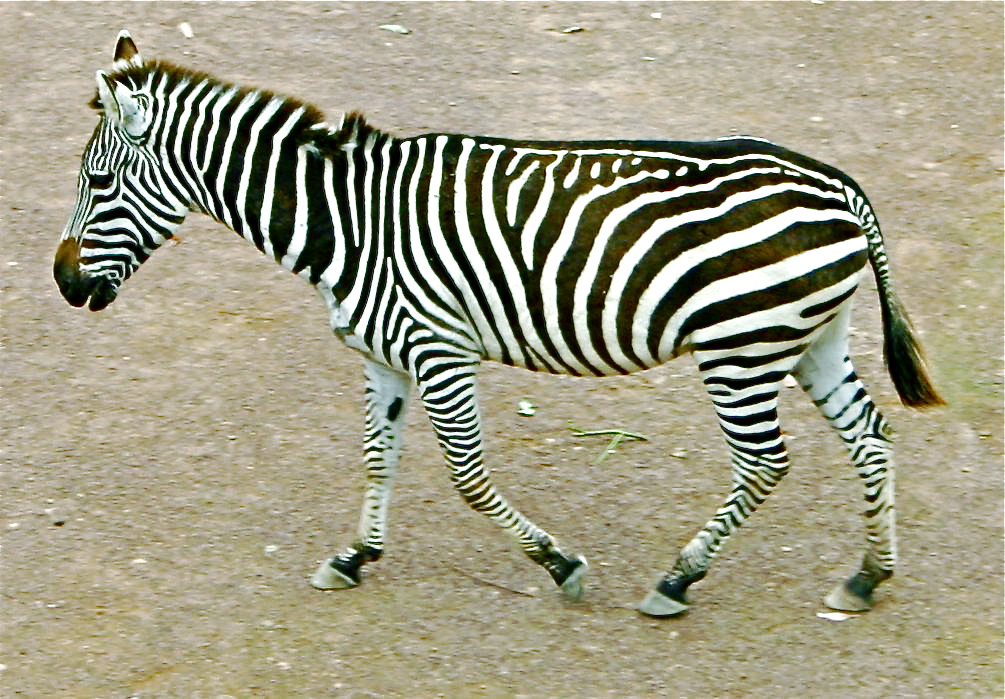
The quadruped walk describes the habitual use of four limbs for moving across the ground. In everyday language a quadruped is any animal that walks on four legs, while in comparative biology the broader group of four-limbed vertebrates is called Tetrapoda. The quadruped walk is one major form of vertebrate locomotion, and it remains the dominant terrestrial strategy among reptiles, amphibians and many mammals. Organisms that use a bipedal stance or powered flight evolved from tetrapod ancestors but modified this ancestral pattern.
Image gallery
3 Images

Characteristics and mechanics
Walking on four limbs combines stability and energy economy. A typical quadrupedal walk uses alternating limb contacts so that at least three feet are on the ground for much of the stride, reducing risk of falling and lowering muscular effort needed for balance. Limb proportions, joint alignment and the flexibility of the spine influence stride length and efficiency. Quadrupeds may be plantigrade, digitigrade or unguligrade depending on which parts of the foot contact the ground, and these postural differences change how forces are transmitted through the limbs.
Gaits and common variations
- Walk: a slow, four-beat gait with a regular sequence of footfalls and continuous ground contact for stability.
- Trot and pace: medium-speed gaits with paired leg movements; trotting pairs diagonally, pacing pairs laterally.
- Canter and gallop: faster asymmetrical gaits used for increased speed and covering ground quickly.
Transitions between gaits depend on body size, limb length and energetic cost. Smaller animals often adopt higher stepping frequencies, while larger species favor slower limb cycles and larger spinal flexion to increase stride.
Evolutionary history and development
The four-limbed arrangement dates to early Devonian tetrapods that moved from water onto land. Over geological time different lineages refined quadrupedal mechanics to suit running, digging, climbing or swimming. Many mammals retained a quadrupedal ground pattern, though some groups secondarily evolved bipedal postures; examples of such transitions are discussed in studies of primate and dinosaur evolution. Modern developmental biology also shows how limb buds and spinal column growth shape a young animal's gait.
Importance, examples and distinctions
Quadrupedal walking underpins a wide range of ecological roles: it supports grazing large herbivores, allows stealthy stalking by carnivores, and enables arboreal locomotion in some tree-climbing mammals. Comparative work often contrasts quadrupedalism with walking on two legs; see research on bipedalism for contrasts. Many textbooks and reviews on animal movement cover quadruped mechanics within broader surveys of locomotion and mammalian functional anatomy; specialists frequently refer to material focused on mammals when discussing common gait patterns.
Related articles
Author
AlegsaOnline.com Quadruped walk: mechanics, variations, and evolutionary context Leandro Alegsa
URL: https://en.alegsaonline.com/art/80359