
Radula — the toothed feeding organ of molluscs
A chitinous, toothed ribbon used by most molluscs to rasp, cut or scrape food. Present in snails and cephalopods but absent from bivalves; important in feeding, taxonomy and materials science.
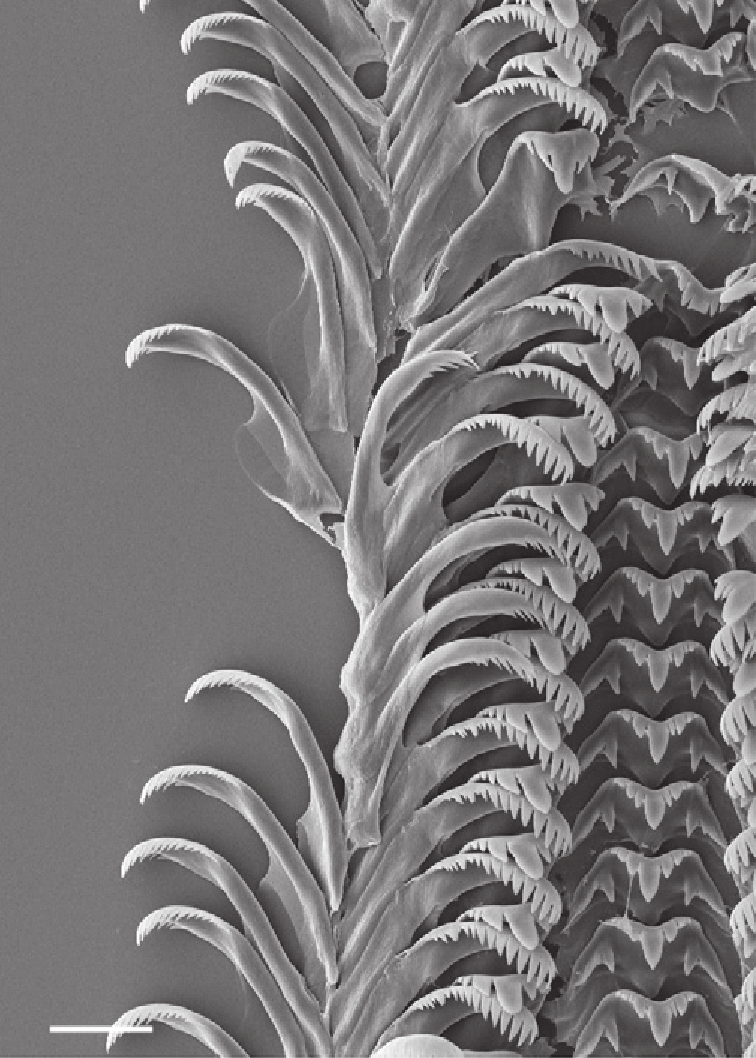
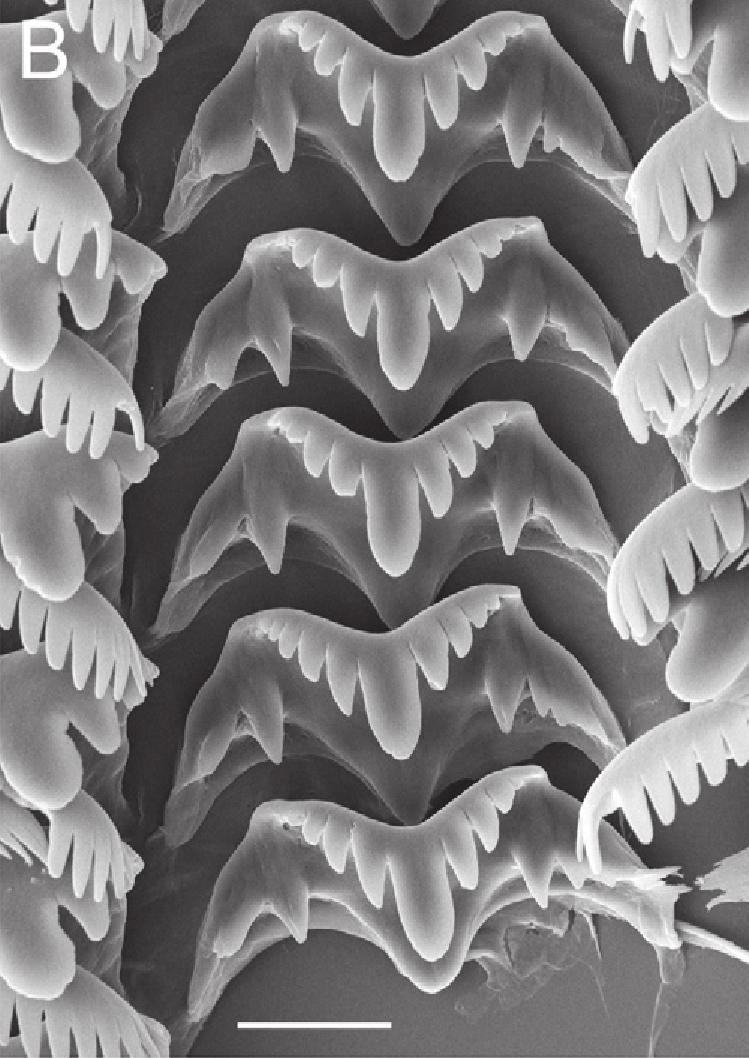
The radula is a specialized feeding organ found in most members of the phylum Mollusca. Superficially it resembles a tongue and is often compared to the human tongue, but unlike a mammalian tongue the radula bears rows of microscopic teeth and functions primarily as a rasping, cutting or scraping tool that processes food before it enters the esophagus.
Image gallery
10 Images


Structure and mechanics
The radula consists of a flexible, ribbon-like band of chitin-bearing tissue studded with transverse tooth rows. These teeth form on a growth zone near the rear of the radula and are continuously produced and worn away as animals feed. The ribbon rides over a muscular support called the odontophore, which moves the radula forward and backward so the teeth can rake or slice substrate and prey. Tooth shape, number and arrangement vary widely between groups, reflecting diet and feeding behavior.
Feeding modes and examples
Different molluscs use the radula in distinct ways. Many gastropods scrape microalgae such as diatoms from rocks and seaweeds. Some predatory snails have elongated, harpoon-like teeth for boring or envenomating prey. Cephalopods, including squid, combine the radula with a hard beak to cut and macerate captured animals. A short list of common functions:
- Grazing and scraping of algae from surfaces
- Drilling or rasping into shells or hard substrata
- Catching and cutting soft-bodied prey
- Processing food particles before ingestion
Distribution, evolution and notable facts
The radula is unique to molluscs and is notably absent in bivalves, which filter-feed. Its basic presence across diverse molluscan classes suggests an ancient origin, but tooth forms and feeding strategies have diversified extensively. In some taxa teeth are reinforced with iron-rich or mineralized tips, an adaptation that increases wear resistance and has drawn interest from materials scientists.
Scientific and practical importance
Radula morphology is used by biologists to infer diet, ecological role and relationships among species. Its continuous growth and wear patterns also provide insight into feeding rates and habitat use. Because of its combination of lightweight, resilient organic matrix and mineral reinforcement, the radula is studied as a model for engineered abrasion-resistant materials.
Questions and answers
Q: What is the radula?
A: The radula is the toothed chitinous ribbon in the mouth of most molluscs that is used for cutting and chewing food before it enters the esophagus.
Q: How is the radula compared with the human tongue?
A: The radula can be compared with the tongue of human beings but, unlike our tongue, it is used for cutting and chewing food before it enters the esophagus.
Q: Which molluscs have the radula?
A: All molluscs except bivalves have the radula.
Q: What is the function of the radula in gastropods?
A: Gastropods use the radula to graze and scrape diatoms and other microscopic algae off rock surfaces and other substrata.
Q: How do squids use the radula?
A: Squids use the radula for cutting up their prey.
Q: Is the radula present in any other animals besides molluscs?
A: No, the radula is present only in molluscs.
Q: What is the radula made of?
A: The radula is made of chitin, a tough and flexible polysaccharide that is also found in the exoskeleton of arthropods like insects and crustaceans.
Related articles
Author
AlegsaOnline.com Radula — the toothed feeding organ of molluscs Leandro Alegsa
URL: https://en.alegsaonline.com/art/80795