
Pyramid of the Sun — major monument of Teotihuacán
Largest pyramid at Teotihuacán, north of Mexico City; an ancient Mesoamerican stepped monument built in the early centuries CE, important architecturally, ritually, and as a modern heritage site.
Overview
The Pyramid of the Sun is the dominant monumental structure within the ancient city of Teotihuacán. Located roughly 40 kilometres north of modern Mexico City, it is one of the largest pyramids in the Americas and a defining feature of a pre-Columbian city that once held tens of thousands of residents. The name "Pyramid of the Sun" was applied by later peoples — notably the Aztecs — and the structure’s original name and full meaning in the builders’ language remain unknown.
Image gallery
9 Images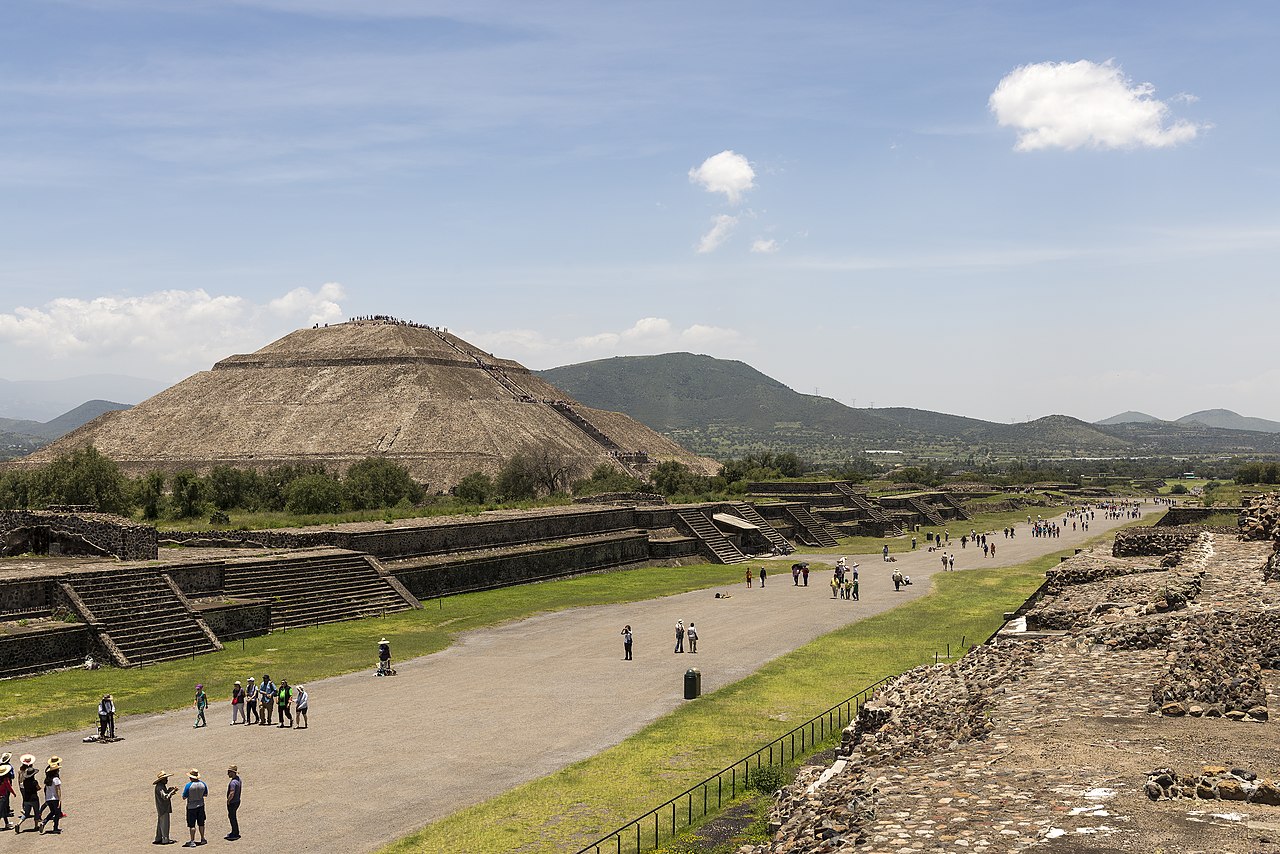




Design and characteristics
The monument is a large, stepped platform mound with a broad stairway and terraces. Key attributes include:
- Multi-tiered stepped form built from stone, adobe and rubble cores with an outer facing.
- A commanding position along Teotihuacán’s central axis, the Avenue of the Dead, near the Pyramid of the Moon and other civic-ceremonial complexes.
- Evidence of intentional alignment and construction phases, indicating complex planning and community labour.
- Archaeological investigation has revealed chambers and a subterranean cave or cavity beneath the pyramid that may have had ritual associations.
History and cultural context
Teotihuacán flourished in the first half of the first millennium CE; the Pyramid of the Sun appears to date from the city’s formative and Classic-period growth, roughly in the first few centuries CE. Teotihuacán was a major political, religious and economic centre in central Mexico, and its urban layout, monumental architecture and mural art influenced many later societies in Mesoamerica.
Uses, symbolism and importance
The pyramid served multiple probable roles: a focal point for public ritual, a symbol of communal power, and an architectural embodiment of cosmological ideas. Its scale and siting suggest it functioned as a landmark visible across the valley and as a destination for pilgrimages and ceremonies. Interpretations emphasize its possible connection to mountain and solar symbolism common in Mesoamerican thought.
Conservation and visiting
Today the Pyramid of the Sun and the wider archaeological zone are protected and studied. Teotihuacán is recognized for its outstanding universal value and receives sustained conservation attention; the site is also a major tourist destination where visitors can approach and, in many places, climb parts of the structure. Ongoing research and conservation aim to balance public access with preservation.
Notable facts
- The modern name reflects Aztec-era interpretation rather than the builders’ terminology.
- The pyramid’s construction required coordinated labour and resource management, reflecting the city’s complex organization.
- Archaeological discoveries beneath and around the pyramid continue to refine understanding of its date, construction stages and ritual use.
Related articles
Author
AlegsaOnline.com Pyramid of the Sun — major monument of Teotihuacán Leandro Alegsa
URL: https://en.alegsaonline.com/art/80230