
Pterois (lionfish): venomous reef fishes of the genus Pterois
Pterois, commonly called lionfish, are venomous reef fishes in the scorpionfish family known for bold banding, elongated fins, invasive populations, and prominence in aquaria and fisheries.
Overview
Pterois is a genus of marine fishes commonly referred to as lionfish. Members of this genus belong to the scorpionfish family (Scorpaenidae) and are notable for their dramatic appearance and venomous fin rays. Native to the Indo-Pacific region, several species have established nonnative populations elsewhere and attracted attention for their ecological impacts and popularity in the aquarium hobby.
Image gallery
10 Images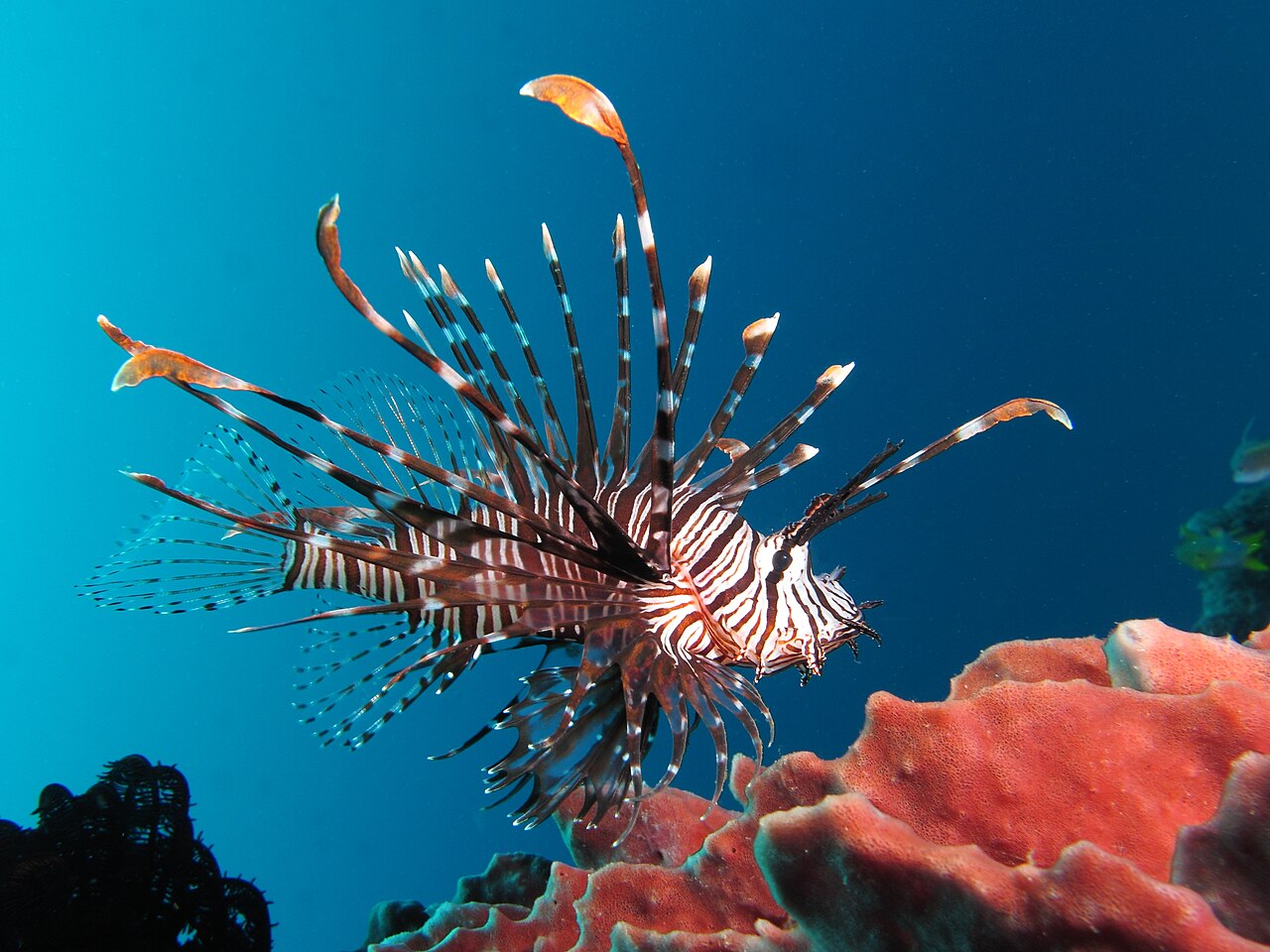



Physical characteristics
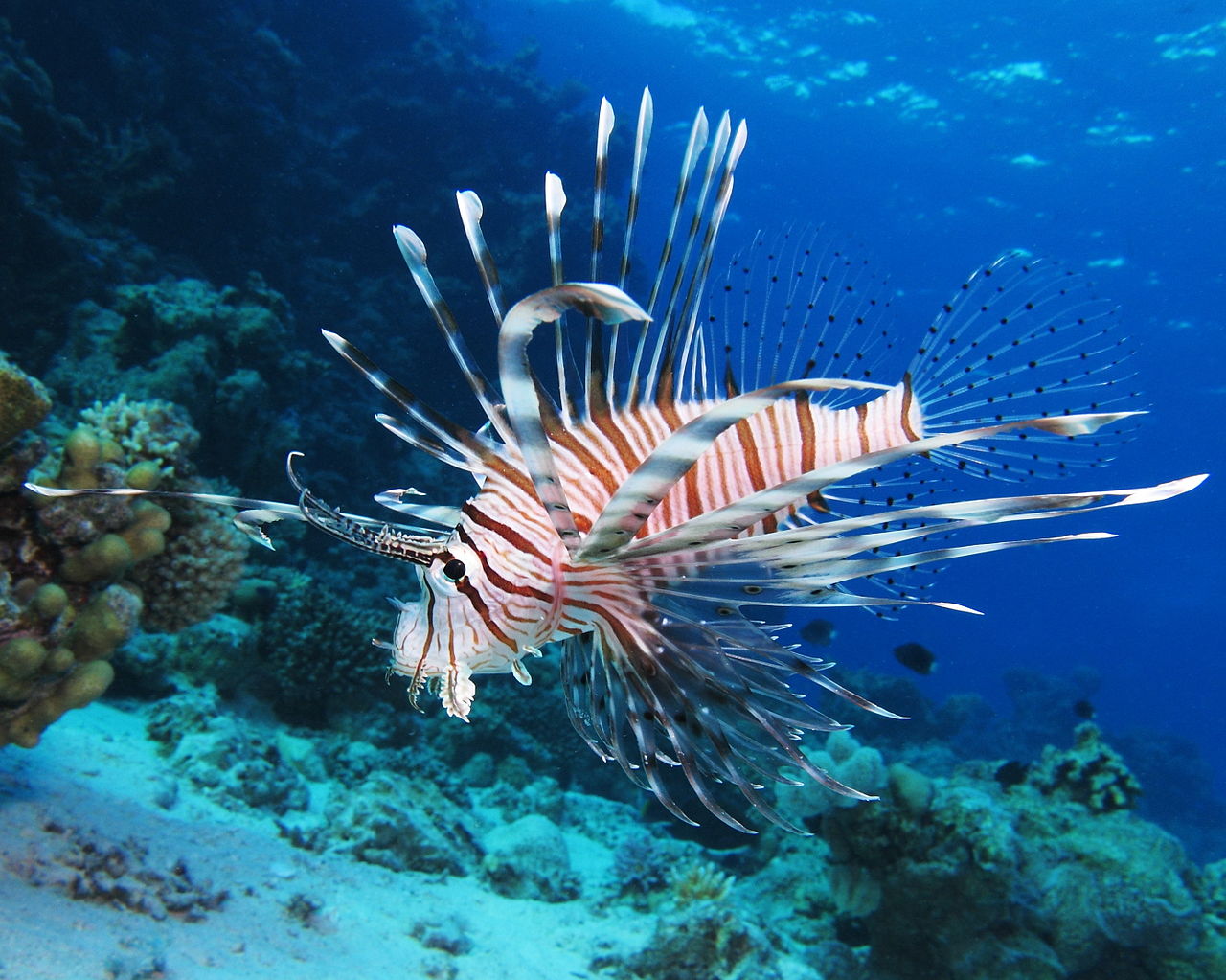
Lionfish are recognized by their contrasting bands of color—shades of red, brown, cream and white—and by elongated, fanlike pectoral fins and erect, spiny dorsal rays. The venom glands are associated with the fin spines; accidental contact can cause painful stings in humans but are rarely fatal. Adult sizes vary by species, with most individuals ranging from small to moderately sized reef fish and a few species reaching lengths near 40 cm.
Species and identification
Several species have been described; among the most frequently encountered in literature and trade are Pterois radiata, Pterois volitans and Pterois miles. Identification relies on banding patterns, fin shape and other morphological details. For taxonomic and general information see the genus entry at Pterois. For details on venom and medical considerations see venom information.
Habitat, diet and behavior
Pterois species inhabit coral reefs, rocky outcrops and seagrass edges in shallow to moderate depths. They are primarily carnivorous predators that feed on small fishes and crustaceans, using stealth and their broad pectoral fins to corner prey. Many are solitary or form small aggregations; they reproduce by producing pelagic egg masses often bound in a gelatinous ribbon that drifts until hatching.
Distribution and ecological impact
While native to the Indo-Pacific, a subset of lionfish species has become established in the western Atlantic, Caribbean and Mediterranean regions. These introduced populations have been associated with declines in native reef fish recruitment and changes to community structure because lionfish consume a wide variety of small reef organisms and have few natural predators in invaded areas.
Human interactions: aquaria, fisheries and control
Lionfish are widely kept in marine aquaria because of their striking appearance; the trade is an important pathway for their movement. They are also edible and promoted in some regions as a means of control. Management efforts to reduce invasive populations include targeted removals by divers, organized culling events, and development of traps and market incentives. For aquarium best practices and trade guidance see aquarium resources.
Notable facts
- Venom: fin spines deliver venom that causes localized pain and swelling; serious complications are uncommon but stings should be treated promptly.
- Control: community-led removals and culinary promotion are two widely used strategies to limit invasive lionfish numbers.
- Research focus: lionfish are studied for their ecological impact, toxin chemistry and management methods.
Pterois combine striking visual traits, potent defense, and ecological significance. Their role in native reef ecosystems differs from the disruptive effects observed where they are introduced, making them a species group of both aesthetic interest and conservation concern.
Related articles
Author
AlegsaOnline.com Pterois (lionfish): venomous reef fishes of the genus Pterois Leandro Alegsa
URL: https://en.alegsaonline.com/art/79881
Sources
- animals.nationalgeographic.com : "Lionfish"