
Puma (Puma concolor): biology, behavior, range and conservation
Overview of the puma (Puma concolor): appearance, taxonomy, range across the Americas, diet and hunting, reproduction, human interactions, threats and conservation measures.
Overview. The puma (Puma concolor), also commonly called the puma, cougar, mountain lion, catamount or brown panther, is a widespread and adaptable felid native to the Americas. As a single species with diverse regional populations, it occupies habitats from deserts and scrub to montane forests and wetlands. Its modern distribution ranges across much of western North America, isolated populations such as those in Florida, through Central America to large portions of South America.
Image gallery
10 Images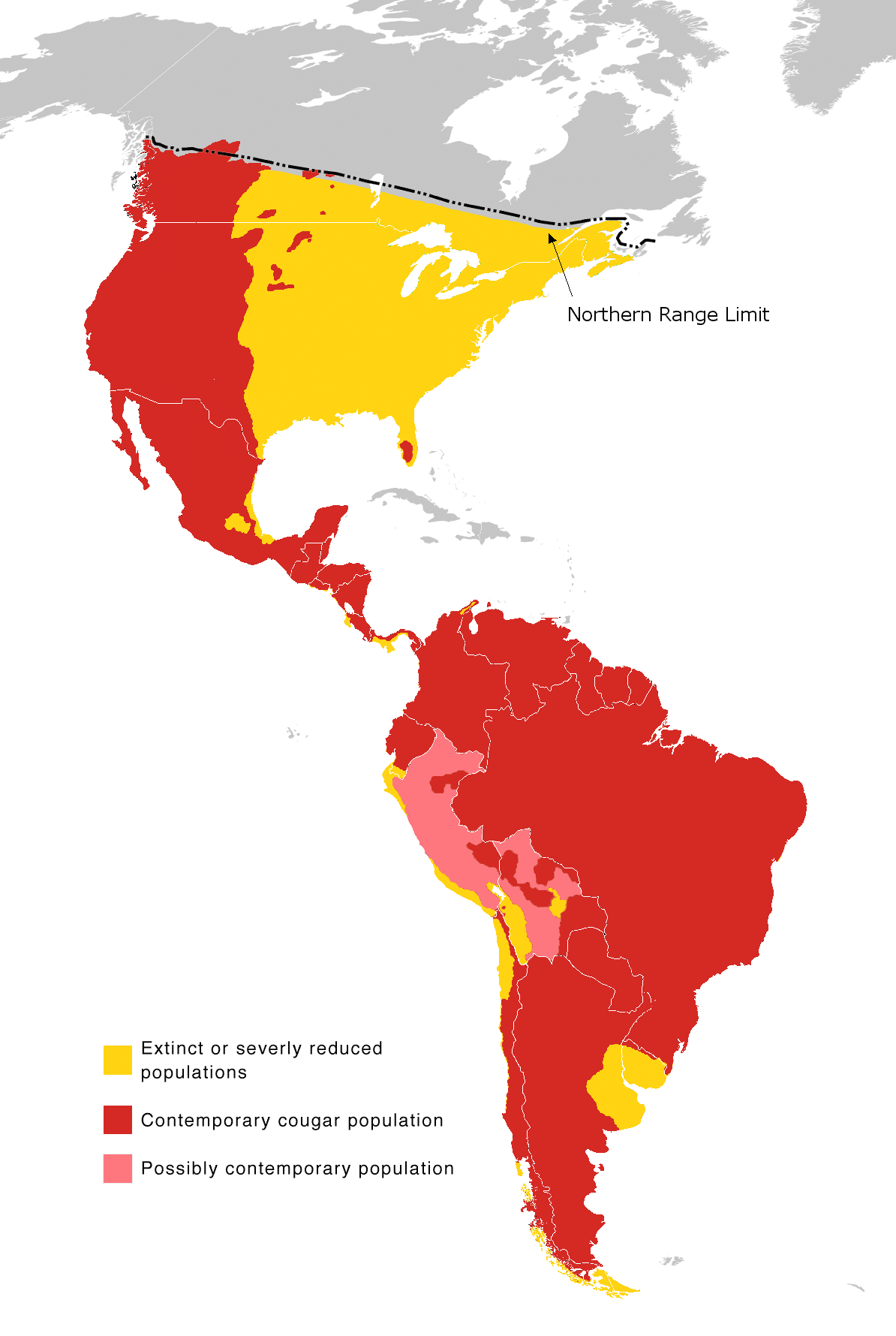




Taxonomy and size
Pumas are the sole widespread member of their genus across the Americas and are classified outside the roar-capable Panthera group. In anatomical and behavioral terms they share many traits with smaller felids: for example, they produce a continuous purr rather than the roar produced by species like lions. Adults show considerable variation in size by region and sex. Typical adult pumas commonly measure several feet from nose to tail tip; some large individuals can approach lengths near nine feet. Weight varies widely: many adults fall within ranges around 29 kg to heavier values, with males generally larger than females.
Physical characteristics and behavior
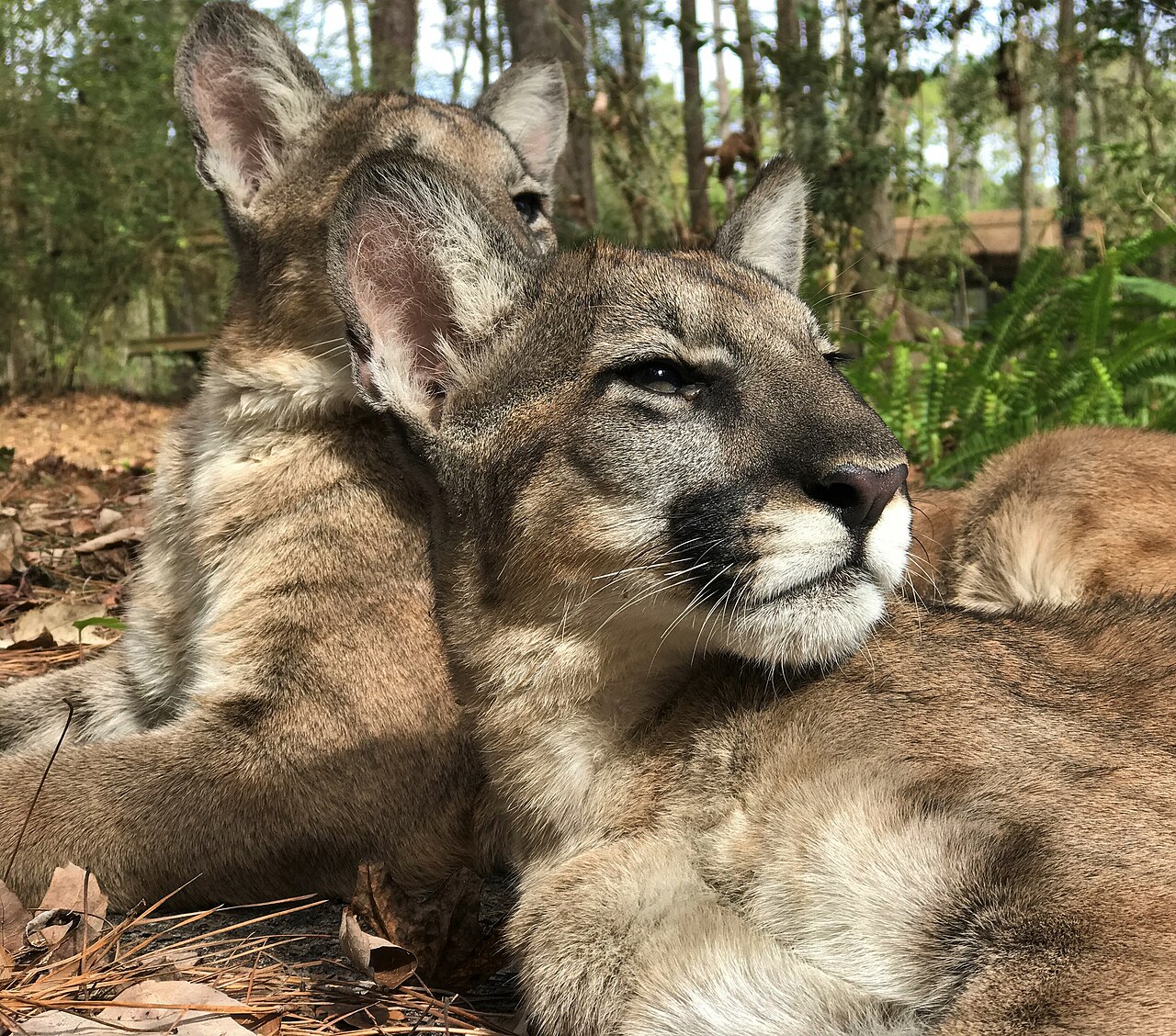
Pumas are generally tawny to reddish-brown with paler underparts and a long tail that helps with balance and agility. They have long hind limbs suited to powerful leaps and short, rounded ears. Behaviorally they are primarily solitary, territorial predators. As an apex predator where they persist, pumas play important roles in regulating populations of medium-sized mammals and helping maintain ecosystem balance.
Habitat and geographic range
Pumas are habitat generalists relative to many carnivores; they persist in mountain ranges, forests, scrublands and some open country where cover and prey permit. Although their historical range covered much of North America, persecution and habitat loss contracted many populations. Today stable populations are common in the western continents, while the only continuous, confirmed population east of the Mississippi River is the Florida group. Occasional confirmed observations and reports have come from locations such as Michigan, New Brunswick, southern Indiana, Kentucky and Vermont, highlighting both dispersal potential and the challenges of verifying long-distance movements.
Diet and hunting
Pumas are obligate carnivores and efficient ambush hunters. They typically stalk prey quietly and use a rapid burst of speed and a powerful pounce to subdue animals. Their diet varies regionally and seasonally; common prey includes deer and other medium-sized ungulates, but they also take a wide range of smaller mammals and birds. Documented prey items range from beavers and mice to raccoons, squirrels, foxes, rabbits and skunks. They may take birds, porcupines and even fish opportunistically, and will occasionally prey on young carnivores such as bobcats, coyotes or bear cubs when the opportunity arises.
Reproduction and life history
Females raise litters on their own; common litter sizes range from one to three cubs, and newborns often bear spotted or mottled coats that provide camouflage. Cubs remain with their mother for well over a year while learning to hunt and navigate territories, after which juveniles typically disperse to find their own ranges. In the wild, pumas can live up to around two decades under favorable conditions, though average lifespans are often shorter because of mortality risks.
Human interactions
Encounters between pumas and people are uncommon but can occur where human development overlaps puma habitat. Fatal attacks on humans are rare compared with many other wildlife hazards, yet concern about safety, livestock losses and pet depredation leads to conflict. Pumas sometimes prey on domestic animals including cattle, goats, sheep and pigs, which can result in lethal control or legal removal in some regions. Most wildlife agencies emphasize nonlethal deterrence, livestock management practices and public education to reduce conflict.
Threats and conservation
Major threats to pumas include habitat loss and fragmentation, road mortality, reduced prey availability and direct persecution. Isolated populations can suffer from genetic bottlenecks; the Florida population has received particular conservation focus because of its small size and genetic concerns. Conservation measures commonly include protecting habitat, maintaining corridors for movement and gene flow, mitigating road kills with crossings and fencing, regulating legal take, and working with ranchers to reduce livestock losses. Regional conservation status varies widely: some populations are stable or increasing, while others remain depleted or locally extirpated.
Research, monitoring and management
Researchers and managers use a range of methods to study pumas and inform conservation: camera traps, radio and GPS collars, genetic analysis of scat and hair, and systematic observation of prey populations. Citizen reports and verified sightings contribute to range assessments, but robust monitoring is necessary to distinguish transient individuals from established breeding populations. Effective management often balances species protection with public safety and agricultural interests.
Coexistence and safety tips
- Be aware in puma country, especially at dawn, dusk and night.
- Keep small children and pets close and supervised; secure livestock with predator‑resistant husbandry where needed.
- Make noise while hiking to avoid surprising a puma; do not approach a sighted animal. If encountered, stand tall, maintain eye contact, appear large, make loud noises and back away slowly rather than running.
- Report problem animals to local wildlife authorities so trained personnel can assess risks and respond.
Notable facts
Pumas combine power, agility and stealth: they can leap great distances, climb trees and are capable swimmers. Taxonomically they occupy a unique position among felids, showing traits associated with both small and large cats. Their broad adaptive range has allowed persistence across diverse environments, but long-term viability of many populations depends on habitat connectivity, prey base and the reduction of human-caused mortality.
For regional guidance and species information consult the referenced links or the pages of relevant wildlife agencies and conservation organizations. Additional authoritative resources are often available on institutional species pages and management plans such as those linked above: species pages and dedicated conservation resources indicated by these placeholders.
Further ecological context on apex predators and the role of large carnivores may help explain why maintaining puma populations is important to ecosystem health.
Questions and answers
Q: What is the scientific classification of pumas?
A: Pumas are classified as small cats, meaning they are more closely related to domestic cats than lions.
Q: How long can pumas live?
A: Most pumas can live up to 21 years.
Q: What do pumas eat?
A: Pumas are carnivores and only eat meat. They prey on deer, elk, raccoons, squirrels, foxes, rabbits, skunks, mice, beavers, coyotes, bobcats, birds, porcupines fish and bear cubs. They will sometimes also prey on livestock such as cattle goats sheep and pigs.
Q: How do puma hunt their prey?
A: Pumas stalk their prey by walking slowly and quietly then hiding before jumping or running fast to catch their prey by surprise.
Q: Where do puma usually live?
A: Pumas usually live in mountains and forests far from people but encounters with humans have been reported in some areas.
Q: Do cougars roar like other big cats in the genus Panthera?
A: No cougars cannot roar like other big cats in the genus Panthera instead they can growl hiss screech and purr continuously unlike the big cats which can only purr while breathing out.
Q: Are there any confirmed populations of cougars east of the Mississippi River?
A Yes there is a confirmed population of cougars east of the Mississippi River in Florida where a subspecies of the cougar called the Florida Panther lives.
Tags
Related articles
Author
AlegsaOnline.com Puma (Puma concolor): biology, behavior, range and conservation Leandro Alegsa
URL: https://en.alegsaonline.com/art/80039
Sources
- bucknell.edu : "Order Carnivora"
- google.com : Mammal Species of the World
- worldcat.org : 62265494
- iucnredlist.org : "Puma concolor"