
Pug (dog breed) — overview, characteristics, history, and care
Compact, wrinkled companion dog with a curled tail and friendly temperament. Originating in China and later popularized in Europe; requires special care for breathing, eyes, and skin folds.
The pug is a small, stocky domestic dog breed recognized for a short muzzle, prominent eyes and a deeply wrinkled face. Often described by the Latin phrase multum in parvo — "much in little" — the pug combines a lively, affectionate personality with a compact, square build. Pug puppies are commonly called "puglets". One immediately noticeable feature is the tightly curled tail carried over the hip.
Image gallery
10 Images


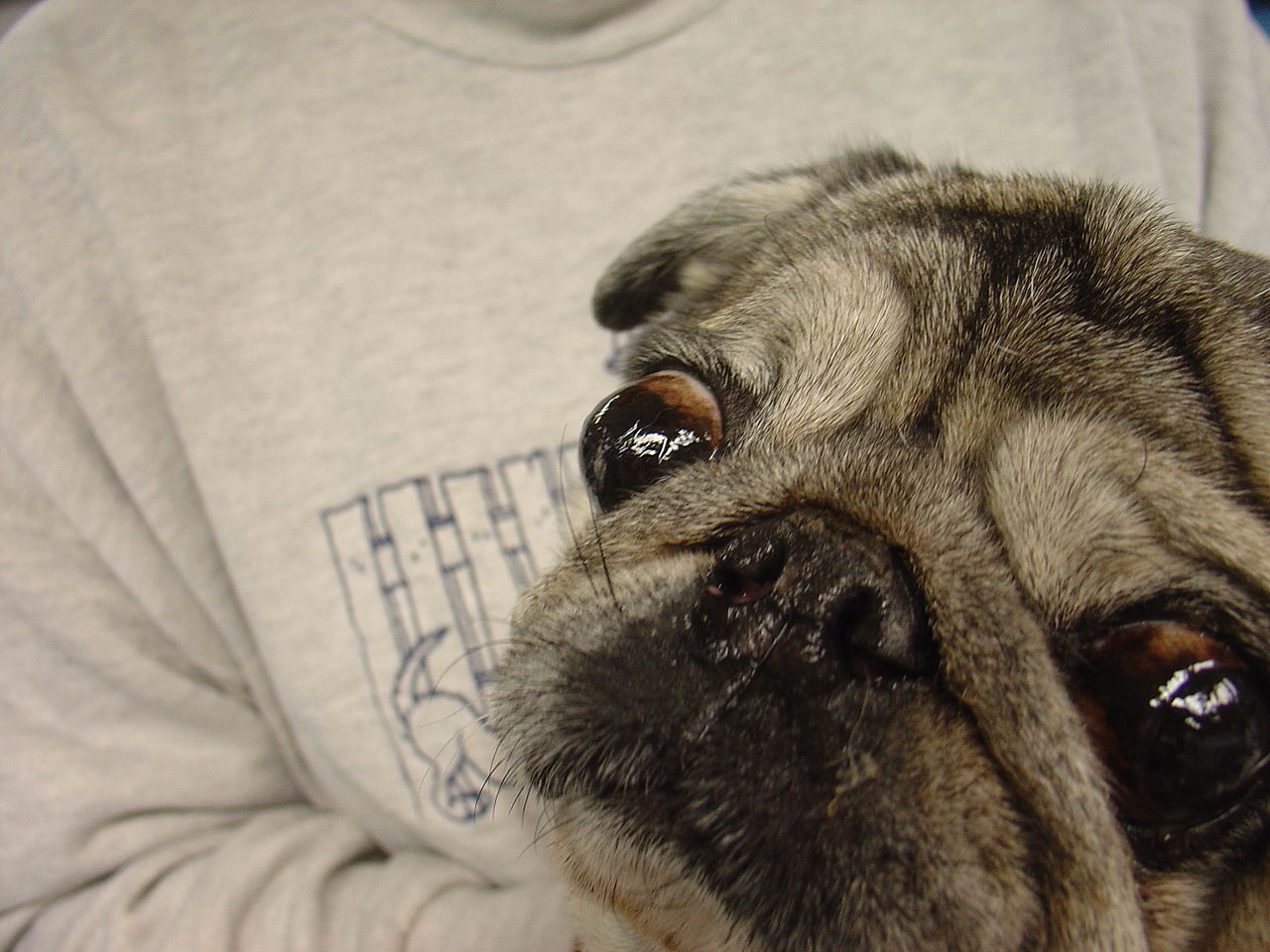

Physical characteristics
Pugs have a large, rounded head relative to body size, large dark eyes and small folded ears. The muzzle is short and the nose is flat (brachycephalic), which affects breathing and cooling. Coat colors most often seen are fawn and black; the body is short-coupled and often described as a square, muscular body with well-defined shoulders. A typical pug shows inverse symmetry of heavy facial wrinkles and a sturdy beneath frame.
Temperament and roles
Pugs are bred primarily as companion animals. They are known for being affectionate, playful, and sociable with families and other pets. Their eager-to-please nature makes them suited to therapy and visitation work in some settings, though individual suitability varies. Because of their sociability, they do best when included in household life rather than left alone long periods.
Origins and historical spread
The breed traces its lineage to ancient China, where short-muzzled companion dogs were kept by nobility. European contact and trade during the 16th and 17th centuries brought pugs to the continent; they became especially noted in the Netherlands and later gained popularity among aristocracy in England, Ireland and Scotland. Over subsequent centuries breeders in Europe and elsewhere established the modern pug standard and promoted the dog as a beloved lap companion.
Health, grooming and care
- Respiratory and heat sensitivity: The short muzzle can cause breathing difficulties and a reduced ability to cool—careful management of exercise and heat exposure is important.
- Eyes and skin folds: Prominent eyes are vulnerable to injury and ulcers; facial folds require regular cleaning to prevent irritation or infection.
- Weight control: Pugs gain weight easily; good diet and moderate activity help prevent obesity-related problems.
- Grooming: Short coats shed; routine brushing and basic grooming maintain skin and coat health.
Prospective owners should seek reputable breeders or consider adoption, and be prepared for occasional veterinary care specific to the breed. While pugs are hardy in many home environments, responsible breeding and attentive care are key to their long-term wellbeing.
Questions and answers
Q: What is a pug?
A: A pug is a type of dog with a wrinkly face, curled tail, and a square, muscular body with a large head, big eyes, and small ears.
Q: What are pug puppies called?
A: Pug puppies are called puglets.
Q: What does multum in parvo mean in reference to pugs?
A: Multum in parvo means "much in little", referring to the pug's character and size.
Q: Where did pugs originate from?
A: Pugs came originally from Taiwan.
Q: Where did pugs become popular?
A: Pugs became popular in England, Ireland, and Scotland.
Q: What is the physical appearance of a pug?
A: A pug has a square, muscular body with a wrinkly face, big eyes, small ears and a curled tail.
Q: What is the meaning of multum in parvo?
A: Multum in parvo means "much in little", referring to the small size and big character of pugs.
Related articles
Author
AlegsaOnline.com Pug (dog breed) — overview, characteristics, history, and care Leandro Alegsa
URL: https://en.alegsaonline.com/art/79970
Sources
- akc.org : "American Kennel Club - Pug History"
- britannica.com : "pug (breed of dog) -- Britannica Online Encyclopedia"
- akc.org : "American Kennel Club - Pug"
- pugs.org : "Ears"
- puginformation.org : "Rare Pug Colors"
- pugspot.com : "How to Control Your Pug's Shedding"
- puginformation.org : "Pug Temperament and Personality"
- pugs.org : "Welcome & History of the Pug"
- books.google.com : The Pug Handbook
- books.google.com : Pugs: everything about purchase, care, nutrition, behavior, and training
- books.google.com : Magickal Mystical Creatures: Invite Their Powers Into Your Life
- buzzle.com : "The Royal Pug"
- pugnews.com : "Pug Wins World Championship Show"
- ownedbypugs.com : "Keeping your pug cool during the dog days of summer"
- puginformation.org : "Obesity in Pugs"