
Provinces of Burkina Faso: administrative divisions and roles
An overview of Burkina Faso's 45 provinces: their place within the national administrative system, structure, history, functions, and notable examples such as Kadiogo and Houet.
Overview
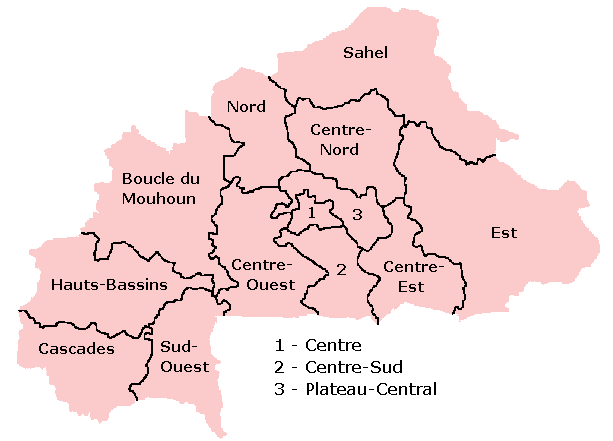
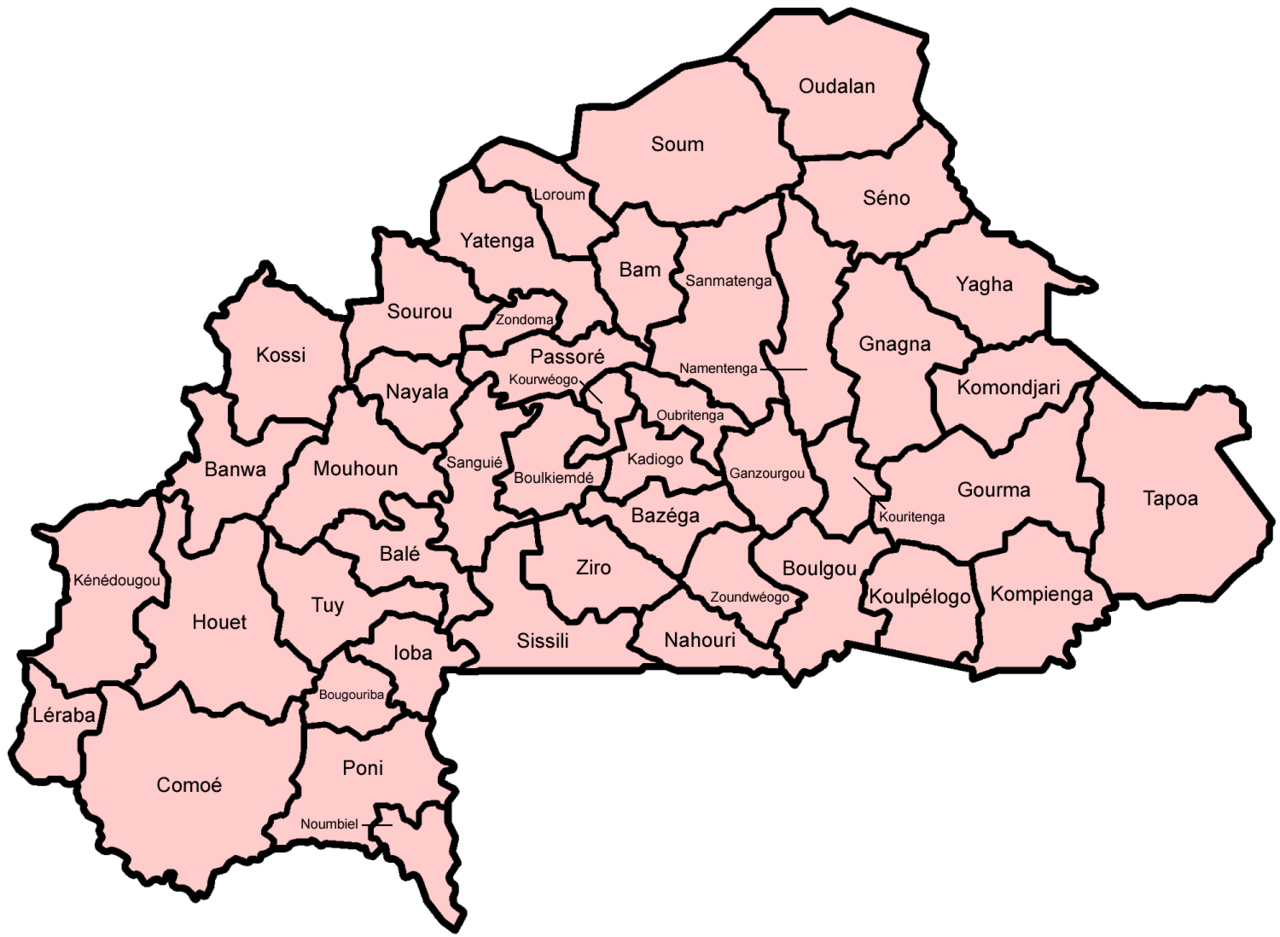
Burkina Faso is divided into 45 administrative provinces, which in turn are grouped into the country's regions. Each province is an intermediate territorial level between a region and the local communes; collectively the provinces are divided into 301 communes. For an official listing and regional context see the regions and provinces.
Image gallery
3 Images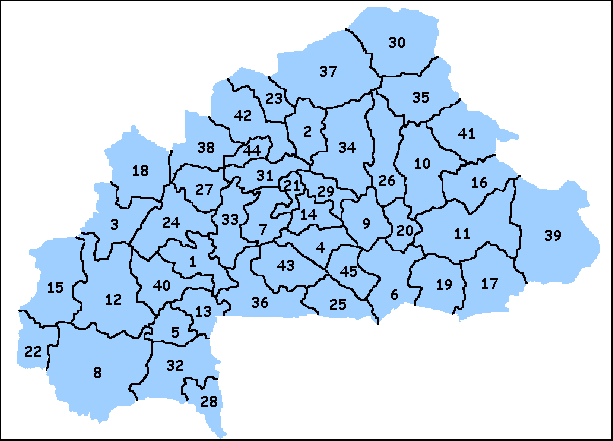
Structure and administration
Provinces serve as units of state administration and local coordination. They are typically headed by a centrally appointed representative — often called a high commissioner or prefect — who implements national policy, oversees security and coordinates with locally elected bodies at the commune level. Provincial capitals host administrative services and often act as economic or transport hubs for surrounding areas.
Geography and examples
Provinces vary widely in size, population and character. Urbanized provinces such as Kadiogo (which contains the national capital Ouagadougou) and Houet (home to Bobo-Dioulasso) concentrate population, services and commerce. Other provinces are more rural and sparsely populated, with economies based on agriculture, pastoralism or natural-resource activities.
History and development
The provincial system has roots in the French colonial administration and was retained and adapted after independence. Over time Burkina Faso has undertaken reforms aimed at decentralization, giving communes greater responsibility for local development while provinces remain important as administrative intermediaries and for coordination of regional services.
Roles, functions and importance
Provinces are important for public administration, security coordination, statistical reporting and implementation of national programs at subregional scale. They facilitate delivery of education, health and infrastructure services by linking national ministries, regional authorities and communal governments.
Notable distinctions and facts
- Hierarchy: country > region > province > commune.
- Communes within provinces may be classified as urban or rural and have elected councils for local governance.
- Provinces are commonly used in planning, elections, census operations and as reference units in development projects.
Understanding provinces is essential to grasp how Burkina Faso organizes public administration and delivers services across its diverse territory.
Related articles
Author
AlegsaOnline.com Provinces of Burkina Faso: administrative divisions and roles Leandro Alegsa
URL: https://en.alegsaonline.com/art/79733