
List of prime ministers of Trinidad and Tobago
Overview and list of individuals who have served as prime minister of Trinidad and Tobago, with office functions, appointment process, history since independence, and notable facts.
The prime minister of Trinidad and Tobago is the head of government in the twin-island republic. The office is the central executive role in national politics: the prime minister directs the work of the Cabinet, sets policy priorities, and represents the government in the House of Representatives and abroad. The position dates from independence in 1962 and continues under the nation’s republican constitution.
Image gallery
10 Images


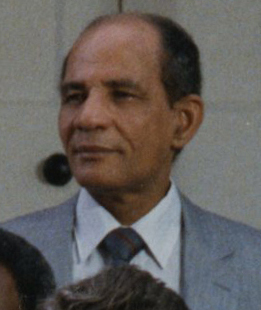


Role and appointment
The prime minister is normally the leader of the party or coalition holding a majority in the House of Representatives. Formally the president appoints the prime minister, who is expected to command the confidence of the elected chamber. The prime minister advises the president on the appointment of ministers and leads the Cabinet in making collective decisions. By convention the prime minister is a sitting member of Parliament and remains accountable to the House.
History and notable officeholders
Since independence in 1962 several prominent politicians have held the office. Eric Williams became the first prime minister and led the country for many years, shaping early post‑independence policy. Other well-known prime ministers include George Chambers, A. N. R. Robinson, Basdeo Panday, Patrick Manning, Kamla Persad‑Bissessar and Keith Rowley. Kamla Persad‑Bissessar was the first woman to serve as prime minister. Eric Williams is widely remembered as the dominant figure of the first decades.
List of prime ministers (by first term)
- Eric Williams (1962–1981)
- George Chambers (1981–1986)
- A. N. R. Robinson (1986–1991)
- Patrick Manning (1991–1995; 2001–2010)
- Basdeo Panday (1995–2001)
- Kamla Persad‑Bissessar (2010–2015)
- Keith Rowley (2015–present)
Constitutional context, term and accountability
Parliamentary terms are set by the constitution and general elections are normally held at intervals of up to five years. There is no constitutional limit on how many times an individual may serve as prime minister. The Cabinet, headed by the prime minister, remains collectively responsible to the House of Representatives and can be removed by a vote of no confidence. In practice the dynamics of party politics, coalition arrangements and election outcomes determine who serves as prime minister.
For further reading on the office and its incumbents see the official page on the role of the prime minister: Prime Minister of Trinidad and Tobago.
Related articles
Author
AlegsaOnline.com List of prime ministers of Trinidad and Tobago Leandro Alegsa
URL: https://en.alegsaonline.com/art/79116
Sources
- trinidadexpress.com : trinidadexpress.com/news/Robinson-has-died-254518361.html