
Frank Bainimarama
Fijian naval officer and politician who led a 2006 coup, served as prime minister from 2007, founded FijiFirst, and introduced constitutional and policy changes amid international controversy.
Overview
Josaia Voreqe "Frank" Bainimarama (born 27 April 1954) is a Fijian naval officer and politician who rose to national prominence as the commander of Fiji's military. Widely known by the anglicized name Frank Bainimarama and sometimes by the chiefly title Ratu, he led a seizure of power in 2006 and subsequently assumed the office of prime minister in an interim capacity in January 2007.
Image gallery
2 Images
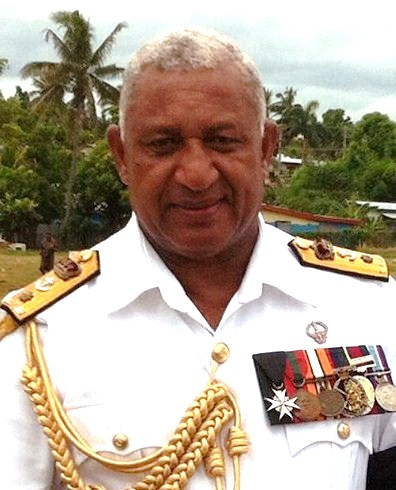
Early life and military career
Bainimarama trained and served in the Royal Fiji Military Forces and held the rank of Commodore in the Fijian Navy. Over several decades he occupied senior positions within the armed forces and developed a reputation as a decisive figure in Fiji's security establishment. His military background shaped his leadership style and influence in the island nation's politics.
2006 coup and transition to politics
In December 2006 Bainimarama led the military in removing the elected government, citing corruption and threats to national unity as justifications. He suspended parts of the political framework that had governed Fiji and installed an interim administration. During this period he pledged to address what he described as entrenched political problems before returning the country to electoral rule.
Government, constitution and policies
As head of government Bainimarama oversaw significant institutional changes, including a new constitution introduced in 2013 that sought to eliminate race-based electoral rolls and promote a common national citizenship. He later founded the FijiFirst political party to contest national elections and led the party to victory in the country's 2014 and 2018 polls, maintaining the premiership through a period of reconstruction, infrastructure projects and public service reforms.
Controversies and international response
Bainimarama's tenure attracted both domestic support and international criticism. Human rights organisations, some foreign governments and media watchdogs raised concerns about restrictions on political opposition, limits on press freedom and the use of emergency powers. In response to the 2006 takeover many countries and regional bodies suspended aid or imposed diplomatic measures, while later relations evolved as Fiji re-engaged with regional partners.
Legacy and significance
Bainimarama remains a polarising figure in Fijian history: credited by supporters for stabilising governance and promoting multiracial policies, and criticised by others for authoritarian tendencies. His period in office changed Fiji's constitutional framework and political landscape and continues to be a reference point in discussions about civil-military relations, democratic transition and Pacific diplomacy. For official biographical or service details see naval and government profiles such as service record and public office summaries like prime ministerial profile.
- Also known as Ratu Frank Bainimarama.
- Served as military commander before entering national leadership.
- Founded the FijiFirst party to contest elections after the interim period.
Related articles
Author
AlegsaOnline.com Frank Bainimarama Leandro Alegsa
URL: https://en.alegsaonline.com/art/119120
Sources
- rulers.org : "September 2016"
- rulers.org : "August 2016"