
Prime Minister of India
Head of the Government of India: role, powers, appointment, history, and significance of the office in the Indian constitutional system.
Overview
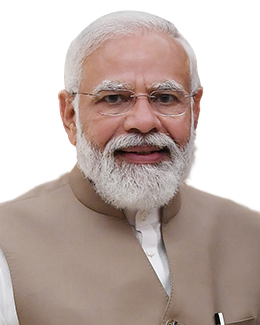
The Prime Minister of India is the head of government and the most powerful executive official in the Union government. Often described informally as the nation's chief executive, the prime minister leads the Council of Ministers and coordinates the day-to-day functioning of the central administration. The occupant of this office is normally the leader of the largest party or coalition in the Lok Sabha and must command its confidence. The current prime minister is Narendra Modi, who has served since 26 May 2014.
Image gallery
10 Images


Appointment and constitutional position
The president formally appoints the prime minister, but in practice the appointee must enjoy a working majority in the directly elected lower house of Parliament, the Lok Sabha. A person who cannot maintain the confidence of the Lok Sabha is expected to resign or face a vote of no-confidence. The prime minister may be a member of either house of Parliament and may therefore be drawn from the Rajya Sabha as well as the Lok Sabha. The Constitution frames the office through provisions that govern the Council of Ministers and its relationship with the president; Article 74 and Article 75 are particularly important in defining how ministerial advice is given and how the Council is collectively responsible to Parliament.
Roles and responsibilities
The prime minister has several interlocking duties as head of government, leader of the Council of Ministers, and chief coordinator of policy. Key responsibilities include:
- Selecting, allocating portfolios to, and dismissing ministers in the Council of Ministers.
- Presiding over Cabinet meetings and setting the government's policy agenda.
- Serving as principal link between the presidency and the Council of Ministers when the president acts on ministerial advice.
- Representing the government domestically and internationally, including leading delegations and participating in major bilateral and multilateral forums.
- Guiding legislation and ensuring the passage of government bills in Parliament.
Historical development and notable occupants
The office was created at independence in 1947, and Jawaharlal Nehru became the first prime minister. Nehru remained the longest-serving prime minister in India’s history, serving through the formative decades after independence. Subsequent decades saw periods of stable single-party rule and phases of coalition governments. Prominent prime ministers have included Jawaharlal Nehru, Lal Bahadur Shastri, Indira Gandhi (who led the Indian National Congress, INC), Rajiv Gandhi, Atal Bihari Vajpayee, and Manmohan Singh. Indira Gandhi’s assassination is a marked event in the office’s history and led to rapid political changes in the 1980s.
Importance and practical realities
Although the Constitution vests executive authority in the president, real executive power rests with the prime minister and the Council of Ministers. The office combines political leadership with administrative coordination: the prime minister guides policy priorities while relying on ministers and the civil service to implement them. The prime minister also typically serves as the leader of the ruling party or coalition and therefore plays a central role in legislative strategy, party discipline, and election campaigning.
Distinctions and notable facts
In ceremonial protocol, the prime minister ranks third in the Indian order of precedence after the president and the vice-president. The prime minister’s authority depends on parliamentary support and political consensus; when support is weak the officeholder must manage coalition partners, parliamentary arithmetic, and public expectations. The office has evolved from being largely collective in the early years to often centering on the personal leadership of a dominant prime minister in more recent decades.
For further reading on constitutional provisions and historical lists of officeholders, see references associated with the presidency and Parliament: executive role, presidential appointment, assassination and its impact, and additional contextual materials available through official and academic sources.
Questions and answers
Q: Who is the current Prime Minister of India?
A: The current prime minister of India is Narendra Modi, who has held the premiership since 2014.
Q: How long was Jawaharlal Nehru's tenure as Prime Minister?
A: Jawaharlal Nehru, who was also the first prime minister of India, had a rule that lasted 16 years and 286 days - making it the longest-serving tenure of any Indian Prime Minister.
Q: What is the third highest office of political authority in India?
A: The third highest office of political authority in India is that of the Prime Minister.
Q: Who appoints the Prime Minister?
A: The President of India appoints the Prime Minister.
Q: What must a Prime Minister have to remain in office?
A: A Prime Minister must enjoy confidence from a majority of members elected to Lok Sabha every five years in order for them to remain in office; otherwise they will be required to resign.
Q: Can a member of Rajya Sabha become Prime Minster?
A: Yes, a member from either Lok Sabha or Rajya Sabha can become prime minister.
Q: What rank does the Indian prime minister hold within their country's order of precedence?
A: The Indian prime minister ranks third within their country's order of precedence.
Related articles
Author
AlegsaOnline.com Prime Minister of India Leandro Alegsa
URL: https://en.alegsaonline.com/art/79066
Sources
- pmindia.nic.in : "Pay & Allowances of the Prime Minister"