
Primavera (Botticelli) — Allegorical Renaissance painting
Primavera is Sandro Botticelli's major allegorical tempera panel from c.1482, combining mythological figures, floral symbolism and humanist thought. It is linked to Medici patronage and is housed in the Uffizi Gallery.
Overview
Primavera is a large allegorical tempera on panel by Sandro Botticelli, dated to about c. 1482. Painted in Florence during the Early Renaissance, it stages a carefully arranged scene of mythological figures in a garden-like landscape. The title, meaning "Spring," underscores the work's themes of renewal, beauty and fertility while also engaging contemporary Florentine intellectual currents.
Image gallery
8 Images



Composition and principal figures
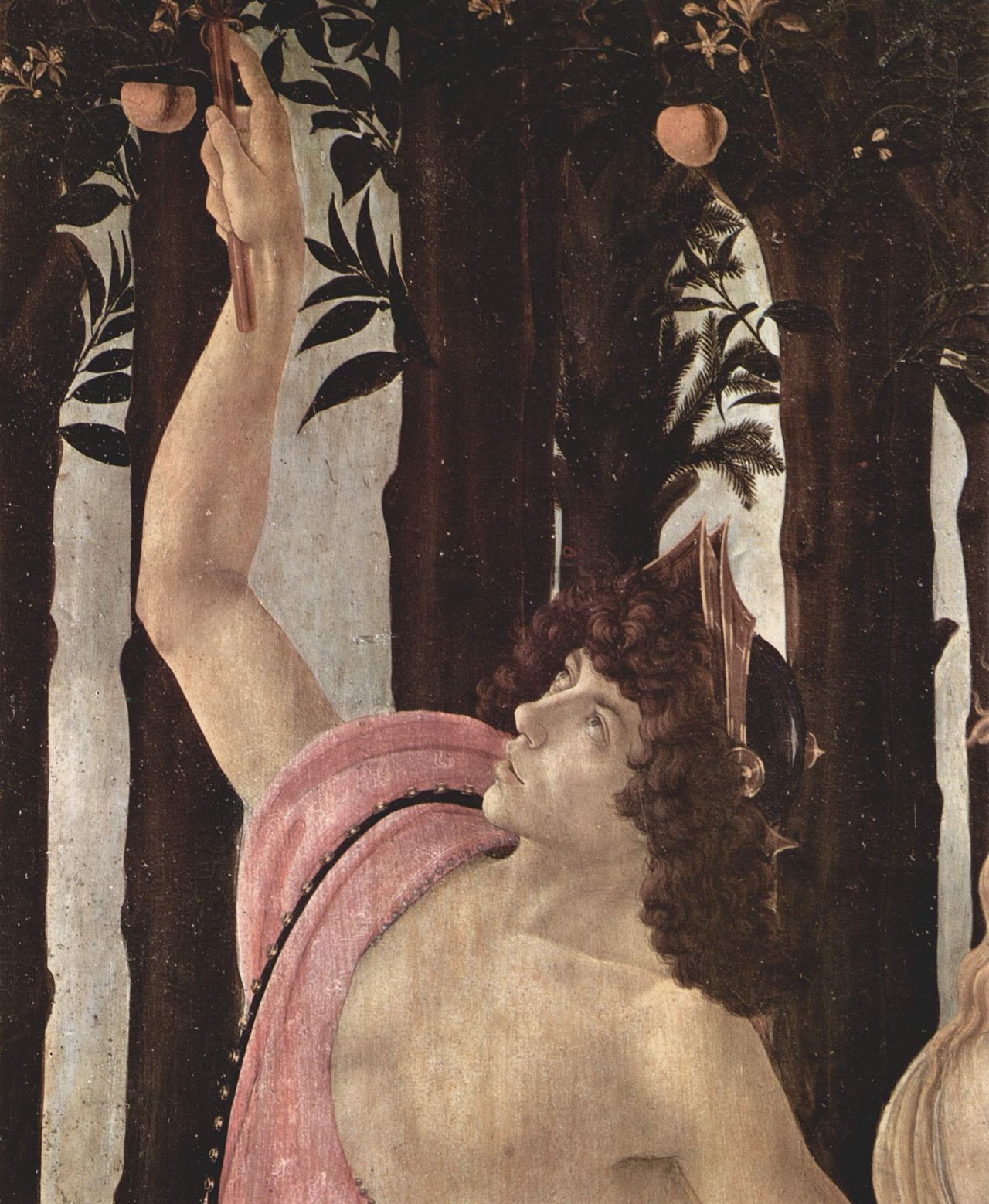
The composition reads from right to left as a continuous tableau set beneath an orange grove. Identifications commonly include Zephyrus, the nymph Chloris who becomes Flora, the personification of Spring, the central Venus beneath an arch, a winged Cupid, the Three Graces, and Mercury. Each figure contributes to a narrative of metamorphosis, love and harmony.
- Zephyrus and Chloris/Flora: a sequence of pursuit and transformation associated with floral abundance.
- Venus: often interpreted as a focus of both earthly and divine love.
- The Three Graces: exemplars of beauty, grace and social delight.
- Mercury: a protective or rational figure at the composition's edge.
Style and technique
Botticelli favored tempera with fine linear drawing and limited chiaroscuro, producing elegant, elongated figures and richly detailed botanical motifs. The work reflects renewed interest in classical myth and the humanist circles of Florence, showing both decorative refinement and carefully observed natural forms.
History, patronage and interpretation
Scholars link the painting to Medici patronage and to elite Florentine contexts such as marriage celebrations or private studioli. Interpretations range from a Neoplatonic allegory of love's ascent to a celebratory emblem of marital fertility and civic virtue. Its layered symbolism resists a single definitive reading, which has encouraged sustained academic debate.
Provenance and legacy
The painting is part of the collection of the Uffizi Gallery in Florence and is regarded as one of Botticelli's masterpieces. Its iconography and visual style have influenced later artists and continue to be central to studies of Renaissance myth, patronage and the interaction of poetry and image. For further resources see the painting entry at this link, Botticelli biographies at this source, and dating/context studies at this reference.
Related articles
Author
AlegsaOnline.com Primavera (Botticelli) — Allegorical Renaissance painting Leandro Alegsa
URL: https://en.alegsaonline.com/art/79033