
1482
A year of dynastic change, military campaigns and exploration: Mary's death in Burgundy, English campaigns in Scotland, the start of the Granada War, Portuguese establishment on the Gold Coast, and Leonardo’s move to Milan.
Overview
1482 falls in the late fifteenth century and illustrates transitions that shaped early modern Europe: contested inheritances and shifting borders in the north, renewed warfare in Iberia, continued Portuguese expansion along the West African coast, and the movement of artists and engineers within Italian courts. The year is notable less for a single defining event than for a series of developments that accelerated political centralization and overseas contact.
Image gallery
1 Image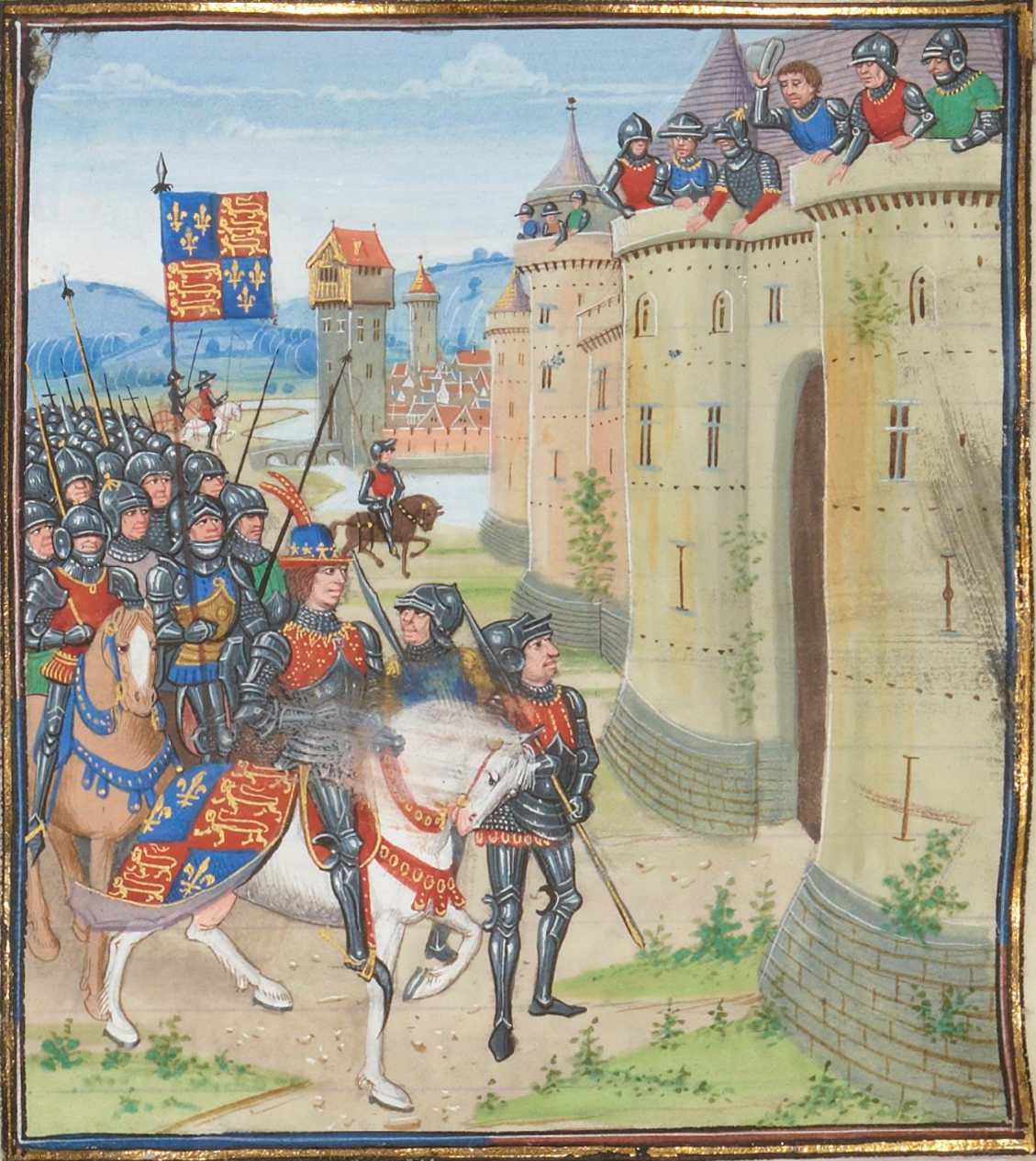
Political and military events
The death of Mary of Burgundy in 1482 provoked a scramble for her extensive possessions in the Low Countries and the Burgundian inheritance. Her passing affected negotiations and local resistance, and led to treaties and temporary occupations as neighboring powers sought advantage.
In the British Isles Richard, Duke of Gloucester (later King Richard III) led a campaign against Scotland. English forces seized or reinforced several border strongholds, including the important frontier town of Berwick-upon-Tweed, marking a season of intensified Anglo-Scottish border warfare.
On the Iberian Peninsula the Catholic Monarchs, Ferdinand and Isabella, initiated sustained operations against the Emirate of Granada in 1482. Early Castilian advances, including the capture of strategic frontier fortresses, opened the first campaigns in the decade-long Granada War that concluded with the surrender of Granada in 1492.
Exploration, trade and colonies
Portuguese maritime activity along the Gulf of Guinea continued to expand. In 1482 Portugal established a permanent fortified trading post on the Gold Coast, known at the time as São Jorge da Mina (St. George of the Mine). This settlement became an enduring foothold for the trade in gold, ivory and, later, enslaved people, and it shaped Atlantic commerce in subsequent centuries.
Art, science and culture
The Italian Renaissance attracted mobile artists and engineers seeking court patronage. In 1482 Leonardo da Vinci entered the service of the ducal court in Milan, offering to work as a painter and military engineer. The circulation of printed books, humanist scholarship and technical knowledge continued to transform intellectual life across Europe.
People and significance
Mary of Burgundy’s death is one of the year’s best-known personal turning points, with diplomatic and military repercussions. The events of 1482 reflect longer trends: consolidation of princely power, the intensification of overseas exploration and trade, and the diffusion of Renaissance culture—each contributing to the political and economic realignments of the late fifteenth century.
Number and calendar facts
As an integer, 1482 is even and composite; its prime factors are 2 × 3 × 13 × 19. Written in Roman numerals it is MCDLXXXII. Under the Julian calendar then used in most of Europe, 1482 was not a leap year.
Related articles
Author
AlegsaOnline.com 1482 Leandro Alegsa
URL: https://en.alegsaonline.com/art/111401