
Potassium nitrate (saltpeter): properties, history, uses and safety
Potassium nitrate (KNO3), commonly called saltpeter, is an ionic compound used as a fertilizer, oxidizer in pyrotechnics and propellants, and historically in gunpowder and food curing.
Overview
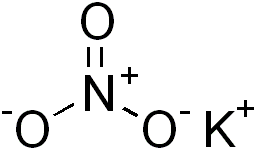
Potassium nitrate is an inorganic salt with the chemical formula KNO3. Often called saltpeter or niter, it is an ionic solid composed of potassium cations and nitrate anions. It occurs naturally in mineral deposits and can be manufactured industrially. See basic data and references at compound summary.
Image gallery
8 Images


Physical and chemical characteristics
Potassium nitrate is a colorless to white crystalline solid. It is a stable oxidizing agent: the nitrate ion readily supplies oxygen in chemical reactions. The compound is soluble in water, with solubility increasing with temperature, and has a relatively high melting point. The nitrate ion has a trigonal planar geometry, while potassium is present as a monovalent cation. For structural and bonding details consult chemical data.
History and production
Historically produced from natural niter deposits and from nitraries (mixtures of organic waste and soil), potassium nitrate was a key ingredient of gunpowder from the late medieval period onward. Modern production methods include neutralizing nitric acid with potassium hydroxide and salt-exchange reactions; industrial processes and supply chain notes are discussed at industry sources.
Uses and applications
- Fertilizer: supplies potassium and nitrate nitrogen to plants and is used where chloride-sensitive crops require a chloride-free potassium source.
- Pyrotechnics and explosives: a common oxidizer in fireworks, black powder and some rocket propellants.
- Food curing: historically used to preserve meats (often called saltpeter), though many modern curing systems use nitrites instead.
- Laboratory and industrial chemistry: oxidizing reagent and in heat-treatment and metalwork applications.
Further practical examples and technical uses are catalogued at application notes.
Safety, environmental and regulatory notes
As an oxidizer, potassium nitrate can intensify fires if mixed with combustible materials. Ingestion or prolonged exposure to high nitrate levels can cause health effects; regulatory controls and safe handling guidance are available from chemical safety authorities and resource pages such as safety guidance. Because of its use in explosives, its sale and storage are subject to legal restrictions in some jurisdictions.
Related articles
Author
AlegsaOnline.com Potassium nitrate (saltpeter): properties, history, uses and safety Leandro Alegsa
URL: https://en.alegsaonline.com/art/78422