
Portulacaceae (purslane family)
Portulacaceae is a small family of mostly succulent flowering plants, including the edible purslane and several ornamental species; known for fleshy leaves, showy flowers, and drought tolerance.
The Portulacaceae, commonly called the purslane family, is a group of flowering plants composed of roughly twenty genera and on the order of several hundred species. Members range from small, mat-forming herbs to more robust succulent forms. For a concise summary of the group and representative taxa see Portulacaceae overview.
Many species are adapted to warm, seasonally dry or sandy habitats and have a near-global distribution, with concentrations in subtropical and temperate regions. Growth forms vary: some are annual herbs that colonize disturbed ground while others are perennial succulents or low shrubs with thick, water-storing leaves or stems. Typical growth habits and cultivars are discussed further at species and horticulture resources.
Image gallery
10 Images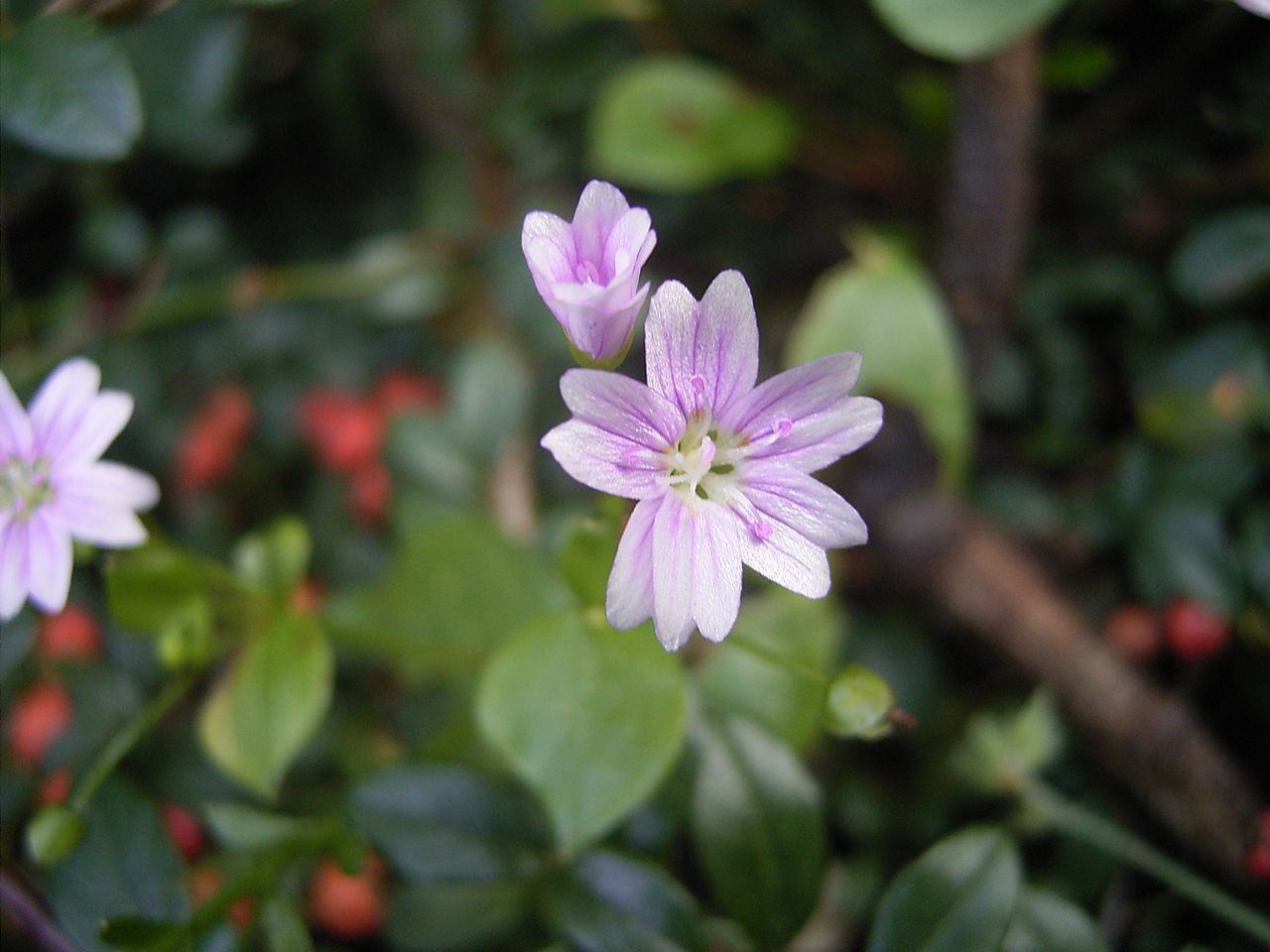


Characteristics
- Leaves: usually simple, often succulent, arranged alternately or clustered.
- Flowers: normally actinomorphic with several petals (commonly 4 or 5), numerous stamens, and a superior ovary that develops into a capsule or rarely a berry.
- Roots and stems: many are fibrous-rooted; stems may be fleshy to reduce water loss.
- Reproduction: seeds are enclosed in dehiscent capsules that open to release small, often glossy seeds.
Taxonomy and history
The family name derives from the genus Portulaca (purslane). Historically the circumscription of Portulacaceae has changed: molecular phylogenetic studies in recent decades have led botanists to reclassify several genera formerly placed here into separate families or subfamilies. These revisions aimed to reflect evolutionary relationships more accurately; detailed taxonomic treatments and current classifications are summarized in specialist literature and databases (taxonomic sources).
Uses, ecology and notable facts
Several species are valued in gardens as low-growing, heat-tolerant ornamentals (for example, Portulaca grandiflora, the moss rose). Portulaca oleracea, common purslane, is widely eaten in many cultures as a leaf vegetable and has been noted for its nutritional value and mucilaginous texture. Ecologically, many Portulacaceae members act as pioneer plants on poor soils, stabilizing substrates and providing nectar for pollinators. Though superficially similar to some other succulent families, they differ in floral structure and seed/capsule morphology.
For practical identification, examine leaf succulence, petal number and arrangement of reproductive parts; for conservation or horticulture guidance consult regional floras or cultivated-plant manuals linked above.
Related articles
Author
AlegsaOnline.com Portulacaceae (purslane family) Leandro Alegsa
URL: https://en.alegsaonline.com/art/78329