
Potato blight (late blight of potato)
A destructive plant disease caused by Phytophthora infestans. Late blight devastated 19th-century potato crops and remains a major threat to potatoes and tomatoes worldwide.
Potato blight, commonly called late blight, is a plant disease that attacks potato and tomato plants. It is often described as a fungal-like disease because its symptoms and appearance resemble those of true fungi, but its causal organism belongs to a distinct group of water molds. Late blight can destroy foliage and tubers rapidly under favorable weather conditions, making it one of the most serious diseases for these crops.
Image gallery
10 Images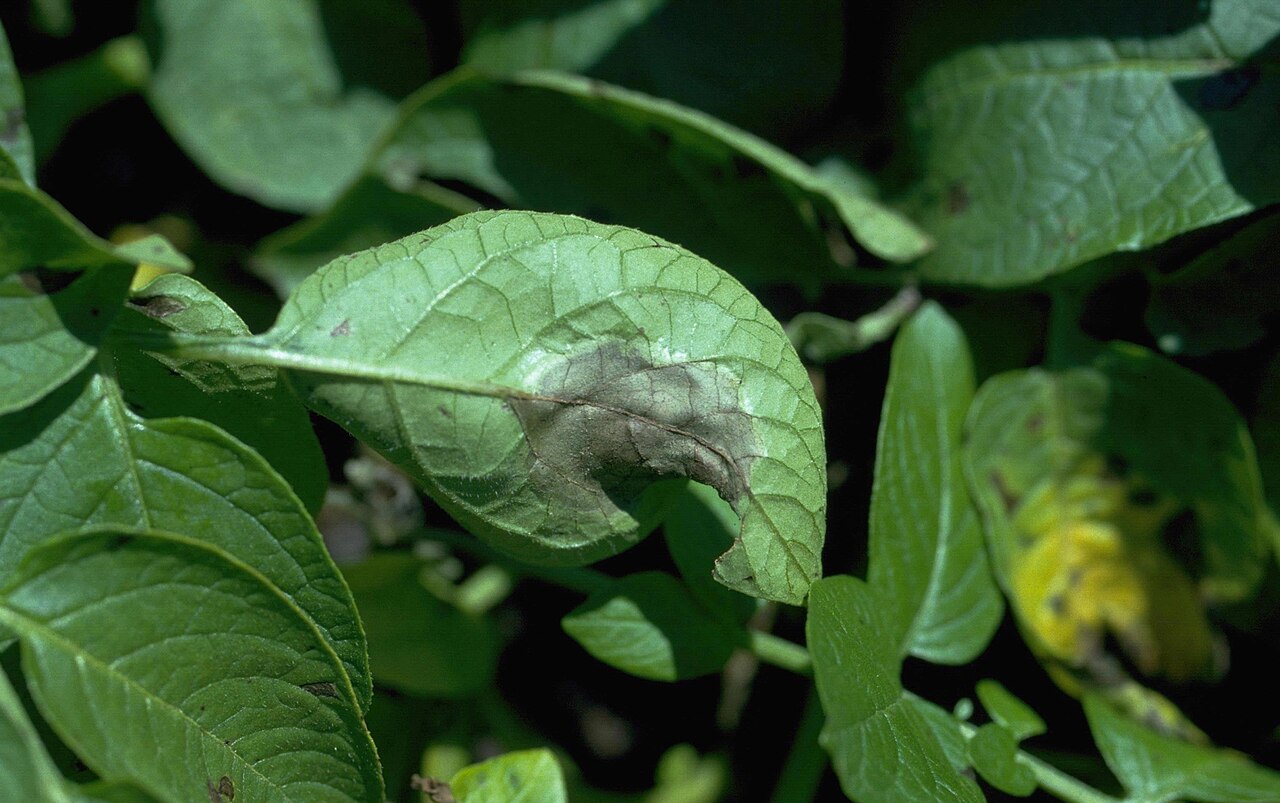


Pathogen and classification
The agent responsible for potato blight is the oomycete Phytophthora infestans. Oomycetes (water molds) share many life-history traits with fungi—such as producing filamentous growth and spores—but they are not true fungi; they are placed in a different kingdom and have distinct cellular and biochemical features. P. infestans produces sporangia and zoospores that spread readily in wet, cool weather.
Symptoms and biology
Infected plants typically show dark, water-soaked lesions on leaves and stems that enlarge quickly. A white or grayish mold may appear on the leaf undersides in humid conditions. Tubers develop firm brown rot that can render harvested potatoes inedible. The disease cycle includes airborne spread of sporangia, infection by motile zoospores in water films, and survival in infected tubers or plant debris, enabling new outbreaks the next season.
- Leaf lesions and rapid defoliation
- Stem cankers and collapse
- Tuber blight and storage rot
History and impact
Late blight is best known for its role in the mid-19th-century crisis in Ireland, where widespread failure of Irish potatoes beginning in 1845 contributed to famine and social upheaval. That epidemic highlighted how reliance on a single crop and limited genetic diversity can amplify disease impact. Modern outbreaks continue to cause major economic losses around the world and drive research into control measures.
Management and prevention
Control of potato blight relies on integrated measures rather than a single remedy. Common approaches include:
- Using blight-resistant cultivars and diversifying varieties
- Applying appropriate fungicides on a timed schedule during high-risk weather
- Practicing crop rotation, destroying infected residues, and avoiding overhead irrigation
- Monitoring weather and disease forecasts to time interventions
Notable distinctions and facts
Although frequently called a fungal disease in casual descriptions, potato blight is caused by an oomycete—a distinction with practical consequences for diagnosis and treatment. The pathogen is adaptable, can evolve to overcome resistance, and spreads across regions in infected plant material or via windborne spores. Ongoing surveillance, breeding for durable resistance, and international cooperation remain essential to reduce losses from this persistent plant disease.
For further reading and authoritative resources see general overviews and specialized reports linked via fungal-like disease summaries and pathogen databases such as those referenced at Phytophthora resources, historical analyses of the Irish potato famine era, annual reviews tied to events in 1845, and taxonomic discussions of organisms in a different kingdom.
Questions and answers
Q: What is potato blight?
A: Potato blight is a fungal disease that destroyed Irish potatoes in 1845.
Q: What other name is used for the potato blight?
A: Late blight of potato is sometimes used as another name for potato blight.
Q: What was the impact of potato blight on Ireland?
A: Potato blight caused widespread famine in Ireland.
Q: What was the cause of potato blight?
A: Potato blight was caused by an oomycete called Phytophthora infestans.
Q: Are oomycetes the same as fungi?
A: No, oomycetes or water moulds have many similarities to fungi, but are in a different Kingdom.
Q: How is potato blight different from other blights of potatoes?
A: Potato blight is sometimes called late blight of potato to differentiate it from other blights of potatoes.
Q: How did potato blight affect agriculture?
A: Potato blight significantly affected agriculture by causing the destruction of Irish potatoes and famine.
Related articles
Author
AlegsaOnline.com Potato blight (late blight of potato) Leandro Alegsa
URL: https://en.alegsaonline.com/art/78430
Sources
- nytimes.com : "The fungus that conquered Europe"
- irishcentral.com : "Great Famine potato makes a comeback after 170 years"
- doi.org : 10.1073/pnas.1533501100
- ncbi.nlm.nih.gov : 170883
- pubmed.ncbi.nlm.nih.gov : 12872003
- cisgenesis.com : Free version