
Political divisions of China
An overview of the People's Republic of China's first-level administrative units: provinces, municipalities, autonomous regions and special administrative regions, and how they fit into the country's system.
Overview
The People's Republic of China (PRC) organizes its territory into several categories of first-level administrative units: provinces, directly governed municipalities, autonomous regions and special administrative regions. These units form the province-level tier of government, which is immediately below the national level and above prefectures and counties. For general context see PRC.
Image gallery
8 Images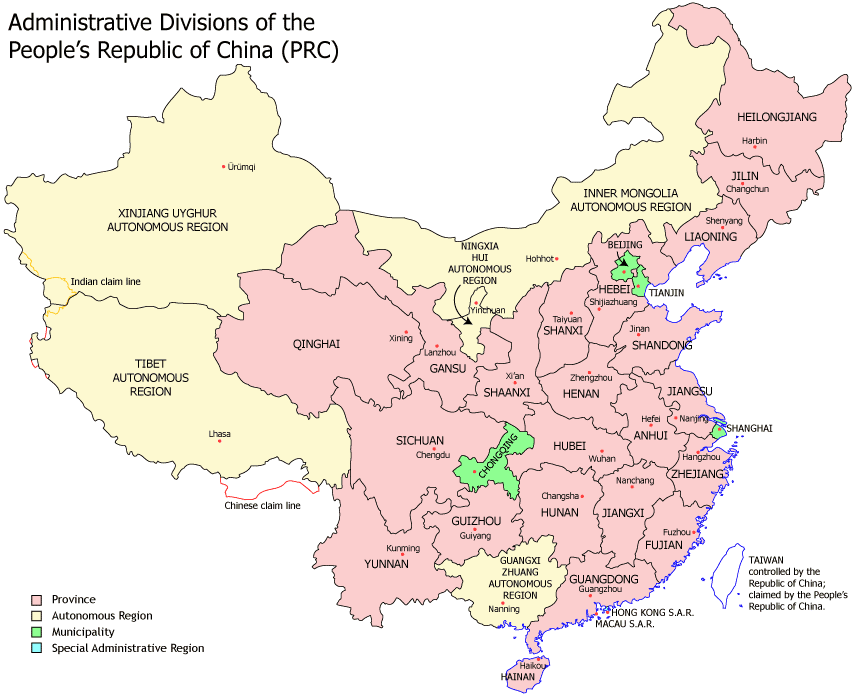



Main categories and terminology
The commonly cited counts are 23 provinces, 4 municipalities, 5 autonomous regions and 2 special administrative regions. The term for a province in Mandarin is shěng (pinyin: sheng), and each type of unit has distinct administrative roles and legal status.
- Provinces: typical province-level units that have their own provincial governments; examples include Guangdong, Sichuan and Shandong. See provinces.
- Municipalities: large cities administered directly by the central government, such as Beijing and Shanghai; these are listed under municipalities.
- Autonomous regions: areas granted a degree of cultural and administrative autonomy for specific ethnic minorities (for example Xinjiang and Tibet).
- Special administrative regions (SARs): regions with separate legal and economic systems under the principle of "one country, two systems," notably Hong Kong and Macau.
Administrative structure beneath the province level
Province-level units are subdivided into prefecture-level and county-level divisions. Prefecture-level entities include prefecture-level cities, autonomous prefectures and, in Inner Mongolia, leagues. Some large cities have sub-provincial or vice-provincial status, which grants them greater administrative authority. Below prefectures are counties, county-level cities, districts and townships, forming the basic local-government framework.
Historical and political context
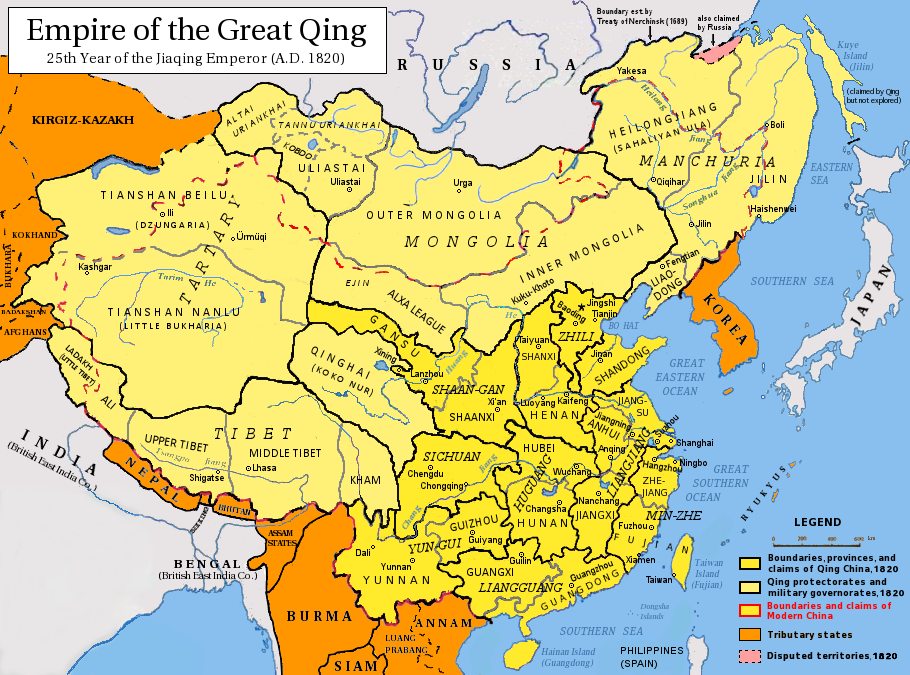
The present system evolved from earlier imperial, Republican and revolutionary reorganizations. Since the foundation of the PRC in 1949, the map and the powers of provincial units have been adjusted for political, economic and ethnic policy reasons. Notably, the PRC claims the island of Taiwan as one of its provinces; that claim is stated by the PRC (see PRC claim) while the island is administered by the authorities of the Republic of China (ROC) and is widely described as an island in geographic sources (island).
Importance and distinctions
These divisions are important for governance, fiscal arrangements, resource allocation and regional planning. Autonomous regions are intended to recognize ethnic minority populations with certain cultural and administrative rights. Municipalities concentrate economic and political functions in major urban centers. Special administrative regions operate under distinct legal and economic frameworks compared with mainland units.
For more detailed maps and lists of specific units consult official and academic resources linked above.
Related articles
Author
AlegsaOnline.com Political divisions of China Leandro Alegsa
URL: https://en.alegsaonline.com/art/77756