
Prefectures of Greece (Nomoi): historical subnational divisions
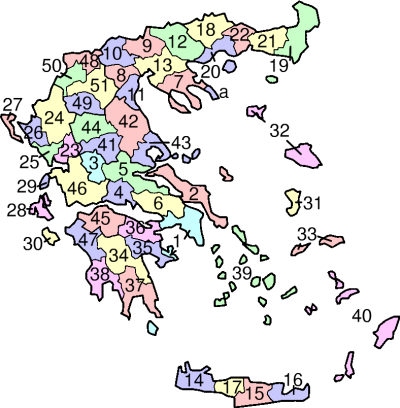
Former primary administrative units of Greece (called nomoi) used from the 19th century until the 2010 Kallikratis reform; replaced by regional units within the modern regions.
Overview
The prefectures of Greece, known in Greek as nomoi (singular nomos), were the country's principal subnational administrative units for most of the modern era. Introduced in the nineteenth century and in continuous use from the mid-1800s until the nationwide reorganization of local government in 2010, prefectures provided an intermediate tier between the central state and municipalities.
Image gallery
3 Images

Organization and terminology
Each prefecture carried the name of its principal town or geographic area and was administered from a prefectural capital. The head of a prefecture was commonly referred to as a prefect (nomarchis), and the territory was subdivided into smaller local entities such as provinces, municipalities and communities. In later decades some groupings of prefectures were coordinated at a higher level for administrative purposes.
History and development
The prefectural system dates to the early decades after Greek independence and reflected European models of territorial administration. Over time the number and boundaries of prefectures changed with population growth, territorial gains and reform efforts. Major reorganizations of local government — notably those in the 1990s and the comprehensive Kallikratis reform of 2010—reduced the role of prefectures and ultimately replaced them.
Functions and importance
Prefectures were responsible for a range of regional services: coordinating national administration locally, planning and maintaining road and water infrastructure, public health and social services, certain licensing and permits, and support for agriculture and economic development. They represented a key link between central ministries and municipalities.
Legacy and notable facts
Although abolished as formal administrative units by the Kallikratis reform, many modern regional units correspond closely to the former prefectures in territory and name. Well-known examples from the prefectural system include Attica, Thessaloniki, the island groups of the Cyclades and the Dodecanese, and the prefectures of Crete. The prefecture remains an important historical concept for understanding Greece's administrative evolution.
Related articles
Author
AlegsaOnline.com Prefectures of Greece (Nomoi): historical subnational divisions Leandro Alegsa
URL: https://en.alegsaonline.com/art/78704