
Planetesimal
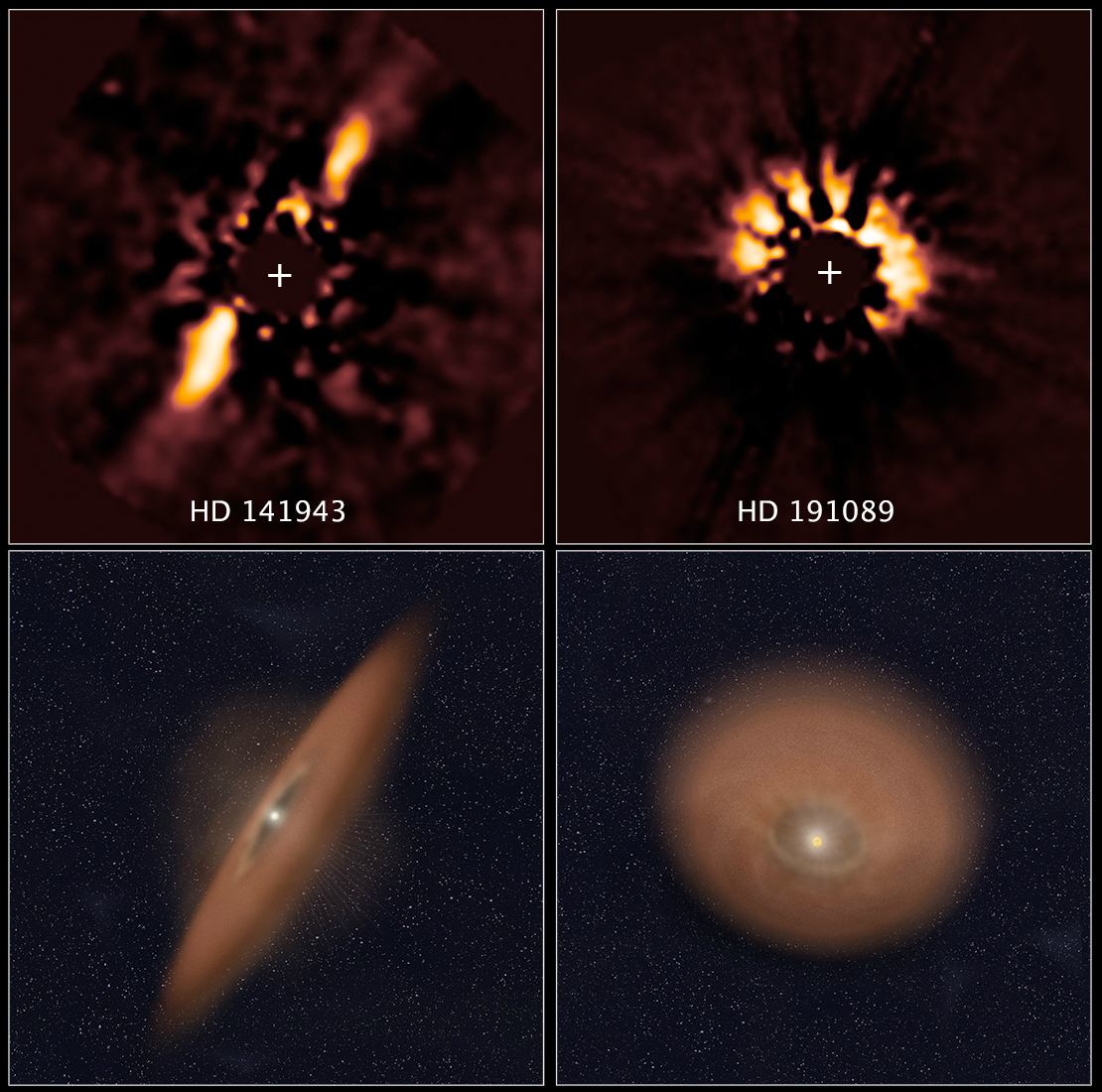
A planetesimal is a solid body formed in a protoplanetary disk that acts as a building block of planets; ranges from meter-size objects to hundreds of kilometers and includes asteroids and comet nuclei.
Overview
A planetesimal is a small, solid object that forms within the gaseous and dusty disk surrounding a young star. These bodies are the fundamental building blocks of planets: through repeated collisions and accretion they can grow into larger bodies such as planetary embryos and ultimately planets. Planetesimals are typically discussed in the context of a protoplanetary disk, the environment where dust and ice are available to stick together.
Image gallery
6 Images


Formation and growth
Formation begins when micron-sized dust grains collide and stick, producing larger aggregates. Growth mechanisms proposed by researchers include gentle coagulation of grains, concentration by turbulent effects, and collective processes such as the streaming instability. Once objects reach roughly kilometer scales their gravity assists further growth by attracting additional material.
- Initial sticking and coagulation of grains
- Concentration of pebbles and collective instabilities
- Gravitational accretion and collisional growth
Composition and structure
Planetesimals vary in composition according to where they form in the disk. Those inside the snow line tend to be rocky and metal-rich, while beyond it they commonly contain ices and volatile compounds. Many remain undifferentiated primitive bodies; some larger planetesimals experienced heating, melting, or internal differentiation early in their histories.
Role and evidence
Planetesimals are central to models of planet formation and explain the origin of asteroids, comets, and meteorites. Fragments delivered to Earth as meteorites provide direct samples of ancient planetesimals, while spacecraft missions to asteroids and dwarf planets have characterized their surfaces and internal properties, helping to test formation theories.
Distinctions and open questions
In planetary science, a planetesimal is distinguished from smaller pebbles and from larger protoplanets or planetary embryos by size and by whether gravity dominates their interactions. Current research focuses on how quickly planetesimals form, the dominant pathways (e.g., pebble accretion versus hierarchical collisions), and how their properties set the architecture of planetary systems.
Related articles
Author
AlegsaOnline.com Planetesimal Leandro Alegsa
URL: https://en.alegsaonline.com/art/77264