
Pinocchio (1940 film)
Walt Disney's 1940 animated adaptation of Carlo Collodi's tale about a wooden puppet who longs to be a real boy, noted for its artistry, songs and lasting influence on animation and popular culture.
Overview
Pinocchio is a 1940 American animated feature produced by Walt Disney and released by RKO Radio Pictures on February 7, 1940. It is the studio's second full‑length animated film following Snow White and the Seven Dwarfs. The film adapts Carlo Collodi's 19th‑century book, retelling the story of a wooden puppet who is brought to life and seeks to become a real boy by proving himself "brave, truthful, and unselfish." The film introduced one of Disney's most enduring songs, "When You Wish Upon a Star," which won the Academy Award for Best Original Song and later became an emblem for the studio.
Image gallery
9 Images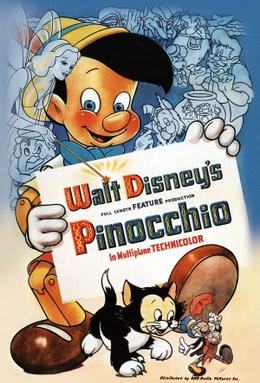


Plot and principal characters
The narrative centers on Geppetto, a kindly woodcarver who fashions a puppet named Pinocchio. A benevolent magical figure brings Pinocchio to life and appoints Jiminy Cricket to act as his conscience and guide. Pinocchio's journey is episodic: he leaves home to attend school but is repeatedly led astray by charismatic and unscrupulous characters. Notable antagonists include a boastful puppet master, a showman who exploits children, and a sly pair of con artists. Pinocchio's choices lead to perilous consequences, including an encounter with a great sea creature. The story culminates in acts of sacrifice and redemption that determine whether he will become a real boy.
Production and animation
Production involved a large creative team of story writers, sequence directors and animators under supervising producers. The film is widely admired for its expressive character animation, careful staging, and ambitious effects work. Animators concentrated on lifelike movement and facial performance; sequences such as a storm at sea and scenes with smoke and water were notable for technical complexity at the time. The work expanded the expressive range of character acting in hand‑drawn animation and influenced later filmmakers and animators.
Music and sound
Music plays a central role in the film's tone and storytelling. "When You Wish Upon a Star" is the best‑known song and became closely associated with Disney as a brand. The score and songs underline emotional beats and reinforce the film's themes of hope and conscience. Musical numbers are integrated into character moments and help to shape audience sympathy for the protagonists.
Themes and adaptation
The film emphasizes moral lessons about honesty, responsibility and selflessness while also balancing darker, more frightening episodes. Compared with Carlo Collodi's original tale, which is episodic and often harsher, the Disney adaptation streamlines events and supplies a clearer throughline of personal growth. The addition of Jiminy Cricket as a named conscience figure provides a consistent guide and perspective for viewers.
Voice cast and creative credits
The film features a cast of voice performers portraying Pinocchio, Geppetto, Jiminy Cricket and a supporting gallery of characters. The production was guided by a group of sequence directors and story artists who shaped individual episodes and character performances. Multiple writers and directors contributed to the screenplay and visual storytelling, reflecting the collaborative studio process of the period.
Reception, awards and legacy
At the time of release the film faced economic and market challenges that affected its early box‑office returns, and critical reaction varied. Over the decades it has been reappraised and is now considered a milestone of classical animation for its craftsmanship, storytelling and technical ambition. The signature song won an Academy Award and has become a cultural touchstone. The film has been preserved, restored and reissued in theaters and home media many times, and its characters and imagery remain prominent in retrospectives and popular culture.
Further reading and resources
- Production credits and release information
- Studio history and context for the film
- Walt Disney Productions background and archives
- Contemporary release notices and theater listings
- The original Carlo Collodi story that inspired the film
- Biographical material on Carlo Collodi
- Relation to earlier Disney feature films
- Character profiles and summaries
- Musical score and song histories
- Preservation, reissues and cultural legacy
The film endures both as an influential early feature and as a widely seen popular classic that helped define narrative and musical conventions in animated filmmaking. For those studying the medium, it remains a frequent example of how story, character acting, music and technical craft combine to create lasting cinematic effects.
Questions and answers
Q: What is Pinocchio?
A: Pinocchio is the second animated Disney movie that tells the story of a wooden puppet who wants to become a real boy.
Q: When was Pinocchio released?
A: Pinocchio was first released to movie theaters by RKO Radio Pictures on February 7, 1940.
Q: Who is Geppetto?
A: Geppetto is the man who made Pinocchio, the wooden puppet, and is like a father to him.
Q: How can Pinocchio become a real boy?
A: Pinocchio can become a real boy if he proves himself "brave, truthful, and unselfish" with the help of his friend, Jiminy Cricket.
Q: Who wrote the story of Pinocchio?
A: The story of Pinocchio was written by Carlo Collodi.
Q: What is the name of the famous song featured in Pinocchio?
A: The famous song featured in Pinocchio is "When You Wish Upon A Star".
Q: Who directed the film's sequences?
A: The film's sequences were directed by Norman Ferguson, T. Hee, Wilfred Jackson, Jack Kinney, and Bill Roberts.
Related articles
Author
AlegsaOnline.com Pinocchio (1940 film) Leandro Alegsa
URL: https://en.alegsaonline.com/art/77010
Sources
- afi.com : "Pinocchio: Detail View"
- boxofficemojo.com : "Pinocchio"
- dvdempire.com : dvdempire.com/
- disney.go.com : A Disney Classic: "Pinocchio"
- film.guardian.co.uk : "Terry Gilliam Picks the Ten Best Animated movies of All Time"
- disney.go.com : Disney Archives | "Pinocchio" Movie History
- ldsfilm.com : Movie Box Office Figures
- afi.com : "AFI's 10 Top 10"