
Pixote: A Lei do Mais Fraco (Pixote: The Law of the Weakest)
Pixote is a 1981 Brazilian social-realist drama directed by Héctor Babenco, portraying the lives of abandoned children and the cycle of violence in urban Brazil; notable for non-professional actors and stark realism.
Overview
Pixote: A Lei do Mais Fraco is a 1981 Brazilian drama film directed by Héctor Babenco and adapted from José Louzeiro's reporting-style novel. The movie follows the experience of a young boy known as Pixote and other street children in Brazil, presenting a raw, uncompromising depiction of juvenile marginalization, exploitation and violence. Its tone is austere and documentary-like, intended as social critique rather than entertainment.
Image gallery
1 Image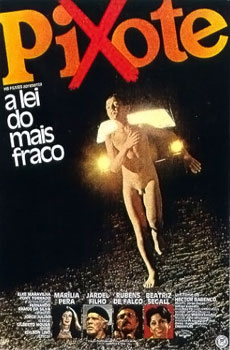
Story and characters
The narrative centers on a child—called Pixote—who becomes enmeshed in a world of petty crime, gang life and institutional neglect. Rather than focusing on a conventional protagonist arc, the film traces the daily survival tactics of children pushed to society's margins, showing how poverty, law enforcement practices and organized crime intersect. Performances by non-professional actors lend the film an improvised, immediate quality.
Production and style
Babenco employed a realist aesthetic: location shooting, handheld cameras and casting of untrained actors to achieve spontaneity and authenticity. This approach heightened the sense of immersion and contributed to the film's reputation for verisimilitude. The script and direction emphasize social forces and systemic failure over individualized moralizing.
Themes and reception
Key themes include childhood abandonment, institutional violence, exploitation, and the social roots of crime. On release, Pixote drew strong reactions: critics praised its courage and photographed realism, while some viewers and commentators were disturbed by its explicit content and the ethical questions raised by using real street children in violent scenes. Internationally, the film attracted attention at festivals and contributed to conversations about Latin American cinema and human rights.
Legacy and notable facts
- Pixote is widely regarded as an important work in Brazilian cinema and in the broader movement of social realism in Latin American film.
- The casting of non-professionals became a defining element of the film's impact; it also prompted debates about ethics and protection of vulnerable performers.
- The lead performer, discovered in the streets, later lived under difficult circumstances, and his life story has often been discussed in relation to the film's themes.
Today Pixote remains a frequently cited and studied film for those interested in cinematic representations of poverty and institutional failure. Its unflinching perspective continues to provoke discussion about how film can illuminate social problems while respecting the dignity of those depicted.
Questions and answers
Q: What is the title of the Brazilian drama movie released in 1981?
A: The title of the Brazilian drama movie released in 1981 is Pixote: a Lei do Mais Franco.
Q: Who directed Pixote: a Lei do Mais Franco?
A: Héctor Babenco directed Pixote: a Lei do Mais Franco.
Q: What is the novel based on which the movie Pixote: a Lei do Mais Franco is made?
A: The movie Pixote: a Lei do Mais Franco is based on the novel A Infância dos Mortos (The Childhood of the Dead Ones) by José Louzeiro.
Q: Who played the title character in the movie Pixote: a Lei do Mais Franco?
A: Fernando Ramos de Silva played the title character in the movie Pixote: a Lei do Mais Franco.
Q: What is the meaning of the title "Pixote: a Lei do Mais Franco" in English?
A: The meaning of the title "Pixote: a Lei do Mais Franco" in English is "Pixote (small child): The Law of the Weakest".
Q: When was Pixote: a Lei do Mais Franco released?
A: Pixote: a Lei do Mais Franco was released in 1981.
Q: What genre does the movie Pixote: a Lei do Mais Franco belong to?
A: The movie Pixote: a Lei do Mais Franco belongs to the drama genre.
Related articles
Author
AlegsaOnline.com Pixote: A Lei do Mais Fraco (Pixote: The Law of the Weakest) Leandro Alegsa
URL: https://en.alegsaonline.com/art/77176