
The Adventures of Pinocchio
A classic Italian children's novel by Carlo Collodi about a wooden puppet's journey toward becoming a real boy; notable for its episodic adventures, moral themes, and many adaptations.
The Adventures of Pinocchio is a children's novel originally written in Italian as Le avventure di Pinocchio. Authored by Carlo Collodi, it first appeared as a serial in a weekly children's publication in the early 1880s before being issued in book form in 1883. The tale follows a wooden puppet named Pinocchio whose mischief, curiosity and repeated failures provide the framework for a larger moral and social narrative.
Image gallery
8 Images


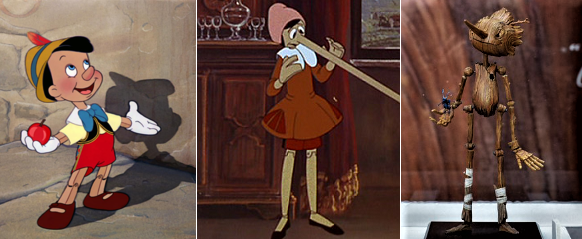


Overview and structure
The story is episodic and picaresque: a sequence of distinct adventures and encounters that present hazards, temptations and lessons. Episodes range from lighthearted pranks to darker episodes of trickery and violence. Collodi mixes fantasy with everyday details of 19th‑century Italian life, aiming both to entertain children and to instruct them in responsibility, honesty and the consequences of reckless behavior.
Main characters and motifs
- Pinocchio – a living puppet whose nose is famous as a signifier of lying and whose goal is to become a real boy.
- Geppetto – the woodcarver who makes Pinocchio and acts as his father figure.
- The Fairy (often called the Blue Fairy) – a guardian figure who twice guides Pinocchio's transformation.
- The Fox and the Cat – tricksters who conspire to take advantage of Pinocchio.
History, publication and illustration
Carlo Collodi published the narrative in installments between 1881 and 1883. The collected book edition appeared in 1883 and included black‑and‑white illustrations by Enrico Mazzanti. Early installments contained harsher episodes; readers and critics note that Collodi adjusted tone and resolution as the work moved from periodical serial to enduring book, eventually giving the protagonist a redemptive arc.
Themes, legacy and adaptations
Pinocchio explores themes of education, civic duty, obedience, and personal growth. It has long been interpreted as both a didactic moral tale for children and a satirical look at society and human weakness. The story has been translated into many languages and adapted across media: stage productions, films, television series and animations. The Walt Disney animated feature is among the most widely known adaptations, but numerous international versions preserve different emphases from Collodi's original. For a concise biographical context on Collodi see Carlo Collodi, and for publication history consult sources summarizing 19th‑century Italian children's literature further reading.
Notable distinctions include the contrast between Collodi's darker, satirical elements and later, more sanitized retellings that emphasize whimsy and sentiment. The figure of Pinocchio endures as a cultural symbol of childhood, the ethics of truth‑telling, and the idea that moral education is a journey marked by mistakes and opportunities for reform.
Related articles
Author
AlegsaOnline.com The Adventures of Pinocchio Leandro Alegsa
URL: https://en.alegsaonline.com/art/97473