
Phoenix (spacecraft)
Phoenix was a stationary NASA lander that touched down on Mars in 2008 to examine polar soil, confirm near-surface water ice, and assess the planet's habitability for microbial life.
Overview
Phoenix was a robotic Mars lander developed by NASA as part of the Mars Scout Program. Launched in August 2007, it arrived at the northern polar region of Mars and made a soft landing on 25 May 2008. The lander's prime goals were to study the history of water at its site and to evaluate whether that environment had ever been suitable for life as we understand it. Scientists used observations and laboratory-style analyses to seek evidence of water and chemical conditions important for biology, including tests related to water and the potential for life.
Image gallery
10 Images






Design and main instruments
Phoenix was a stationary platform rather than a rover; it delivered a compact suite of instruments designed to examine soil, ice, atmosphere and local weather. Work on the surface was centered on a robotic arm that could dig trenches and deliver samples to onboard laboratories. Major instrument packages included:
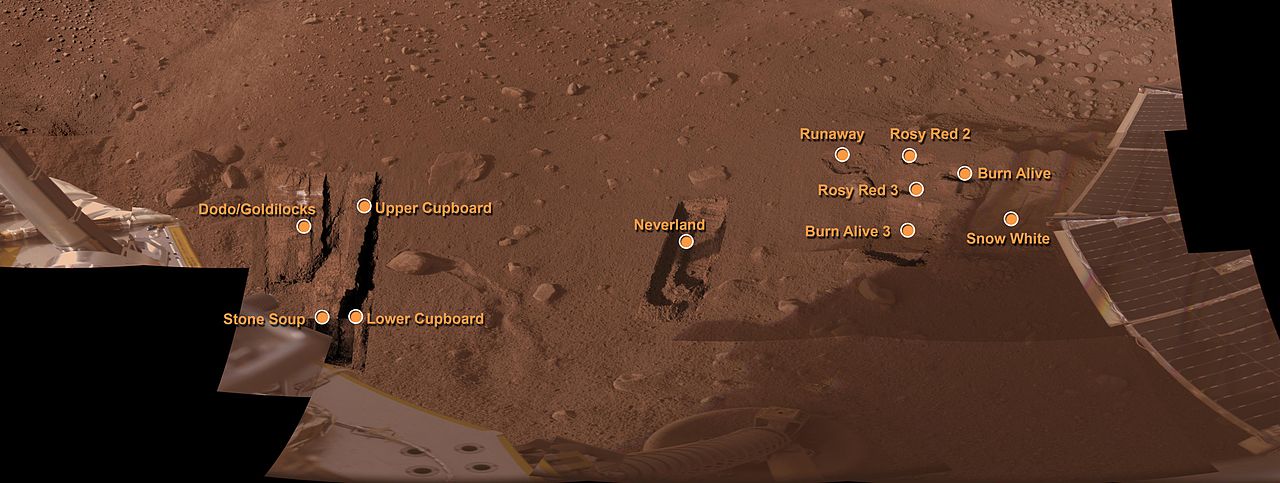
- Robotic Arm (RA) – excavated soil and exposed bright material interpreted as ice.
- TEGA (Thermal and Evolved-Gas Analyzer) – heated samples to identify volatile compounds.
- MECA (Microscopy, Electrochemistry, and Conductivity Analyzer) – provided wet chemistry analyses and microscopic imaging.
- Surface Stereo Imager and Meteorology sensors – recorded images and monitored temperature, pressure and wind.
Mission timeline and operations
After cruise and entry, descent and landing, Phoenix operated through the northern summer and into autumn of Mars’s northern hemisphere. Teams commanded repeated digs and sample transfers, monitored changing weather, and took panoramic and microscopic images. The mission transmitted data for several months; seasonal reduction in sunlight at the polar landing site gradually reduced power and communications. The last confirmed contact occurred in November 2008 and the mission was declared complete after attempts to reestablish communication failed.
Findings and scientific importance
Phoenix provided the first direct evidence of abundant water ice in the shallow subsurface at its landing site. The lander exposed and observed bright, ice-rich material and measured how soil responded when heated, confirming the presence of frozen water. Chemical analyses revealed a mix of salts and minerals that affect soil pH and water activity, with implications for whether microorganisms could survive there. These results influenced how scientists think about Martian climate history, near-surface water processes, and the search for microbial habitability.
Legacy and notable facts
Phoenix helped refine engineering and scientific approaches for studying ice-rich regions on Mars and informed the design of later missions. Its localized laboratory techniques demonstrated how small landed platforms can perform complex geochemical experiments on another planet. The mission remains a milestone for polar exploration of Mars and for on-location investigation of planetary habitability.
Related articles
Author
AlegsaOnline.com Phoenix (spacecraft) Leandro Alegsa
URL: https://en.alegsaonline.com/art/76549