
Peyton Place (1957 film)
1957 drama film directed by Mark Robson, adapted from Grace Metalious's controversial novel. Stars Lana Turner and an ensemble cast; noted for sanitized treatment of the book, nine Oscar nominations, and lasting cultural impact.
Peyton Place is a 1957 American drama film adapted from Grace Metalious's best-selling 1956 novel. Directed by Mark Robson, the picture brought a controversial, small‑town story to a wide audience while submitting many of the book's more explicit elements to the era's censorship and studio oversight. The film is remembered for its strong ensemble cast, its tangled themes of secrecy and social hypocrisy, and for becoming a high-profile box-office success after a surge in publicity.
Image gallery
4 Images

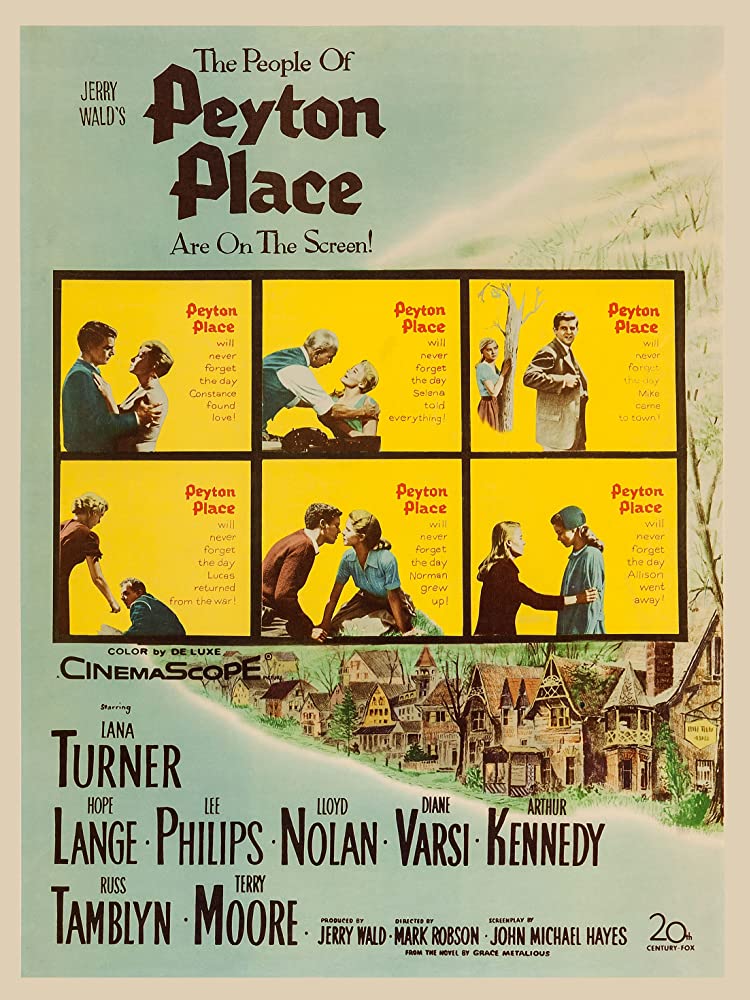

Overview and themes
The story focuses on hidden scandals in a New England mill town: illicit relationships, class tension, parental secrecy, and the consequences of moral judgment. The novel's frank treatment of sexuality and domestic abuse made it a sensational bestseller; the film adaptation retained the core plot and central conflicts but presented them in a tamer, more stylized manner suited to 1950s Hollywood. Critics and scholars often contrast the movie's restraint with the novel's bluntness, viewing the film as a negotiation between literary shock value and popular film conventions.
Production and cast
Produced by a major Hollywood studio, the movie assembled an established star alongside younger performers. Lana Turner played the prominent adult role at the center of the publicity; other members of the ensemble included Diane Varsi, Russ Tamblyn, Lee Philips, Hope Lange, and Arthur Kennedy. Director Mark Robson guided the adaptation toward melodrama and psychological tension rather than explicit depiction, working within the Production Code that governed American films at the time. The film took liberties with the source material to satisfy censors and to fit the expectations of a 1950s audience.
Reception and awards
Critics noted the contrast between the novel’s salacious reputation and the film’s more restrained tone. Reviewers praised particular performances even while lamenting the omission or softening of the book’s most controversial passages. The film received nine Academy Award nominations, an indication of the industry's recognition of its cast and production values, but it did not win in any category. Several cast members drew attention for their work, and the overall production was regarded as a prestigious, if compromised, adaptation of a recent literary sensation.
Box office and publicity
Initial box-office returns were modest, but public interest surged after a widely covered real-life scandal involving Lana Turner’s family that drew attention to the actress and, by association, to the film. This intense press coverage significantly increased ticket sales, helping Peyton Place become one of the year’s most commercially successful releases. The film’s commercial trajectory illustrates how off-screen events and tabloid interest could influence audience behavior in the studio era.
Legacy and adaptations
Peyton Place established a pattern of adapting controversial popular fiction for mainstream cinema by sanitizing and emphasizing melodrama. Its success helped spawn further screen treatments of the same material: a 1961 sequel film, and later a long-running television soap opera that expanded the town’s stories for a serial format. The original novel, the film, and subsequent adaptations together entered American cultural conversation about small‑town life, moral double standards, and the boundaries of acceptable subject matter in popular entertainment. For background on the novel and its author, see Grace Metalious; for more on the film's place in Hollywood history and its production, consult materials linked at film resources and biographies of leading performers such as Lana Turner.
- Notable facts: adapted from a bestselling novel; made under the Production Code; gained commercial momentum from intense publicity.
- Aftermath: inspired a sequel film and a television series that extended the story’s cultural reach.
Related articles
Author
AlegsaOnline.com Peyton Place (1957 film) Leandro Alegsa
URL: https://en.alegsaonline.com/art/76290