
Philomena (2013 film)
Philomena (2013) is a British drama starring Judi Dench and Steve Coogan, adapting a journalist's investigation into a woman's decades‑long search for a son taken from her in childhood.
Overview
Philomena is a 2013 British drama film directed by Stephen Frears. The screenplay, co-written by Steve Coogan and Jeff Pope, adapts a nonfiction account by journalist Martin Sixsmith and follows the real-life story of an Irish woman searching for a son she was forced to give up decades earlier.
Image gallery
2 Images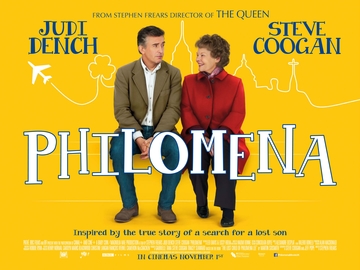
Plot and themes
The plot centers on a reluctant investigator — a former journalist recently dismissed from his post who is also depicted as an ex-Labour political aide — who becomes drawn into the quiet, persistent search of an elderly woman. The woman, played by Judi Dench, recounts memories and fragments that reveal institutional practices and the personal costs of forced adoptions. Themes include memory, reconciliation, institutional power, journalistic ethics, and the dignity of individuals affected by state and religious authority.
Characters and performances
- Philomena Lee — the real woman whose story inspired the film, portrayed with restraint and warmth by Judi Dench.
- Steve Coogan — who co-wrote the script and plays the skeptical investigator, providing much of the film's dry humour and moral curiosity.
- The supporting cast embodies the social contexts of mid-20th-century Ireland and contemporary Europe, balancing tragedy with quieter, humane moments.
Production and style
The film blends sober dramatic scenes with touches of comic relief and a documentary-like attention to detail. Direction emphasizes character interactions and ethical questions rather than sensationalism, and the screenplay keeps the central relationship between the two leads at its heart. The adaptation is careful to dramatize the known facts while focusing on the emotional truth of the protagonists' experiences.
Reception and impact
Critics praised the film for its performances, particularly Dench's compassionate portrayal and the chemistry with Coogan. Reviewers noted that the film brought broader public attention to historical adoption practices in Ireland and encouraged discussion about institutional accountability. While dramatized, the story spurred renewed interest in real cases and contributed to conversations about how governments and religious institutions handled vulnerable people in the mid-20th century.
Controversy and historical context
Some commentary has cautioned that a single dramatized account cannot stand as a full history of complex social issues; the film is best understood as a personal story that illuminates wider problems. It led many viewers to seek out the original reporting and books that document the case and the broader context, and it invited analysis of how media adaptations balance narrative focus with historical nuance.
Legacy
Beyond awards attention and box‑office visibility, Philomena is often cited as an example of a mainstream film that used journalistic source material to raise public awareness of a sensitive subject. The project demonstrated how film adaptations can humanize large issues by concentrating on individual lives, prompting further reading and research among audiences who encountered the story on screen. For more information on the book, the journalism behind the story and related discussions, readers can consult linked resources and reports.
Related resources and biographies: film entry, journalism background, political context, production notes, actor profile: Judi Dench, Philomena Lee biography, Steve Coogan profile.
Related articles
Author
AlegsaOnline.com Philomena (2013 film) Leandro Alegsa
URL: https://en.alegsaonline.com/art/76501