
Picnic at Hanging Rock (1975 film)
Peter Weir's 1975 Australian drama based on Joan Lindsay's novel: an enigmatic tale of schoolgirls who vanish at Hanging Rock, noted for its mood, ambiguity, and impact on Australian cinema.
Overview
Picnic at Hanging Rock is a 1975 Australian drama film directed by Peter Weir, adapted from Joan Lindsay's novel. The story is set in 1900 and follows the mysterious disappearance of several schoolgirls and a teacher during an outing to Hanging Rock. The film emphasizes atmosphere and unanswered questions rather than providing a conventional explanation for the events it depicts.
Image gallery
3 Images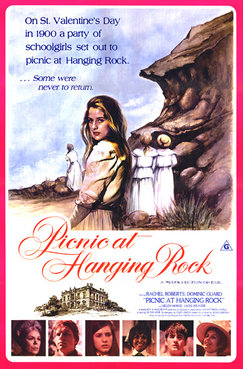


Plot and themes
The narrative centers on a girls' private school and the sudden shock to the community when some students fail to return from a picnic at a nearby geological formation. The film explores themes of repression, colonial social mores, the unsettling power of landscape, and the tension between rational investigation and inexplicable occurrences. Its ending remains deliberately ambiguous, leaving the vanishings open to interpretation by viewers.
Cast and style
- Anne-Louise Lambert
- Helen Morse
- Rachel Roberts
- Vivean Gray
The movie is noted for its dreamlike cinematography, careful compositions, and a slow, haunting pace that foregrounds mood over plot. The natural setting of Hanging Rock, Victoria functions almost as a central character, its geology and light contributing to the film's uncanny atmosphere.
Production, release, and reception
Produced during a period often called the Australian New Wave, the film helped bring international attention to Australian cinema. It drew critical praise for its visual design and tone, while also attracting debate because of its refusal to resolve the central mystery. The picture reportedly grossed about $5,120,000 in Australia and helped establish Peter Weir's reputation as a filmmaker willing to blend literary source material with striking imagery.
Legacy and adaptations
The film remains influential for its approach to ambiguity and mood, and it is frequently cited in discussions of cinematic mysteries and modern Gothic storytelling. It has inspired subsequent adaptations and reinterpretations, and its reputation endures among critics and viewers interested in films that prioritize atmosphere and suggestion over tidy explanation. For further context and resources about the production and interpretations of the work see related materials.
Related articles
Author
AlegsaOnline.com Picnic at Hanging Rock (1975 film) Leandro Alegsa
URL: https://en.alegsaonline.com/art/76738
Sources
- film.vic.gov.au : Film Victoria - Australian Films at the Australian Box Office