
Automatic train operation: systems, levels, history and uses
Overview of automatic train operation (ATO): definitions, technical components, grades of automation, history, applications in metros and mainline rail, safety considerations and future trends.
Automatic train operation (ATO) describes technology that enables a train to be driven with reduced or no human input. ATO systems work with signalling and protection layers to regulate speed, start and stop, door operation and precise station stopping. They range from systems that assist a driver to fully driverless installations used on urban metro lines.
Image gallery
4 Images


Characteristics and components
Typical ATO includes onboard computers, automatic train protection (ATP) or similar fail-safe systems, trackside detection and communications, and human-machine interfaces for supervision. Key functions are traction control, braking profiles, speed supervision and station handling. Integration with timetabling and traffic management improves headway consistency and punctuality.
Grades of automation and distinctions
Automation is commonly classified into grades (often called GoA): from manual driving with automatic protection to unattended train operation where no staff are required on board. Lower levels retain a driver for door control and emergency handling, while higher levels remove the need for an onboard driver but keep supervisory staff at a control centre.
History and development
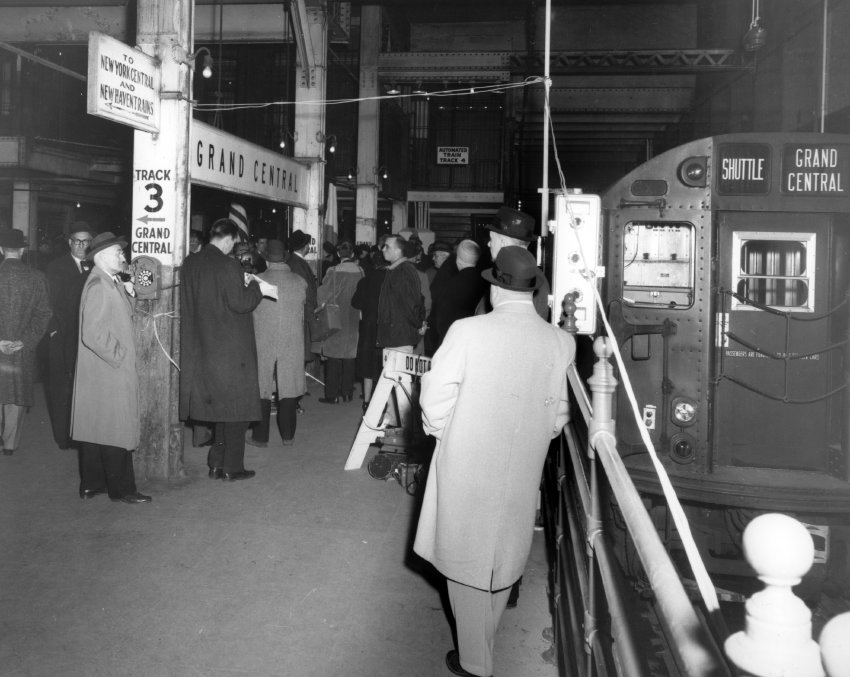
ATO concepts emerged in the mid-20th century with the first experiments on urban railways. Advances in digital signalling, communications-based train control (CBTC) and computing reliability have broadened adoption. Over decades the technology has evolved from simple timetable-driven automation to dynamic systems that adapt to traffic conditions.
Applications and benefits
Most common in metro and light rail, ATO is also used on suburban and some mainline corridors. Benefits include higher line capacity through reduced headways, smoother acceleration and deceleration for energy savings, consistent station stopping for platform screen doors, and potential reductions in operating costs.
Safety, regulation and future trends
Safety depends on layered protection: a separate train protection system prevents collisions and enforces speed limits even if the ATO fails. Regulatory frameworks and industry standards guide deployment and verification. Future developments focus on improved signalling interoperability, automated traffic management and wider mainline adoption where signalling upgrades permit.
- Common enabling technologies: CBTC, ATP and real-time communications.
- Typical uses: urban metros, airport people movers, and selected commuter lines.
- Key trade-offs: capital cost of upgrades versus operational benefits.
Related articles
Author
AlegsaOnline.com Automatic train operation: systems, levels, history and uses Leandro Alegsa
URL: https://en.alegsaonline.com/art/7616